

News
09
Dec
Fractional CO2 Laser Machines for Stretch Mark Removal: How They Work, Key Benefits, and Cost Guide
Stretch marks are one of the most common skin concerns among clients, especially after pregnancy, weight changes, or rapid growth. As demand for effective treatment continues to rise, fractional CO2 laser machines have become a leading solution thanks to their ability to remodel collagen, smooth texture, and visibly improve both red and white stretch marks.
For clinics and medspas, choosing the right fractional CO2 laser can significantly impact treatment results, patient satisfaction, and long-term ROI. This guide explains how the technology works, the key benefits for stretch mark removal, and what clinics should consider when comparing machine features and costs.
Understanding Stretch Marks
What Causes Stretch Marks?
Stretch marks form when the skin is stretched faster than its underlying collagen and elastin fibers can adapt. This sudden tension creates micro-tears in the dermis, leading to visible lines on the surface.
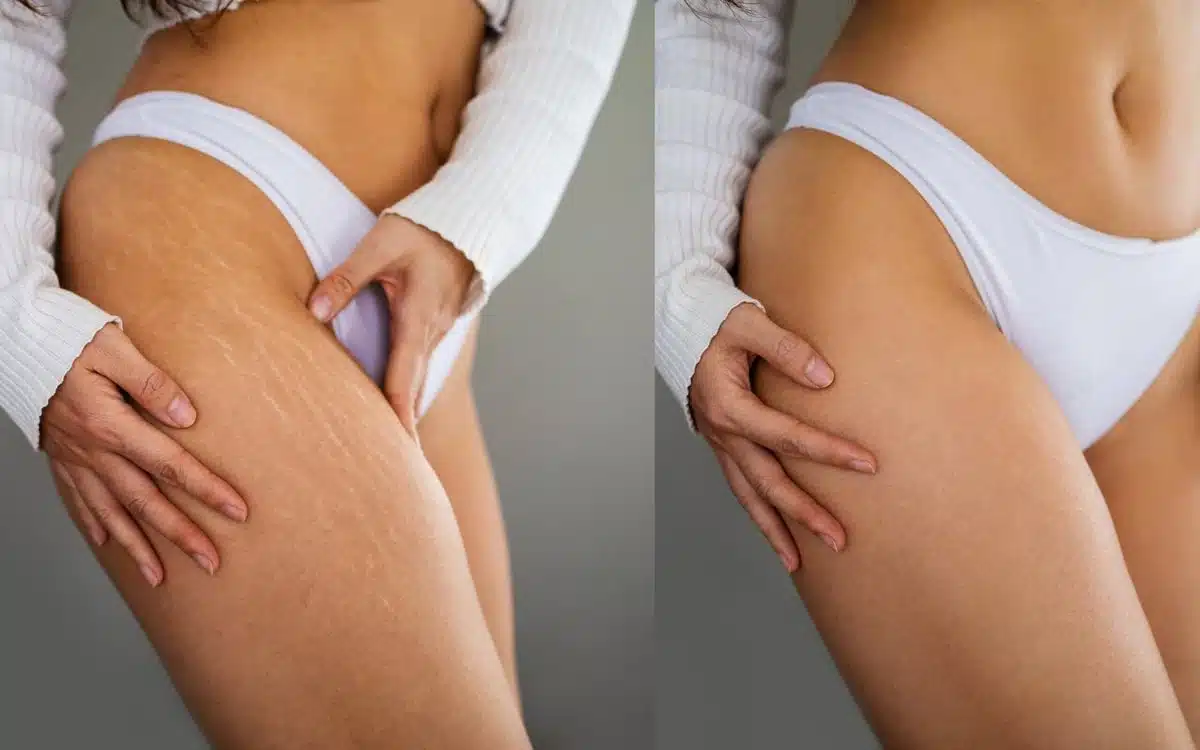
Common causes include:
1.Pregnancy and rapid abdominal expansion
2.Hormonal fluctuations, especially during puberty
3.Rapid weight gain or loss
4.Genetic factors that influence skin elasticity
When collagen ruptures, the body attempts to repair the damaged tissue, but the new fibers often form in uneven patterns—creating the familiar streaked appearance.
Red vs. White Stretch Marks
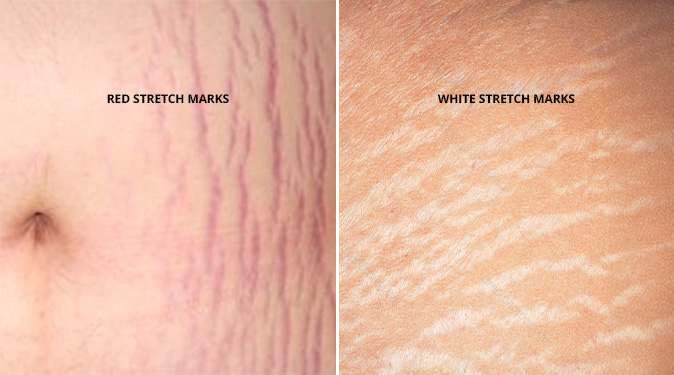
Stretch marks progress through two main stages:
1.Red or purple stretch marks (Striae Rubrae):
These are newer marks with active inflammation and visible blood vessels. Because the skin is still in the early healing phase, they respond more easily to treatment.
2.White stretch marks (Striae Albae):
Older marks that have lost pigment and appear silvery or pale. Collagen has already reorganized, making these deeper and more resistant to mild treatments.
Understanding these stages helps clinics choose the right laser settings and predict treatment outcomes more accurately.
Why Deeper or Older Striae Respond Better to CO2 Laser Resurfacing
Fractional CO2 lasers are highly effective for older, deeper stretch marks because they can penetrate the dermis, where structural damage actually occurs.
Key advantages include:
Creates microscopic thermal channels that trigger new collagen production
Resurfaces uneven texture, making indented or raised striae smoother
Breaks up dense, fibrotic tissue found in long-term stretch marks
Stimulates gradual repigmentation, helping white stretch marks blend with surrounding skin
This deeper remodeling is something lighter treatments—such as topical products or non-ablative lasers—often cannot achieve.
How Fractional CO2 Laser Technology Works
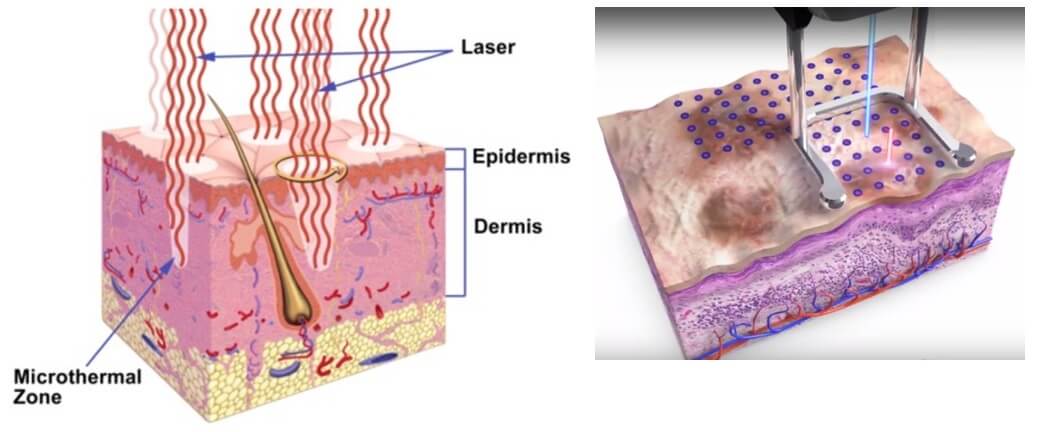
How Fractional CO2 Lasers Create Controlled Micro-Injuries
During treatment, the laser creates microthermal zones—tiny columns of controlled tissue damage within the dermis.
These micro-injuries stimulate the body’s natural repair processes:
Damaged collagen fibers are broken down
New collagen and elastin are produced
Fibrotic stretch mark tissue is gradually remodeled
Surrounding untreated skin helps accelerate healing, reducing downtime compared to fully ablative lasers.
Collagen Remodeling and Skin Renewal
As new collagen forms over the next several weeks, stretch marks become:
Smoother in texture
Tighter and more even
Less indented or raised
More blended in color
This gradual remodeling process continues for 8–12 weeks, meaning clients often see continued improvement long after the session.
Why Fractional CO2 Is Ideal for Stretch Marks
Stretch marks sit deep within the dermis, so effective treatment must reach deeper layers.
Fractional CO2 lasers offer:
Deep penetration for significant collagen stimulation
Precision targeting without damaging surrounding skin
Superior results for older, white, or textured stretch marks
Long-term improvement compared to topical or non-ablative treatments
For these reasons, fractional CO2 remains the most reliable option for clinics that want visible, lasting results for stretch mark removal.
Benefits of Using Fractional CO2 Laser for Stretch Mark Removal
| Benefit | Effect on Stretch Marks | Recommended Body Areas |
|---|---|---|
| Significant Collagen Stimulation | Boosts collagen and elastin production, improves firmness and skin texture | Abdomen, thighs, buttocks, arms |
| Effective for Red & White Stretch Marks | Works on both new (red) and older (white) stretch marks through deep tissue remodeling | All common stretch mark areas |
| Smooths Texture & Reduces Indentation | Breaks up fibrotic tissue and evens out skin surface | Abdomen, thighs, buttocks, arms |
| Improves Skin Tone & Blends Discoloration | Lightens darker marks and repigments lighter ones for uniform appearance | Abdomen, thighs, hips, breasts |
| Long-Lasting, Progressive Results | Gradual improvement over 8–12 weeks, visible long-term results | All treated areas |
| Versatile Treatment Areas | Safe and effective on multiple body areas with minimal downtime | Abdomen, thighs, hips, buttocks, upper arms, breasts |
Treatment Costs & ROI: How Much Clinics Can Charge for Stretch Mark Removal
Fractional CO2 laser treatments are an investment for both clinics and clients. Understanding the typical costs, pricing strategies, and ROI can help clinics maximize profit while providing effective treatments.
Average Price per Session
United States: $300–$600 per session
United Kingdom: £250–£500 per session
Canada: CAD 350–CAD 650 per session
Australia: AUD 400–AUD 700 per session
Prices vary depending on the laser type, clinic location, and treatment area size.
Typical Treatment Packages
Most stretch mark removal treatments require 3–5 sessions spaced 4–6 weeks apart. Offering packages can:
Encourage repeat visits
Improve overall results
Increase average revenue per client
ROI Example for Clinics
Machine cost: $7,000–$9,000
Average price per session: $500
Sessions per client: 4
Revenue per client: $2,000
If a clinic treats 5–10 clients per month, ROI can be recovered in 3–4 months, depending on overhead costs.
Tips to Maximize ROI
Offer package deals instead of single sessions to lock in clients.
Combine treatments (e.g., CO2 + RF or LED) for upselling opportunities.
Target high-demand areas like postpartum clinics or dermatology centers.
Track results and client satisfaction—visible improvements lead to repeat bookings and referrals.
Treatment Expectations & Safety Guidelines for Fractional CO2 Laser Stretch Mark Removal
| Category | Details | Notes / Tips |
|---|---|---|
| Visible Improvement Timeline | Smoother texture and reduced redness noticed in 2–4 weeks; optimal results at 8–12 weeks | Collagen remodeling continues gradually, improvement may be seen after each session |
| Number of Sessions | 3–5 sessions recommended, spaced 4–6 weeks apart | Depends on stretch mark depth and age |
| Pain Level | Moderate discomfort; warm prickling sensation | Topical numbing cream applied to minimize pain |
| Downtime | Mild redness, swelling, small scabs for 5–7 days | Makeup can usually cover treated areas after 3–4 days |
| Skin Type Considerations | Darker skin (Fitzpatrick IV–VI) more prone to hyperpigmentation | Adjust laser settings; patch test recommended |
| Contraindications | Active infections, keloid scars, recent isotretinoin use | Treatment not recommended for these clients |
| Post-Treatment Care | Avoid sun exposure, use SPF 30+, apply healing creams, avoid harsh exfoliation for 2 weeks | Essential for faster healing and better results |
| Equipment Safety | Proper maintenance and calibration required | Prevents burns or uneven treatment |
How Clinics Can Choose the Right CO2 Laser
Consider Your Clinic Size and Business Model
Choosing the right CO2 laser starts with assessing your clinic’s size and patient volume.
High-volume clinics: May need medical-grade machines with multiple handpieces for fast, efficient treatments.
Small medspas or startups: Compact or mid-range systems can balance performance, affordability, and space constraints.
Key Specifications That Matter
The effectiveness of fractional CO2 lasers depends on technical specs:
Scanner quality: Ensures precise energy delivery and uniform coverage.
Laser power: Determines penetration depth and ability to remodel collagen.
Spot size and adjustable settings: Affect treatment precision, safety, and downtime.
Warranty, Training, and Support
Reliable service and training are essential for safe and effective operation:
Warranty: Protects your investment in case of hardware issues.
Training: Ensures staff can deliver optimal results and minimize risks.
Customer support: Quick technical assistance reduces downtime and maintains clinic efficiency.
Hidden Costs to Consider
Fractional CO2 lasers may involve additional expenses that impact ROI:
Consumables: Handpieces, tips, or protective covers.
Maintenance: Regular servicing and calibration for consistent performance.
Replacement parts: Occasional handpiece or scanner replacements.
By carefully evaluating clinic needs, machine specifications, support, and hidden costs, clinics can choose a fractional CO2 laser that delivers effective stretch mark removal, improves client satisfaction, and ensures long-term profitability.
Final Insights for Stretch Mark Removal Clinics
Fractional CO₂ laser treatments are among the most effective solutions for stretch mark removal, delivering noticeable improvements in skin texture, tone, and collagen remodeling. By understanding treatment expectations, safety guidelines, machine specifications, and hidden costs, clinics can make informed decisions and maximize both client satisfaction and ROI.
For clinics looking for a reliable, versatile, and high-performance solution, Krysmed Fractional CO₂ Laser Machines stand out as a top choice, offering advanced features, customizable settings, and professional support.
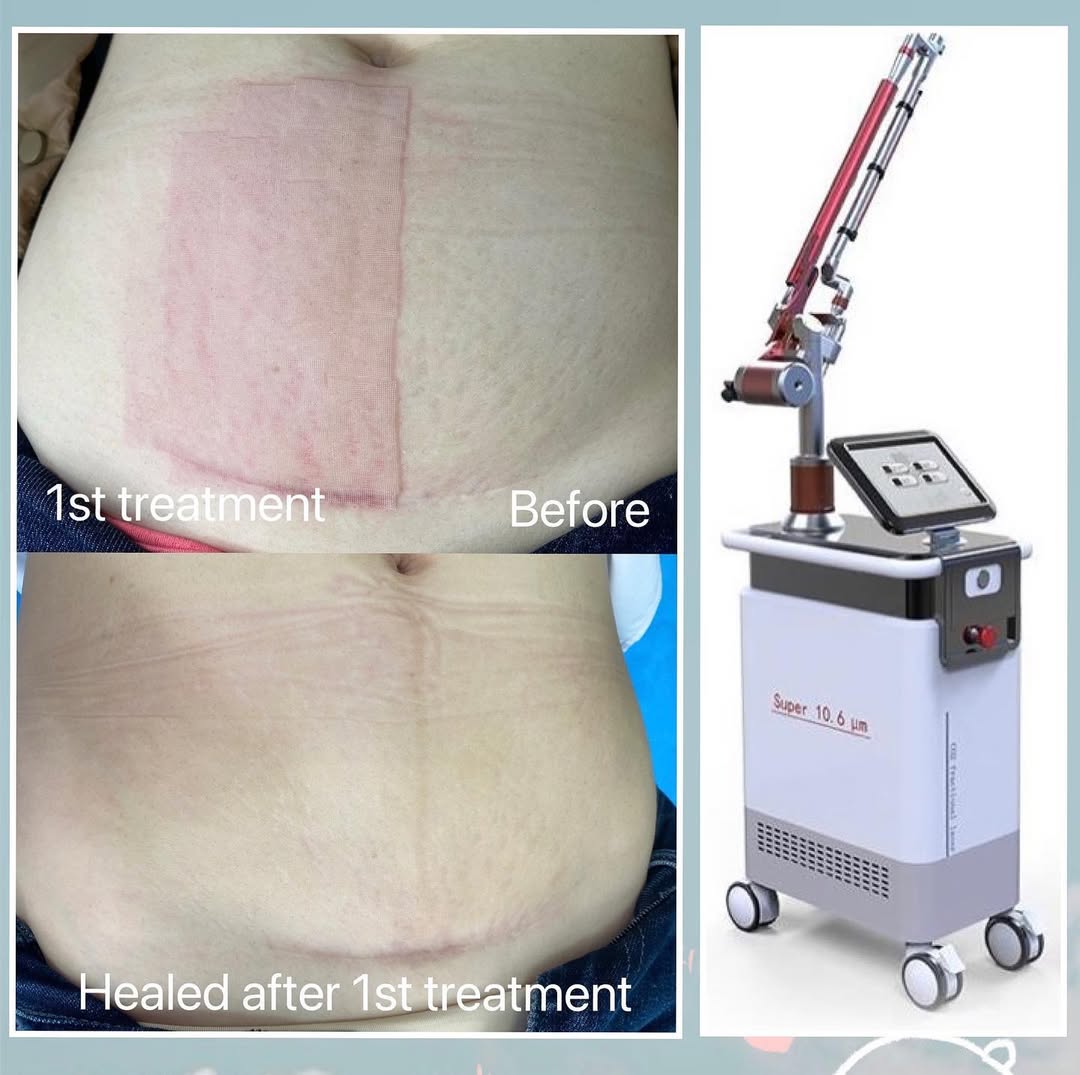
Ready to elevate your clinic’s stretch mark treatments?
Explore Krysmed’s full range of fractional CO₂ laser systems today and provide your clients with safe, effective, and long-lasting results. Contact Krysmed now to learn more and start delivering safe, effective, and long-lasting results—boost your clinic’s revenue and client satisfaction today!
FAQ: Fractional CO₂ Laser Stretch Mark Removal
Q1: How does fractional CO₂ laser remove stretch marks?
A1: Fractional CO₂ lasers create tiny microthermal zones in the skin, stimulating collagen and elastin remodeling. This process improves skin texture, reduces redness, and gradually fades stretch marks.
Q2: How many sessions are needed for noticeable stretch marks removal results using fractional CO₂ laser ?
A2: Most clients require 3–5 sessions spaced 4–6 weeks apart. Results appear gradually, with optimal improvements visible around 8–12 weeks after treatment.
Q3: Is the Fractional CO₂ Laser Stretch Mark Removal procedure painful?
A3: Patients may feel mild to moderate discomfort, often described as a warm prickling sensation. Topical numbing cream is typically applied to enhance comfort.
Q4: How long is the downtime for Fractional CO₂ Laser Stretch Mark Removal procedure?
A4: Mild redness, swelling, and tiny scabs may appear for 5–7 days. Makeup can usually cover treated areas after 3–4 days.
Q5: Can all skin types undergo fractional CO₂ treatment?
A5: Most skin types can be treated safely. Darker skin tones (Fitzpatrick IV–VI) may require lower energy settings to reduce the risk of hyperpigmentation, and a patch test is recommended.
Q6: Are Fractional CO₂ Laser Stretch Mark Removal results permanent?
A6: Fractional CO₂ laser provides long-lasting improvements, but aging, weight fluctuations, or future pregnancies may affect skin appearance. Maintenance sessions may be recommended for optimal results.
Q7: What areas of the body can be treated with Fractional CO₂ Laser Stretch Mark Removal treatment?
A7: Common areas include the abdomen, thighs, hips, buttocks, upper arms, and breasts. The treatment is versatile and can also address scars, wrinkles, and skin texture irregularities.
Q8: Are there any contraindications with Fractional CO₂ Laser treatmente?
A8: Fractional CO₂ laser is not recommended for clients with active infections, keloid scars, or recent isotretinoin use. Clinics should conduct a thorough consultation before treatment.
Q9: How can clinics maximize ROI with Fractional CO₂ Laser?
A9: By offering treatment packages, combining services (like CO₂ + RF or LED), tracking results, and choosing a high-quality, reliable machine like Krysmed, clinics can attract repeat clients and increase profitability.
Our Contact
Ready to Elevate Your Business with Krysmed?
Let’s discuss your needs and find the best solution for your business. Our experts are here to provide personalized recommendations tailored to your business needs.
-
Call For Inquiry
-
Send Us Email
info@krysmed.com
Get A Custom Quote Now!
We value your privacy and guarantee a prompt, professional reply.
 WhatsApp
 info@krysmed.com
 +86 19867944875