

News
18
May
How Q-Switched Lasers Can Help Clinics Expand Treatment Services
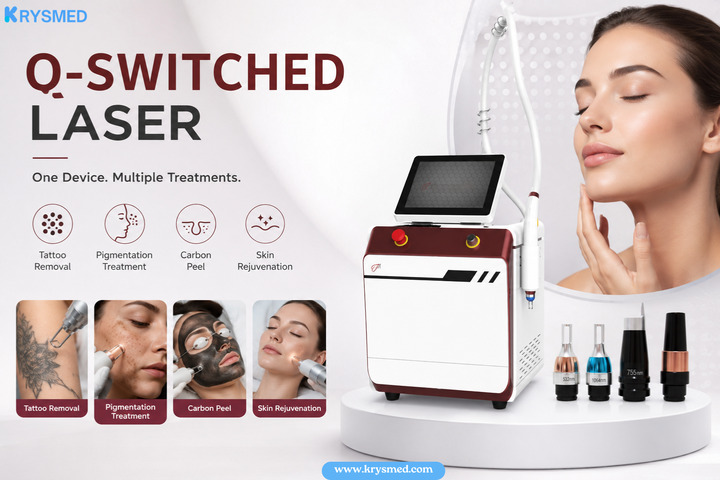
Many aesthetic clinics want to offer more treatments without investing in multiple expensive devices. This is why Q-Switched laser machines remain popular for services like tattoo removal, pigmentation treatment, carbon peel, and skin rejuvenation, helping clinics attract more clients while keeping operating costs manageable. With one versatile platform, clinics can expand treatment services naturally and create more repeat business opportunities.
1. What Is a Q-Switched Laser?
A Q-Switched laser is a popular aesthetic device used for tattoo removal, pigmentation treatment, carbon peel, and skin rejuvenation treatments in clinics and beauty salons.
How Q-Switched Technology Works
Q-Switched laser technology delivers very short high-energy pulses that break down pigment particles in the skin without causing excessive damage to surrounding tissue. This makes it suitable for treating tattoos, freckles, dark spots, acne marks, and uneven skin tone with relatively minimal downtime. Many clinics choose Q-Switched laser treatments because they are versatile and suitable for repeat sessions.
Common Types of Q-Switched Lasers
Nd:YAG 1064nm
The 1064nm wavelength is commonly used for tattoo removal and deeper pigmentation treatment, especially for darker skin types. It can target black, blue, and deeper pigment safely and is one of the most widely used wavelengths in aesthetic clinics.
532nm Wavelength
The 532nm wavelength is mainly used for superficial pigmentation concerns such as freckles, sun spots, and red or lighter-colored tattoo pigments. Many clinics combine 532nm and 1064nm treatments to expand their treatment options.
1320nm
The 1320nm wavelength is often used for carbon peel treatments and skin rejuvenation procedures. It helps improve oily skin, enlarged pores, and overall skin texture, making it popular in beauty salons and medi-spas.
755nm
The 755nm wavelength is effective for certain pigmented lesions and colored tattoo removal, especially green and blue pigments that can be harder to treat with other wavelengths. Some advanced Q-Switched laser machines include 755nm to support a wider range of treatments.
2. Popular Treatments Clinics Can Offer with Q-Switched Lasers
One reason many clinics still choose Q-Switched laser machines is because they can offer multiple high-demand treatments with a single device.
Tattoo Removal
Q-Switched laser tattoo removal remains one of the most requested treatments in many aesthetic clinics. It can help fade professional and amateur tattoos over multiple sessions, especially black and dark-colored pigments. Clinics often like tattoo removal services because clients usually require repeat visits.
Pigmentation and Dark Spot Treatments
Many clients look for treatments for freckles, sun damage, age spots, and post-acne pigmentation. Q-Switched laser pigmentation treatments can help break down excess pigment while keeping downtime relatively low. This makes the treatment popular among clients who want gradual skin improvement without long recovery periods.
Melasma Management
Melasma can be difficult to treat, so many clinics use Q-Switched laser treatments carefully as part of a long-term skin management plan. Proper settings and realistic expectations are important, especially for clients with sensitive or darker skin types.
Carbon Peel Treatments
Q-Switched laser carbon peel treatments are popular for oily skin, enlarged pores, acne-prone skin, and dull complexions. Many clients like this treatment because it can leave the skin looking cleaner, smoother, and brighter with minimal downtime.
Skin Rejuvenation
Some clinics also use Q-Switched laser treatments for overall skin rejuvenation and tone improvement. Clients often choose these treatments to improve uneven skin texture, mild acne marks, and tired-looking skin without invasive procedures.
| Treatment | Key Benefits / Uses | Why Clinics Offer It |
|---|---|---|
| Tattoo Removal | Fades black & dark tattoo pigments over multiple sessions | High demand, repeat visits, strong package sales |
| Pigmentation & Dark Spots | Treats freckles, sun spots, age spots, acne marks | Popular low-downtime skin correction treatment |
| Melasma Management | Helps manage stubborn pigmentation issues | Long-term treatment plan required, careful protocols |
| Carbon Peel | Improves oil control, pores, and skin brightness | Fast visible results, minimal downtime |
| Skin Rejuvenation | Improves skin texture, tone, and dullness | Non-invasive and suitable for most clients |
3. Why Q-Switched Lasers Help Clinics Expand Services
Q-Switched laser machines are popular in aesthetic clinics because they allow one device to cover multiple high-demand treatments like tattoo removal, pigmentation removal, carbon peel, and skin rejuvenation, making it easier for clinics to expand their service menu without large extra investment.
Multiple Treatments with One Device
A Q-Switched laser is not limited to just one service, which means clinics can treat tattoos, dark spots, acne marks, and skin texture issues using the same machine. This helps clinics build a more complete treatment menu without buying several different devices.
Easier to Attract Different Types of Clients
Because Q-Switched laser treatments cover so many skin concerns, clinics can attract a wider range of clients, from tattoo removal patients to pigmentation and anti-aging clients. This naturally increases daily patient flow and improves clinic visibility in a competitive market.
Encourages Repeat Visits and Treatment Packages
Most Q-Switched laser treatments require multiple sessions to achieve visible results, especially for tattoo removal and pigmentation correction. This makes it easier for clinics to sell treatment packages and build long-term client relationships instead of one-time visits.
4. What Clinics Should Consider Before Buying a Q-Switched Laser
Before investing in a Q-Switched laser machine, clinics should look beyond the price and focus on real treatment performance, stability, and whether the device can reliably support services like tattoo removal, pigmentation treatment, and carbon peel in daily clinical use.
Energy Stability and Treatment Consistency
For Q-Switched laser treatments, stable energy output is very important because inconsistent pulses can affect results and client satisfaction. A good machine should deliver steady performance for long-term use in busy aesthetic clinics.
Training and Treatment Support
Even with a good Q-Switched laser machine, proper training is essential to achieve safe and effective results. Clinics should choose suppliers that provide clear treatment protocols for different applications such as melasma, carbon peel, and tattoo removal.
Matching the Machine to Your Clinic Goals
Not every clinic needs the same setup, so it’s important to choose a Q-Switched laser based on your target clients and treatment focus. For example, clinics focused on pigmentation treatment may prioritize wavelength options, while tattoo removal clinics may focus more on power and stability.
Final Thoughts
Q-Switched laser technology remains a practical and reliable option for aesthetic clinics that want to expand treatment services without overcomplicating their equipment setup. From tattoo removal and pigmentation treatment to carbon peel and skin rejuvenation, it allows clinics to meet everyday client needs with one versatile platform.
For many clinics, the real value of a Q-Switched laser is not just the technology itself, but the ability to build a stable treatment menu, attract different types of clients, and generate repeat business through multi-session treatments.
Ready to Expand Your Clinic Treatment Services with Q-Switched Laser?
If you are looking to add high-demand treatments like tattoo removal, pigmentation treatment, carbon peel, and skin rejuvenation to your clinic, a Q-Switched laser can be a practical and cost-effective solution to grow your business and attract more clients. For more details, pricing, or machine options, please contact Krysmed.
Our Contact
Ready to Elevate Your Business with Krysmed?
Let’s discuss your needs and find the best solution for your business. Our experts are here to provide personalized recommendations tailored to your business needs.
-
Call For Inquiry
-
Send Us Email
info@krysmed.com
Get A Custom Quote Now!
We value your privacy and guarantee a prompt, professional reply.
 WhatsApp
 info@krysmed.com
 +86 19867944875