

News
April 30, 2026

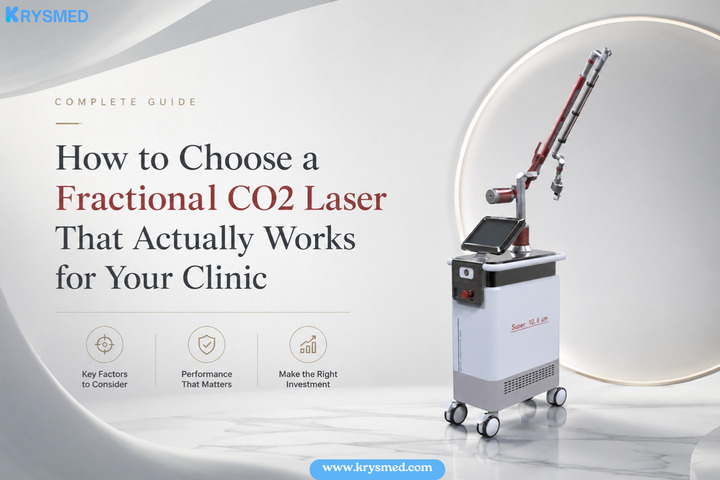
How to Choose a Fractional CO2 Laser That Actually Works for Your Clinic
Many clinics invest in a fractional CO2 laser expecting strong results, but end up struggling with low client demand, complicated settings, or slow ROI. With so many options on the market, choosing the right CO2 laser machine for your clinic isn’t just about price — it’s about finding something that actually works in real treatments. In this guide, we’ll break down how to choose a CO2 laser for skin resurfacing that delivers results your clients can see and a return your business can feel.
1. What Is a Fractional CO2 Laser (And Why Clinics Still Use It in 2026)
In simple terms, a fractional CO2 laser is still one of the most effective tools for real skin resurfacing results in clinics today.
What Does a Fractional CO2 Laser Actually Do?
A CO2 laser for skin resurfacing works by creating tiny controlled injuries in the skin to trigger collagen production. This helps improve acne scars, wrinkles, enlarged pores, and overall skin texture. It’s one of the few treatments where clients can clearly see before-and-after results.
Why Clinics Still Use CO2 Laser Machines in 2026
Even with newer technologies, a CO2 laser machine for clinic use remains popular because the results are stronger and more noticeable. Clients are often willing to pay more for treatments that actually work. That’s why it’s still a high-ticket, high-demand service in many clinics.
What Makes It Different from Other Devices?
Compared to IPL or RF, a fractional CO2 laser goes deeper and delivers more dramatic results. The trade-off is downtime, which means proper consultation is important. But for the right clients, the results are worth it — and that’s why clinics keep offering it.
2. Why Some CO2 Laser Machines Don’t Work Well in Clinics
On paper, many fractional CO2 laser machines look similar — but in real clinic use, the difference becomes obvious very quickly.
Low Power = Weak Results
Some CO2 laser machines for clinic use simply don’t have enough power to treat deeper concerns like acne scars. The treatment feels “safe,” but clients don’t see real improvement. And if results aren’t visible, they won’t come back or recommend you.
Downtime That Scares Clients Away
If the settings aren’t well balanced, clients may experience longer downtime than expected. For many, that’s a dealbreaker — especially if they have work or social commitments. So even if you have a CO2 laser for skin resurfacing, clients may avoid booking it.
Poor Support After Purchase
Some clinics struggle not because of the machine, but because there’s no real support. No training, slow responses, and no clear guidance when issues come up. That’s when a “good deal” on a fractional CO2 laser price turns into a costly mistake.
3. Things to Check Before You Buy a Fractional CO2 Laser
Before you invest in a fractional CO2 laser, it’s not just about specs on paper — it’s about how the machine actually performs in daily clinic work.
Power and Energy Output
This is what really determines whether your CO2 laser for skin resurfacing can deliver visible results. If the power is too low, treatments will feel mild but won’t improve deeper scars or wrinkles. Strong, stable energy output is key if you want clients to see real change.
Spot Size and Precision
Different treatment areas require different levels of precision. A good CO2 laser machine for clinic use should allow you to adjust spot size easily for areas like under-eyes or acne scars. Better control means better results and safer treatments.
Downtime vs Results Balance
Not every client is willing to accept long recovery times. The right fractional CO2 laser should give you flexibility to adjust settings based on client needs. This helps you balance visible results with manageable downtime.
Training and After-Sales Support
Even the best machine needs proper guidance. Make sure the supplier offers training, support, and quick responses when needed. Good support makes a big difference in how well your fractional CO2 laser performs long-term.
| Key Factor | What to Check |
|---|---|
| Power Output | Strong & stable energy |
| Spot Size | Adjustable precision |
| Downtime | Balance results & recovery |
| Ease of Use | Simple interface / presets |
| Training & Support | Reliable after-sales help |
5. Will a CO2 Laser Machine Actually Make Money for Your Clinic?
A fractional CO2 laser can be very profitable — but only if it’s used properly and fits your clinic’s client base.
Treatment Pricing and Profit Potential
A CO2 laser for skin resurfacing is usually a high-ticket treatment, often priced higher than IPL or RF. Even a few clients per week can generate solid revenue. That’s why many clinics see it as a strong income stream.
How Fast Can You Get Your Investment Back?
The return depends on your pricing, client flow, and how confident your team is with the machine. A good CO2 laser machine for clinic use with visible results makes it easier to get repeat bookings.
In many cases, clinics can recover the fractional CO2 laser price within a few months.
What Makes the Difference Between Profit and Loss
It’s not just the machine — it’s how you use it. Clinics that do proper consultations and set realistic expectations tend to get better results and more referrals. A reliable fractional CO2 laser combined with good communication is what really drives ROI.
6. Who Should (and Shouldn’t) Buy a Fractional CO2 Laser
A fractional CO2 laser can be a great investment — but it’s not the right fit for every clinic.
Who Should Buy a Fractional CO2 Laser
Clinics that already offer skin treatments and want stronger, more visible results from a CO2 laser for skin resurfacing. If your clients are asking about acne scars, wrinkles, or texture, this is a natural upgrade. It’s especially suitable for clinics ready to offer higher-value treatments and build long-term client results.
Who Should Think Twice Before Buying
If your clinic mainly focuses on basic treatments or low-cost services, a CO2 laser machine for clinic use may be harder to position. Also, if you don’t have time for consultation or client education, results may not translate into repeat business. Without the right setup, even a good fractional CO2 laser can sit unused.
A Simple Reality Check
Before looking at the fractional CO2 laser price, think about your clients and your business model. Do you have the right audience for this type of treatment? Choosing a machine that fits your clinic is always more important than just choosing a “popular” one.
7. Conclusion
At the end of the day, choosing a fractional CO2 laser isn’t about picking the most expensive or the most popular option. It’s about finding a CO2 laser machine for your clinic that delivers real results, is easy to use, and fits your client base. Focus on what actually works in daily treatments — that’s what brings results, repeat clients, and real ROI.
Ready to add a fractional CO2 laser to your clinic?
Contact Krysmed to get real treatment results, training support, and help choosing the right CO2 laser machine for your clinic that fits your business.
FAQ
1. How painful is a fractional CO2 laser treatment?
Most clients feel a hot prickling sensation during treatment, but it is generally manageable with numbing cream. The comfort level also depends on the settings of the fractional CO2 laser and the treatment area.
2. How long does downtime usually take after CO2 laser?
Downtime can range from 3 to 10 days depending on the strength of the CO2 laser for skin resurfacing used. Stronger settings give better results but may require slightly longer recovery.
3. How many sessions are needed for visible results?
Many clients see improvement after 1 session, but for deeper acne scars or wrinkles, 2–4 sessions with a fractional CO2 laser machine are usually recommended.
4. Can all skin types use CO2 laser treatments safely?
A fractional CO2 laser is generally more suitable for lighter skin types, but settings can be adjusted depending on skin condition and professional evaluation.
5. What is the difference between CO2 laser and other skin rejuvenation treatments?
Compared to IPL or RF, a CO2 laser machine for clinic use works deeper in the skin and delivers more dramatic resurfacing results, especially for scars and texture issues.
Our Contact
Ready to Elevate Your Business with Krysmed?
Let’s discuss your needs and find the best solution for your business. Our experts are here to provide personalized recommendations tailored to your business needs.
-
Call For Inquiry
-
Send Us Email
info@krysmed.com
Get A Custom Quote Now!
We value your privacy and guarantee a prompt, professional reply.
 WhatsApp
 info@krysmed.com
 +86 19867944875