

News
04
Jul
Ultherapy vs HIFU: What’s the Real Difference for Clinics and Distributors in 2026?
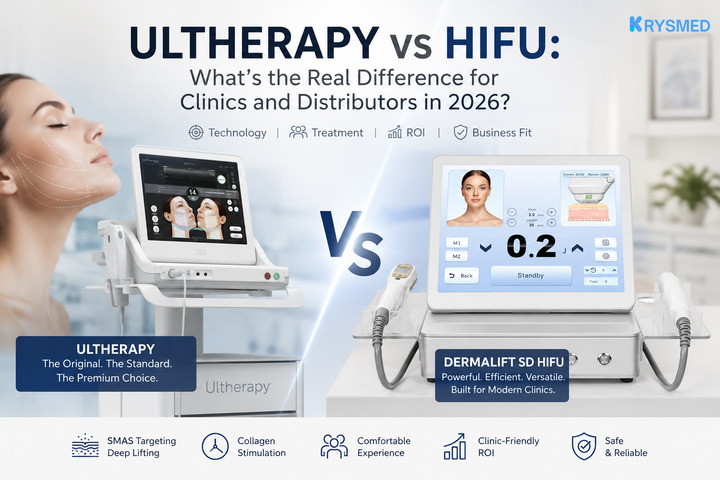
Ultherapy and HIFU are often mentioned together, but they are not the same thing. Ultherapy is a branded ultrasound lifting treatment, while HIFU is a broader category of focused ultrasound technology used for skin tightening and non-surgical lifting. In this guide, we’ll break down the real difference between them, why clinics and distributors compare them so often, and what to look for when choosing an ultrasound skin lifting machine in 2026.
Why “Ultherapy vs HIFU” Is Such a Common Question
Searches for Ultherapy vs HIFU, is Ultherapy HIFU, what is HIFU, and Ultherapy alternative are growing because the ultrasound lifting market has become much more crowded. Clinics are no longer choosing between only one or two recognizable systems. They are comparing brand recognition, treatment comfort, cartridge flexibility, workflow, supplier training, and long-term profitability.
At the same time, patients are more informed. Many already know the word Ultherapy, while others ask for HIFU skin tightening more generally. That creates a challenge for clinics: they need to understand the difference themselves before they can position treatments clearly and confidently.
For distributors, the challenge is similar. The more crowded the category becomes, the more important it is to explain the difference between a branded treatment platform and a broader HIFU device category without oversimplifying the technology or making misleading claims.
What Is HIFU?
HIFU stands for High-Intensity Focused Ultrasound. In aesthetic medicine, it refers to a non-invasive technology that delivers focused ultrasound energy to targeted tissue depths beneath the skin. The energy creates controlled thermal coagulation points in specific layers, stimulating the body’s natural wound-healing response and encouraging collagen remodeling over time.
In practical clinic terms, HIFU is commonly used for:
skin tightening
non-surgical facial lifting
jawline definition
neck tightening
lower-face contouring
collagen stimulation
in some systems, body contour support
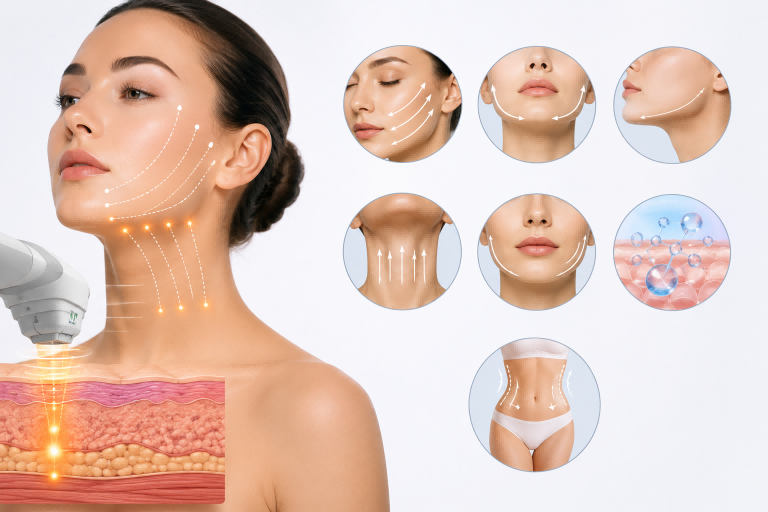
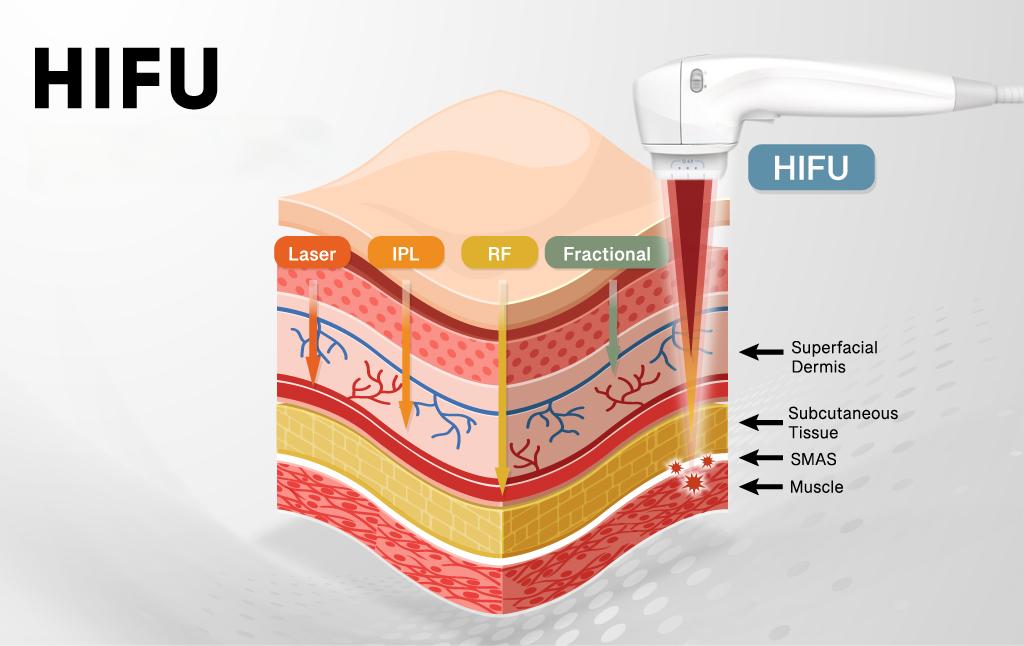
One reason HIFU became so popular is that it can target deeper support structures, including the SMAS layer (Superficial Musculoaponeurotic System), which is also the foundational layer addressed in facelift surgery. In aesthetic treatments, that makes HIFU especially attractive as a non-surgical facelift machine category for patients who want tightening and lifting without surgery or long downtime.
How HIFU works in simple terms
A HIFU handpiece delivers focused ultrasound energy at preset depths—commonly 1.5 mm, 3.0 mm, and 4.5 mm for facial treatments. The skin surface remains intact while thermal energy is delivered deeper within the tissue. Over the following weeks and months, collagen remodeling can gradually improve firmness, lift, and skin support.
Why the term “HIFU” can be confusing
In theory, HIFU is a technology term. In the beauty equipment market, however, it is often used much more broadly. Depending on the supplier, a clinic may see ultrasound lifting systems described as:
HIFU
MFU
MMFU
micro-focused ultrasound
ultrasound facelift machine
ultrasound skin tightening machine
That is one of the main reasons the Ultherapy vs HIFU conversation exists. Buyers are often comparing one branded ultrasound lifting platform against a wider category of ultrasound lifting machines marketed under slightly different terminology.
What Is Ultherapy?
Ultherapy is not the generic name for all HIFU machines. It is a branded ultrasound lifting treatment platform.
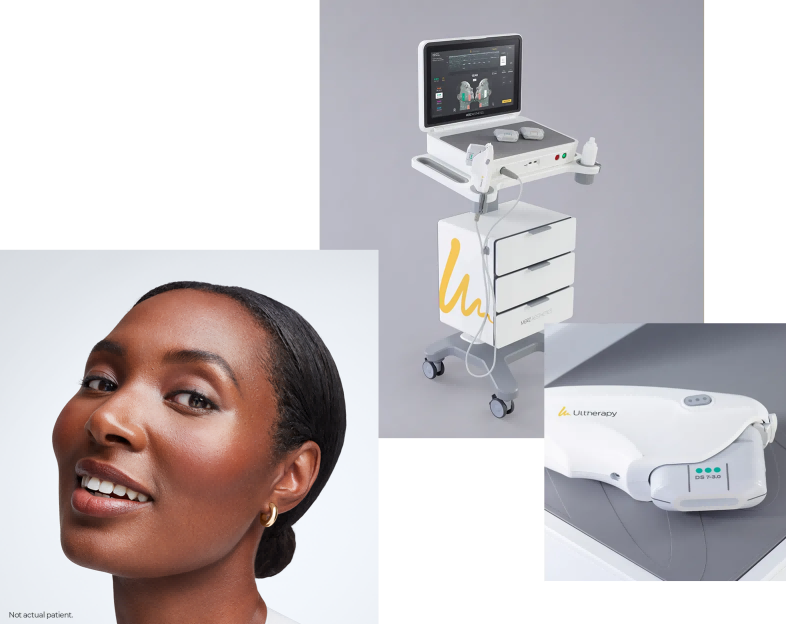
Ultherapy is commonly associated with micro-focused ultrasound with visualization (MFU-V). One of its best-known differentiators is the use of real-time ultrasound visualization, which allows practitioners to see tissue layers before or during energy delivery. In the market, Ultherapy is often positioned as a premium non-invasive lifting treatment for the face, neck, submental area, and décolletage.
So if a clinic asks, “Is Ultherapy HIFU?”, the most practical answer is:
Ultherapy is a branded ultrasound lifting system, while HIFU is a broader category term used for focused ultrasound lifting devices.
That means Ultherapy belongs to the same general ultrasound lifting conversation, but it is not a generic name for all HIFU platforms.
Why People Compare Ultherapy and HIFU So Often
When buyers search “Ultherapy vs HIFU”, they are usually not trying to debate terminology. They are trying to answer a business question:
Should I invest in a premium branded ultrasound lifting treatment, or choose a HIFU-based platform designed for similar skin-tightening and lifting goals?
There are four main reasons this comparison keeps coming up.
1. They target similar aesthetic concerns
Both Ultherapy and HIFU-based systems are associated with:
mild to moderate skin laxity
lower-face and jawline tightening
collagen stimulation
non-surgical lifting
neck rejuvenation
facial anti-aging programs
2. Clinics view them as alternative solutions in the same treatment category
A clinic owner may not care whether the technology label is technically perfect. What they care about is whether the machine fits their treatment menu, staff skill level, patient expectations, and pricing strategy.
3. The market uses “HIFU” loosely
Many suppliers use HIFU as a broad commercial term for ultrasound lifting devices, even when the underlying technology is described elsewhere as MFU or another focused-ultrasound variation.
4. Ultherapy has strong brand recognition
Ultherapy is one of the most recognizable names in non-surgical ultrasound lifting. That makes it a natural benchmark, even when clinics are really comparing it with a range of other HIFU machines for clinic use.
Ultherapy vs HIFU: The Real Difference at a Glance
The most useful way to compare them is not simply “brand vs no brand,” but branded treatment platform vs broader equipment category.
Ultherapy vs HIFU: Key Differences at a Glance
A practical comparison for clinics and distributors evaluating ultrasound lifting platforms.
| Comparison Point | Ultherapy | HIFU / Other Ultrasound Lifting Machines |
|---|---|---|
| What it is | A branded ultrasound lifting treatment platform | A broader category of focused ultrasound lifting machines |
| Technology language | Commonly associated with MFU-V and real-time visualization | Commonly marketed as HIFU, MFU, MMFU, or other ultrasound lifting terminology |
| Category position | Premium branded treatment system | Broad equipment category with multiple suppliers, designs, and price levels |
| Typical clinic perception | Strong brand recognition and premium treatment positioning | More flexible equipment category with wider pricing and feature variation |
| Main treatment goals | Lift, tighten, stimulate collagen, improve facial and neck laxity | Lift, tighten, stimulate collagen, support contouring and facial rejuvenation |
| Visualization during treatment | Key Point A key differentiator in Ultherapy’s positioning is real-time visualization | Many HIFU systems do not include real-time ultrasound visualization, although platform capabilities vary |
| Commercial comparison point | Brand equity, treatment positioning, clinical protocol, provider training | Investment cost, treatment flexibility, cartridge options, workflow, and supplier support |
| Price level | Premium Positioning Typically associated with premium treatment pricing and higher platform positioning | Wide range depending on supplier, features, market, and treatment model |
| Best fit | Clinics prioritizing branded treatment recognition and specific platform positioning | Clinics prioritizing flexibility, ROI, broader equipment choice, or tailored clinic workflows |
What Clinics and Distributors Should Actually Compare
This is where the conversation becomes more useful than a simple definition article. If you are evaluating an Ultherapy alternative or researching the best HIFU machine for clinics, these are the areas that matter most.
1. Treatment depth and intended indication
Not all ultrasound lifting systems are positioned in exactly the same way. Some focus mainly on lifting and tightening, while others are marketed with added emphasis on contouring, multi-depth planning, or broader treatment versatility.
Questions to ask:
What treatment depths are available?
Is the platform designed mainly for face and neck, or does it also support body indications?
Which indications are covered in the supplier’s training and protocols?
Is the system positioned for skin tightening, lifting, jawline contouring, or all of the above?
2. Visualization vs non-visualization workflow
Ultherapy’s most distinctive positioning point is its association with real-time visualization. For some clinics, that is important. For others, the bigger questions are workflow, training, and treatment economics.
Questions to ask:
Does the platform include visualization?
If not, how does the supplier support safe and practical treatment planning?
How much operator training is required for consistent treatment delivery?
Is the workflow realistic for daily clinic use?
3. Treatment comfort and patient experience
Patient comfort matters more than many comparison articles admit. Even if two systems both fall under “ultrasound lifting,” the treatment experience can vary depending on energy delivery design, treatment density, protocol, treatment speed, and operator technique.
Questions to ask:
How is treatment discomfort typically managed?
Is the treatment designed for shorter session times or higher shot efficiency?
Does the supplier provide realistic guidance on balancing comfort and efficacy?
Are expectations around tenderness, downtime, and gradual results clearly explained?
4. Speed and operator workflow
For clinics, one of the biggest real-world questions is not whether a machine can deliver energy—it is whether the treatment fits the pace of a working business.
Questions to ask:
How long does a full-face treatment typically take?
How easy is it to train new staff?
Are treatment protocols standardized enough for a growing team?
Does the machine support efficient cartridge changes, treatment planning, and follow-up scheduling?
5. Cost structure and ROI
A premium branded platform and a professional HIFU machine for clinic use may both deliver lifting treatments, but they can sit in very different business models.
Questions to ask:
What is the total platform investment?
How are consumables or cartridges priced?
What gross margin can a clinic reasonably expect per treatment?
Does the machine fit a premium boutique pricing strategy, or a broader medspa model?
6. Supplier support and after-sales
This is one of the most overlooked parts of the best HIFU machine for clinics discussion. A machine is only as valuable as the clinic’s ability to use it well and maintain it confidently.
Questions to ask:
Is there structured onboarding and treatment training?
Are there videos, manuals, and live support?
Can the supplier help with treatment positioning and patient education?
Is there a clear after-sales process for consumables, troubleshooting, and technical support?
A More Practical Buying Table for Clinics and Distributors
The table below reframes the comparison the way a clinic owner or distributor would actually use it.
Ultherapy vs HIFU: A Practical Buying Comparison for Clinics
Use this table to compare branded ultrasound lifting platforms with HIFU machines from a real clinic buying perspective.
| Buying Question | Ultherapy | HIFU Machines |
|---|---|---|
| Brand positioning | Premium Brand Strong for clinics wanting a recognized treatment name | Flexible Option Better for clinics that want more equipment choice and pricing flexibility |
| Real-time visualization | Key Differentiator Often a central part of Ultherapy’s positioning | Usually depends on the system; training and protocol matter more |
| Upfront investment | Higher Investment Premium positioning usually comes with higher upfront cost | Wider price range depending on features and supplier |
| Staff training | Training still matters for consistent results | Supplier training quality can be a major deciding factor |
| Treatment menu fit | Good for clinics centered on branded ultrasound lifting | Better for clinics wanting more pricing flexibility and customizable treatment packages |
| Patient demand | Some patients ask for Ultherapy by name | Patients often ask more generally for HIFU, skin tightening, or non-surgical lifting |
Is Ultherapy Better Than HIFU?
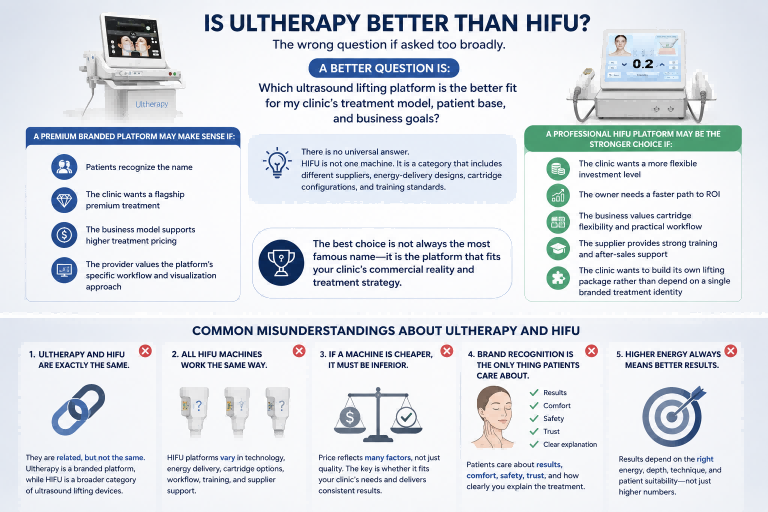
In other words, the best choice is not always the most famous name—it is the platform that fits your clinic’s commercial reality and treatment strategy.Common Misunderstandings About Ultherapy and HIFU
“Ultherapy and HIFU are exactly the same.”
Not exactly. They are related because both sit in the ultrasound lifting category, but Ultherapy is a specific branded platform while HIFU is a broader category term.
“All HIFU machines work the same way.”
No. HIFU platforms vary in energy delivery design, ergonomics, software, cartridge options, workflow, training quality, and supplier support. Comparing “HIFU” as if it were one single machine can lead to poor buying decisions.
“If a machine is cheaper, it must be inferior.”
Not necessarily. Price can reflect brand positioning, supplier model, market region, features, training package, or consumables. The more useful question is whether the device performs well for your clinic’s use case and whether the supplier can support you long-term.
“Brand recognition is the only thing patients care about.”
Patients care about results, comfort, safety, trust, and how clearly the clinic explains the treatment. A recognized brand can help marketing, but clinic experience and treatment delivery still matter.
What a Good HIFU Machine for Clinics Should Offer in 2026
If you are evaluating a HIFU skin tightening machine or an Ultherapy alternative, these are the features that matter most from a clinic and distributor perspective:
| Key Feature | Why It Matters for Clinics and Distributors |
|---|---|
| Stable and consistent energy delivery | The machine should be designed for reliable treatment performance across different facial zones and treatment sessions. |
| Practical cartridge options | Clinics need treatment depths that make sense for face and neck planning, and ideally a structure that can be adapted to different patient profiles. |
| Comfortable and efficient workflow | Treatment comfort, handpiece ergonomics, speed, and session planning all affect whether a machine becomes a profitable service or a machine that sits unused. |
| Strong supplier training | A clinic needs more than a device. It needs treatment guidance, practical protocols, and a supplier that can answer real clinical and operational questions. |
| Business-friendly treatment economics | A good machine should not only be clinically useful—it should also support healthy margins, repeatable treatment packages, and realistic pricing for the clinic’s market. |
| Clear positioning support for distributors | For distributors, a good HIFU platform should come with strong sales materials, treatment explanations, visuals, and enough product clarity to help clinics understand where the machine fits compared with premium branded alternatives. |
FAQ
Is Ultherapy the same as HIFU?
No. Ultherapy is a branded ultrasound lifting treatment platform, while HIFU is a broader category term used for focused ultrasound skin tightening and lifting systems.
Is Ultherapy a brand?
Yes. Ultherapy is a branded platform rather than a generic name for all ultrasound lifting machines.
What is HIFU used for in aesthetics?
HIFU is commonly used for skin tightening, facial lifting, collagen stimulation, jawline definition, neck rejuvenation, and non-surgical facelift-style treatments.
Why do people compare Ultherapy and HIFU?
Because both are associated with non-surgical skin lifting and tightening, and clinics often view them as alternative solutions for the same treatment demand.
Which is better for a clinic: Ultherapy or a HIFU machine?
It depends on the clinic’s budget, target patient profile, treatment positioning, and desired ROI. Some clinics prioritize premium branded treatment recognition, while others focus more on workflow flexibility, training support, and investment efficiency.
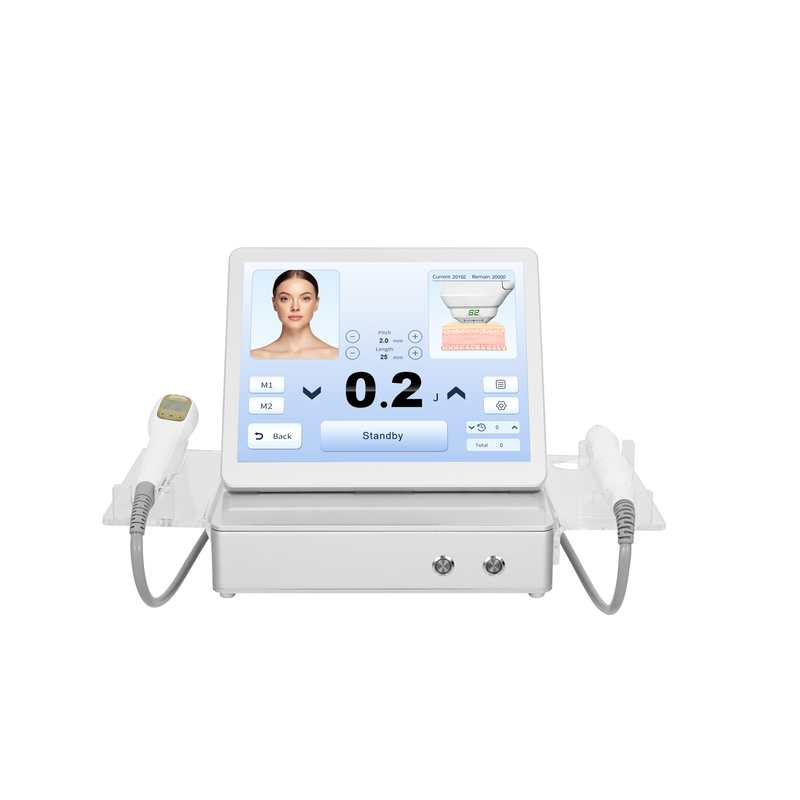
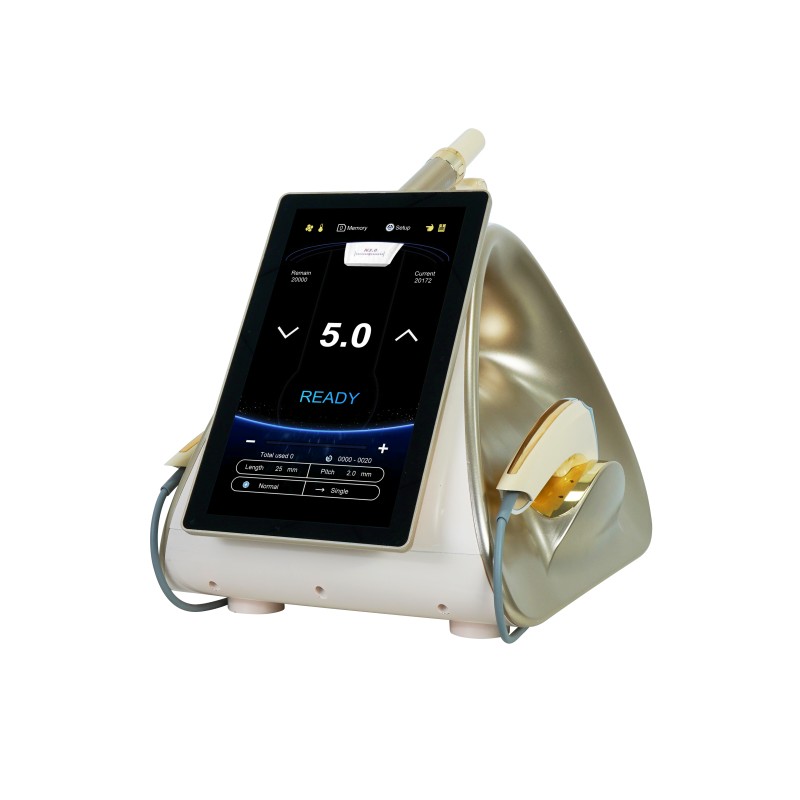
Is DermaLift SD HIFU an Ultherapy alternative?
It can be considered an alternative ultrasound lifting platform for clinics that want to offer non-surgical lifting and skin tightening without building their treatment strategy entirely around a premium branded treatment model. The right choice depends on the clinic’s business goals, treatment positioning, and patient profile.
Final Thoughts: The Right Comparison Is Bigger Than a Brand Name
The reason Ultherapy vs HIFU is such a common search is simple: clinics and distributors are trying to compare two ways of entering the same treatment category—premium branded ultrasound lifting versus broader HIFU-based ultrasound lifting platforms.
The most useful conclusion is not that one word is “right” and the other is “wrong.” It is that clinics should compare these systems with the same discipline they would use for any capital equipment purchase:
What treatment demand am I serving?
What patient experience do I want to offer?
How much training and support will my team need?
What investment model fits my business?
Which platform helps me build a profitable, repeatable lifting service?
If you answer those questions first, the Ultherapy vs HIFU decision becomes much clearer—and much more relevant to your clinic’s real goals.
Looking for a Professional HIFU Machine for Clinics?
If your clinic or distribution business is comparing Ultherapy vs HIFU and wants a more practical way to evaluate the category, focus on more than the brand name. Treatment workflow, patient comfort, cartridge flexibility, training, and long-term ROI all matter.
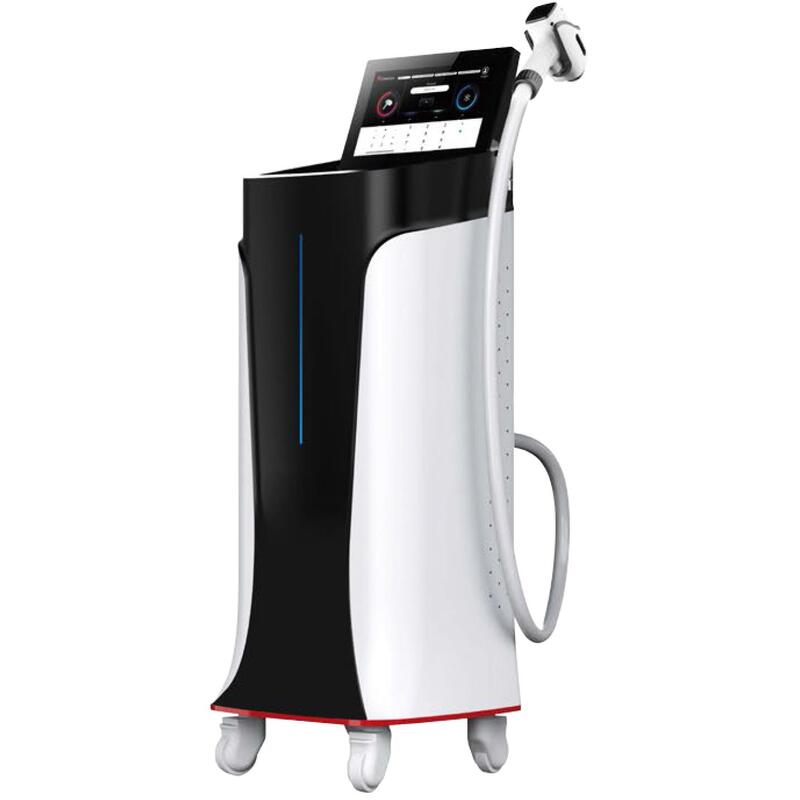
If you would like to learn more about Krysmed’s DermaLift SD HIFU and whether it fits your clinic’s treatment menu or distributor portfolio, contact the Krysmed team for product details, treatment information, and supplier support.
Our Contact
Ready to Elevate Your Business with Krysmed?
Let’s discuss your needs and find the best solution for your business. Our experts are here to provide personalized recommendations tailored to your business needs.
-
Call For Inquiry
-
Send Us Email
info@krysmed.com
Get A Custom Quote Now!
We value your privacy and guarantee a prompt, professional reply.
 WhatsApp
 info@krysmed.com
 +86 19867944875