

News
03
Jan
Why HIFU Remains a Gold Standard in Non-Surgical Skin Lifting
Many patients want visible skin lifting without surgery, needles, or long downtime. At the same time, clinics face the challenge of offering treatments that deliver reliable, long-lasting results. High-Intensity Focused Ultrasound(HIFU) addresses both needs, delivering precise energy to deep tissue, including the SMAS layer, for safe, effective, and natural lifting. This is why HIFU remains the gold standard in non-surgical skin lifting and trusted skin tightening technology for modern aesthetic clinics.
What Is HIFU and How Does It Work?
High-Intensity Focused Ultrasound (HIFU) is a non-invasive skin tightening technology designed to lift and firm the skin by delivering precisely focused ultrasound energy into targeted tissue layers beneath the surface. Unlike laser or radiofrequency treatments that primarily act on the epidermis or dermis, HIFU penetrates deeper structural layers without damaging the skin barrier.

How High-Intensity Focused Ultrasound Targets Deep Skin Structures
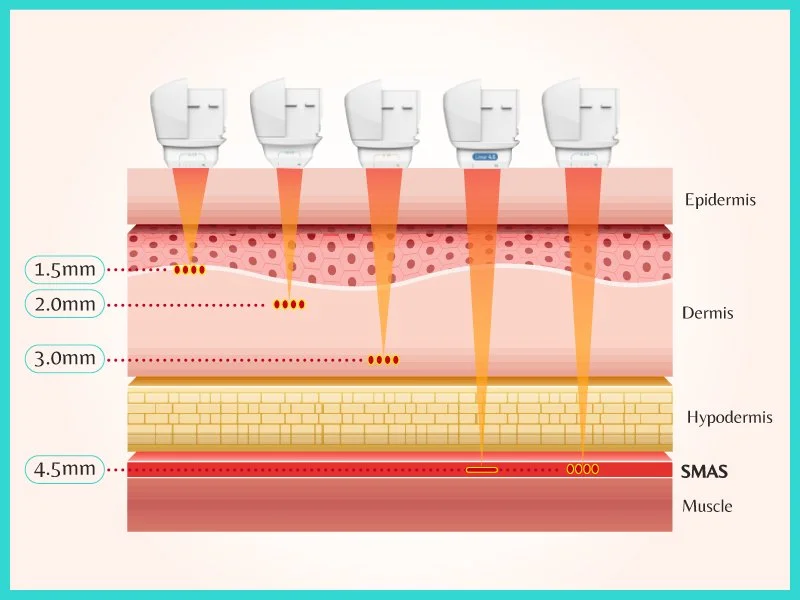
One of the defining advantages of HIFU technology is its ability to deliver energy with exceptional depth accuracy. Using focused ultrasound, the energy converges at predetermined depths below the skin surface, creating precise thermal zones while leaving surrounding tissue unaffected.
This selective energy delivery allows practitioners to treat multiple anatomical layers during a single session. As a result, HIFU skin tightening achieves both immediate tissue contraction and long-term collagen remodeling, addressing skin laxity more effectively than surface-based non-invasive treatments.
The Importance of SMAS Layer Stimulation in Non-Surgical Skin Lifting
The Superficial Musculoaponeurotic System (SMAS) is a key structural layer responsible for facial support and contour. In surgical facelifts, this layer is physically repositioned to achieve lifting effects. HIFU remains unique among non-invasive technologies because it can reach and stimulate the SMAS layer without incisions or downtime.

By targeting the SMAS, HIFU provides a level of lifting that goes beyond superficial skin tightening. This capability explains why HIFU continues to be recognized as a gold standard technology for non-surgical skin lifting, particularly for clinics seeking clinically meaningful and long-lasting results.
Why HIFU Differs from Other Non-Invasive Skin Tightening Technologies
Many non-invasive skin tightening technologies rely on heat diffusion from the skin surface downward, which limits depth precision and treatment intensity. In contrast, HIFU delivers energy from the outside in, allowing for controlled treatment at specific tissue depths.
This depth-selective approach reduces the risk of epidermal damage while maximizing lifting efficacy. For aesthetic professionals, this distinction is critical when choosing reliable skin tightening technology capable of producing consistent outcomes across different skin types and treatment areas.
Why HIFU Is Considered a Gold Standard Technology
In an aesthetic market driven by constant innovation, few technologies maintain long-term relevance. HIFU (High-Intensity Focused Ultrasound) continues to be regarded as a gold standard in non-surgical skin lifting because it is built on anatomical principles, not trends. Its effectiveness is rooted in precise energy delivery, depth accuracy, and predictable biological responses.
Rather than offering temporary surface tightening, HIFU addresses the structural causes of skin laxity. This capability allows clinics to deliver consistent lifting results while maintaining a strong safety profile—key reasons why HIFU remains a foundational skin tightening technology in professional practice.
Clinically Proven, Anatomy-Based Results
HIFU technology is designed to work in harmony with facial anatomy. By targeting specific tissue layers, including the dermis and the SMAS layer, HIFU initiates controlled thermal coagulation that stimulates collagen regeneration and tissue contraction.
Because this mechanism mirrors the lifting principles used in surgical procedures—without incisions or downtime—HIFU produces results that are both natural and progressive. This anatomy-based approach differentiates HIFU from many non-invasive face lifting technologies that rely solely on superficial heat diffusion.
Precision Energy Delivery and Depth Control
One of the defining characteristics of professional HIFU skin tightening systems is precise depth control. With multiple cartridge options, practitioners can accurately treat different anatomical areas and levels of tissue laxity.
This level of precision ensures that energy is delivered where it is most effective, reducing variability between treatments and improving overall consistency. For aesthetic clinics, predictable outcomes are essential, which is why HIFU continues to be trusted for non-surgical skin lifting across a wide range of indications.
Reliable Safety Profile for Professional Clinical Use
Safety is a critical factor in determining whether a technology can become a long-term standard. HIFU’s non-invasive nature, combined with controlled energy delivery, allows treatments to be performed with minimal downtime and a low risk of surface injury.
When performed using professional-grade devices and standardized protocols, HIFU treatments are suitable for various skin types and treatment areas. This balance between efficacy and safety has reinforced HIFU’s reputation as a dependable solution in modern aesthetic clinics.
Consistent Outcomes Across Different Patients and Indications
A true gold standard technology must perform reliably across diverse patient profiles. HIFU has demonstrated consistent effectiveness for facial lifting, jawline definition, neck tightening, and overall skin rejuvenation.
Because results are driven by collagen remodeling rather than temporary tissue swelling, improvements develop gradually and last longer. This consistency enhances patient satisfaction and supports HIFU’s continued adoption as a core non-invasive skin lifting treatment.
HIFU vs Other Non-Surgical Skin Lifting Technologies
While multiple non-invasive skin tightening technologies are available, HIFU remains unique due to its ability to deliver precise energy to deep tissue layers. Below is a comparison of HIFU with other popular non-surgical skin lifting methods, highlighting key differences in mechanism, results, and clinical application.
| Technology | Mechanism | Target Depth | Typical Results | Downtime | Key Advantage |
|---|---|---|---|---|---|
| HIFU (High-Intensity Focused Ultrasound) | Focused ultrasound energy creates thermal coagulation points | Dermis & SMAS layer (deep tissue) | Lifting, firming, collagen remodeling, natural results | Minimal | Precise depth control, long-lasting, clinically proven |
| RF (Radiofrequency) | Electrical energy heats dermis | Superficial to mid-dermis | Skin tightening, mild lifting | Minimal | Good for skin texture improvement, surface firming |
| Ultrasound Therapy (Non-Focused) | Broad ultrasound energy | Superficial dermis | Mild tightening | Minimal | Non-invasive, safe, limited lifting |
| Laser Skin Tightening | Light energy heats dermis | Epidermis to mid-dermis | Skin rejuvenation, mild tightening | 1–3 days | Improves texture, pigmentation, collagen stimulation |
| EMS / Microcurrent Lifting | Electrical stimulation of facial muscles | Muscle layer (surface) | Temporary lift, muscle toning | None | Enhances facial contour, non-invasive, adjunct therapy |
Why Clinics Continue to Invest in HIFU Technology
Clinics continue to choose HIFU devices because they provide predictable results, high patient satisfaction, and strong ROI in non-surgical skin lifting. Compared with other skin tightening technologies, HIFU combines deep tissue lifting with minimal downtime, making it a cost-effective and high-demand solution for aesthetic clinics.
| Factor | HIFU | Other Non-Surgical Skin Lifting Technologies |
|---|---|---|
| Clinical Effectiveness | Targets SMAS & dermis for true lifting and collagen remodeling | Mostly surface or mid-dermis; mild tightening |
| Patient Satisfaction | Natural, gradual results; high repeat bookings | Temporary or limited lifting results |
| Treatment Versatility | Face, neck, jawline, and other areas | Often single-purpose or limited application |
| Downtime | Minimal | Minimal to 3 days depending on technology |
| Return on Investment (ROI) | High, due to strong demand and minimal consumables | Moderate, lower patient retention for single-purpose treatments |
| Professional Credibility | Recognized as gold standard; enhances clinic reputation | Less authoritative; may require combination with other treatments |
Choosing the Right HIFU Device for Clinical Use
Selecting the right HIFU device is critical for clinics aiming to deliver consistent, safe, and effective non-surgical skin lifting treatments. Not all HIFU systems are equal—differences in energy stability, cartridge depth, safety features, and operator training can significantly affect clinical outcomes. Choosing a professional-grade system ensures reliable results, patient satisfaction, and a strong return on investment.
Key Factors to Consider When Selecting a HIFU Device
| Factor | Importance | What to Look For |
|---|---|---|
| Energy Stability | Ensures consistent tissue coagulation | Even energy output across all treatment depths; avoids overheating or under-delivery |
| Depth Accuracy | Critical for effective SMAS lifting | Multiple cartridge options (1.5mm, 3mm, 4.5mm, 8mm); precise depth targeting |
| Safety Features | Minimizes risk of injury | Real-time monitoring, automatic shutoff, skin contact sensors |
| Device Certifications | Guarantees clinical compliance | CE, ISO, FDA approvals if available |
| Ease of Use | Reduces training time and operational errors | Intuitive interface, preset treatment protocols |
| Training and Support | Improves treatment outcomes | Manufacturer-provided training, manuals, videos, and online support |
| Maintenance and Consumables | Ensures long-term usability | Availability of cartridges, warranty coverage, replacement parts |
Recommended Krysmed HIFU Devices for Clinical Use
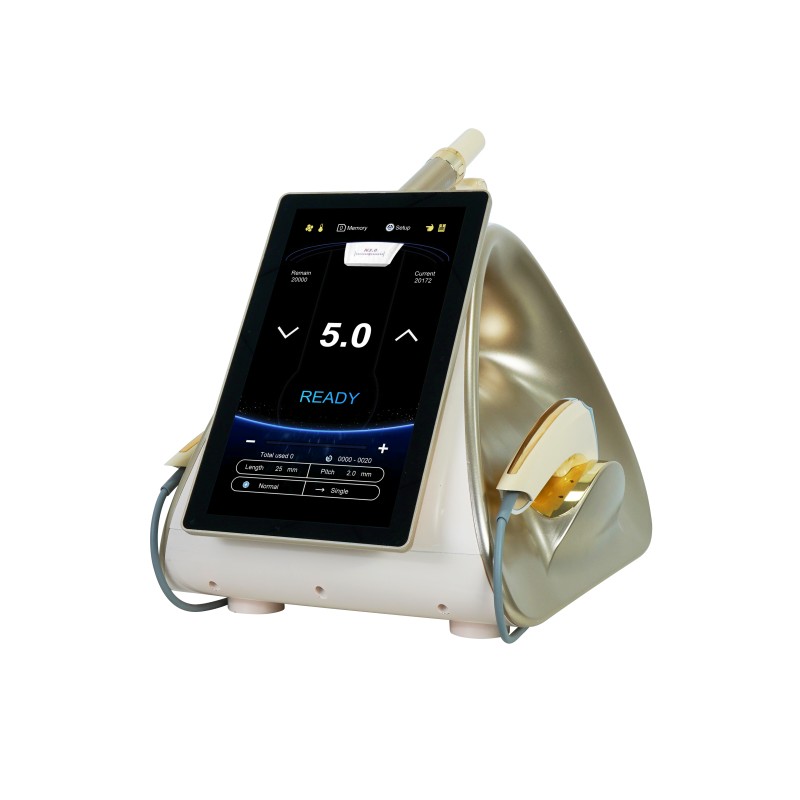
For aesthetic clinics seeking professional-grade HIFU technology for non-surgical skin lifting and skin tightening, Krysmed offers a range of devices tailored to different treatment needs and clinical settings. Each model combines precise energy delivery, multi-depth targeting, and advanced features to ensure effective and safe results for both facial and body applications.
| Model | Key Strengths | Applications |
|---|---|---|
| DermaLift SD HIFU | Dual MFU + RF synergy for enhanced collagen activation and precise energy control | Face & body lifting, skin tightening, rejuvenation with faster treatment time and adjustable depth |
| DermaLift HIFU MPT | Micro & Macro Focused Ultrasound (MMFU) with precise TCP energy delivery | Skin tightening, wrinkle reduction, body contouring using multi-depth cartridges |
| DermaLift 7D HIFU | Multi-layer focused ultrasound targeting multiple skin depths in one session | Facial and body lifting, elasticity improvement, fine-line reduction |
| DermaLift HIFU Pro | All-in-one 7D system with added vaginal rejuvenation and fat reduction functions | Facial lifting, body sculpting, and intimate wellness treatments |
| DermaLift HIFU Max | High-performance multifunction platform combining HIFU with additional technologies | Comprehensive clinic protocols including lifting, contouring, and tissue remodeling |
| DermaLift 7D HIFU Compact | Advanced MMFU technology in a compact tabletop design | Facial and full-body contouring for space-efficient clinics with precise multi-layer depth control |
Conclusion
HIFU remains the gold standard for non-surgical skin lifting and skin tightening technology. By targeting deep tissue layers like the SMAS, it delivers safe, effective, and long-lasting lifting results. Clinics using HIFU can enhance patient satisfaction, expand treatment offerings, and increase revenue.
Ready to Upgrade Your Clinic with HIFU?
Provide your patients with professional, results-driven non-surgical skin lifting treatments. Explore Krysmed HIFU devices today and bring advanced skin tightening technology to your clinic. Contact Krysmed now to find the perfect solution.
FAQ – HIFU and Non-Surgical Skin Lifting
Is HIFU suitable for all skin types?
Yes. Professional HIFU systems are safe for a wide range of skin types. Because the energy targets deep tissue layers rather than the surface, the risk of pigmentation changes or skin irritation is minimal.
How long do HIFU results last?
Results from HIFU treatments are gradual and natural, typically lasting 12–24 months depending on patient age, skin condition, and lifestyle. Collagen remodeling continues for several months after the session, enhancing long-term skin lifting effects.
How is HIFU different from RF or laser skin tightening?
HIFU delivers focused ultrasound energy to precise depths, including the SMAS layer, achieving true lifting. RF and laser treatments primarily affect the superficial or mid-dermis, offering skin tightening but less structural lift.
How many sessions are usually needed with HIFU?
Most patients see visible lifting after a single session, but some clinics recommend 1–2 additional sessions for enhanced results. Treatment plans are tailored based on skin laxity and patient goals.
Is HIFU safe for professional clinic use?
Yes. When performed using certified professional-grade HIFU devices and proper protocols, treatments are non-invasive, have minimal downtime, and maintain a strong safety profile.
Can HIFU be combined with other treatments?
Absolutely. HIFU can be safely combined with RF, laser, or EMS therapies to enhance non-surgical skin lifting and overall skin rejuvenation, providing a layered approach for optimal results.
Our Contact
Ready to Elevate Your Business with Krysmed?
Let’s discuss your needs and find the best solution for your business. Our experts are here to provide personalized recommendations tailored to your business needs.
-
Call For Inquiry
-
Send Us Email
info@krysmed.com
Get A Custom Quote Now!
We value your privacy and guarantee a prompt, professional reply.
 WhatsApp
 info@krysmed.com
 +86 19867944875