

News
08
Mar
HIFU Jawline Lifting: Depth Selection and Line Distribution Guide
A well-defined jawline is a key feature of a youthful facial contour, but aging and collagen loss can gradually lead to sagging and reduced definition. HIFU jawline lifting has become a popular non-surgical treatment for tightening skin and improving jawline shape. However, achieving optimal results depends on proper HIFU depth selection and accurate line distribution during treatment. This guide explains how to plan HIFU jawline treatments for safe and effective lifting outcomes.
1. What Is HIFU and How Does It Work?
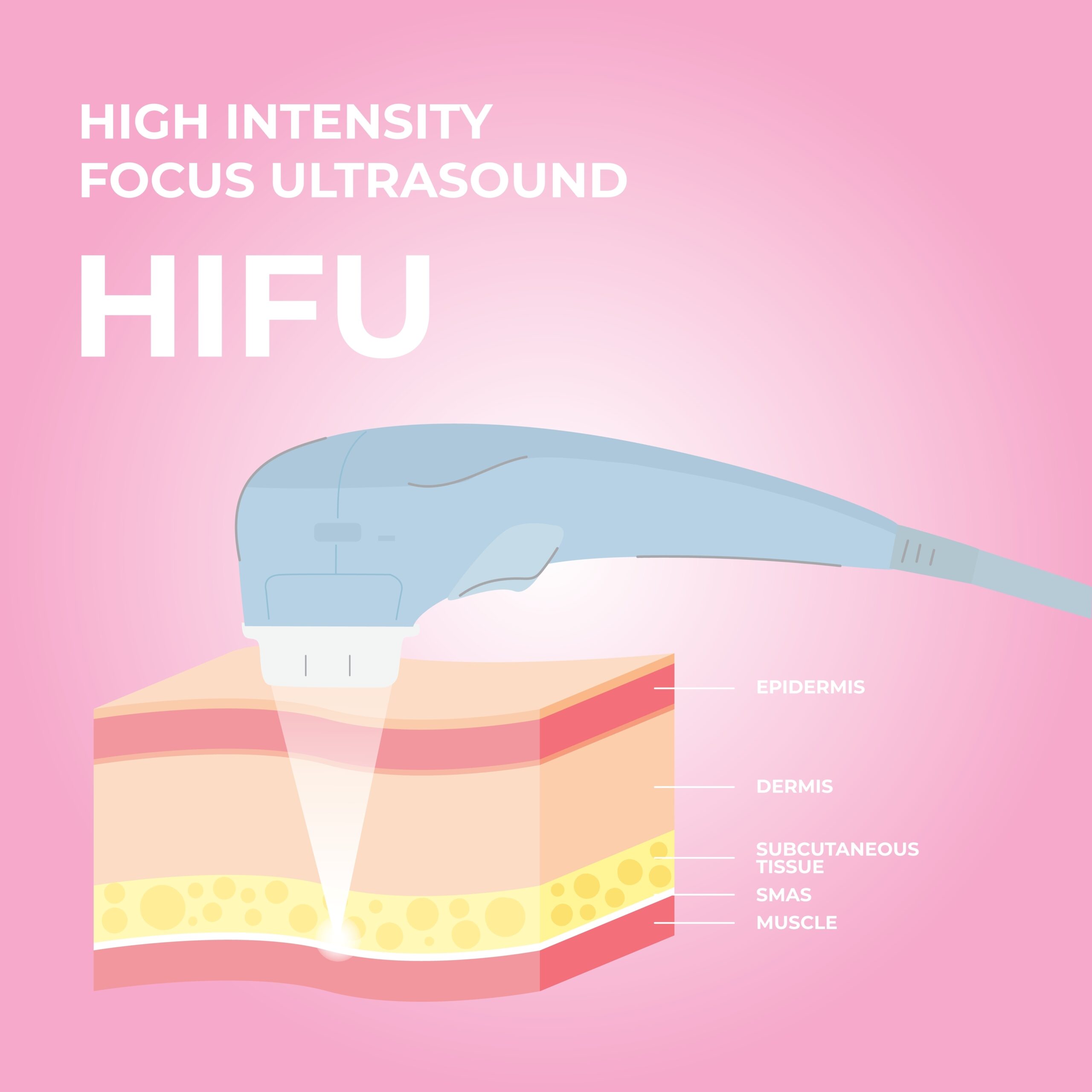
HIFU stands for High-Intensity Focused Ultrasound, a technology that delivers focused ultrasound energy into specific layers of the skin. Instead of affecting the skin surface, the energy penetrates deeper tissue layers where structural support is located.
Why HIFU Is Popular for Non-Surgical Lifting
Unlike surgical facelifts, HIFU treatments are non-invasive and require minimal downtime. The treatment stimulates collagen production and tissue tightening, gradually improving skin firmness and facial contours over time.
How HIFU Targets Different Skin Layers
Different HIFU cartridges are designed to reach different depths in the skin. By selecting the appropriate depth, practitioners can target areas such as the deep dermis or SMAS layer, which are responsible for lifting and structural support.
2. Why the Jawline Is an Ideal Area for HIFU Treatment
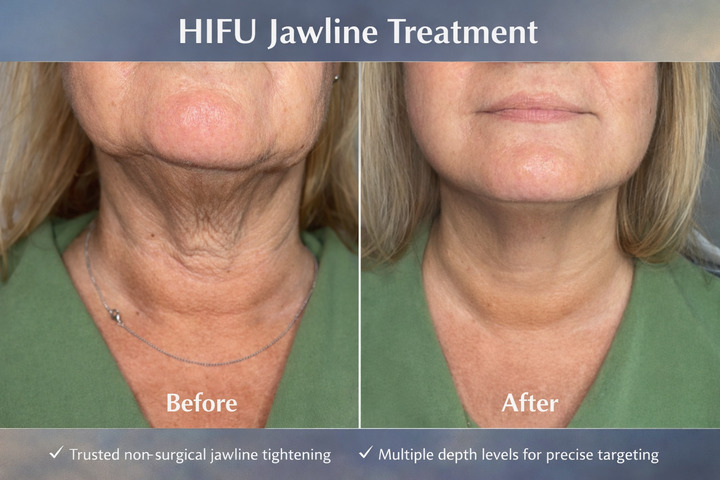
The jawline is a key structural area that defines facial contour and balance. Because skin laxity and tissue descent often appear early in this region, HIFU jawline treatment can effectively target the deeper support layers responsible for lifting. With proper HIFU depth selection, practitioners can improve jawline definition and achieve noticeable tightening results.
Common Causes of Jawline Sagging
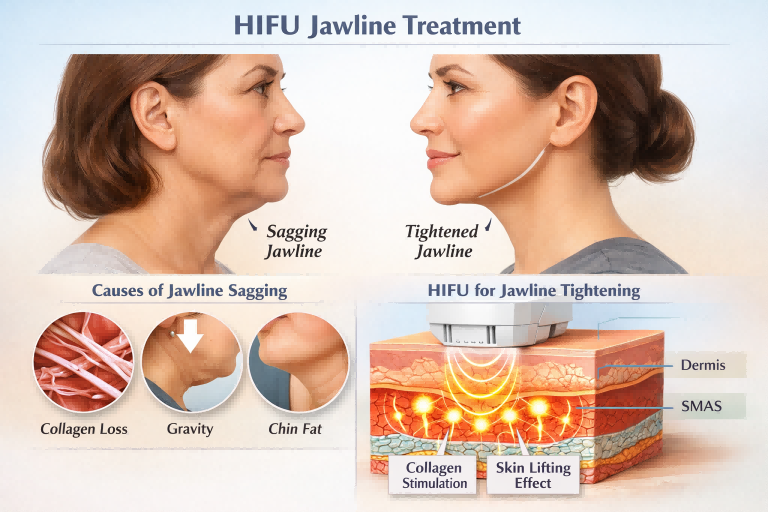
Several factors contribute to jawline changes, including collagen loss, gravity, and mild fat accumulation under the chin. As the skin loses elasticity over time, the jawline may appear softer or less defined. These structural changes make jawline tightening treatments increasingly popular in aesthetic clinics.
How HIFU Helps Improve Jawline Definition
By delivering focused ultrasound energy to deeper tissue layers, HIFU treatment stimulates collagen remodeling and tissue contraction. This process gradually tightens loose skin and improves structural support beneath the jawline. As collagen production increases, the jawline contour becomes firmer and more defined.
3. Choosing the Right HIFU Depth for Jawline Lifting
Selecting the correct HIFU cartridge depth is essential for achieving effective jawline lifting results. Different depths target specific skin layers, allowing practitioners to deliver energy where structural support and collagen remodeling occur. A layered approach using multiple depths is commonly used in HIFU jawline treatments to enhance tightening and contour definition.
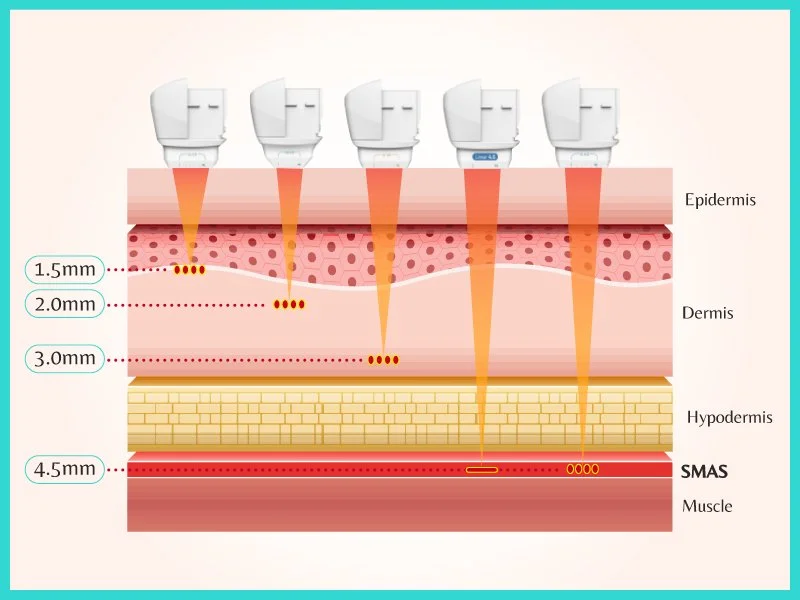
4.5 mm Depth – Structural Lifting Support
The 4.5 mm HIFU cartridge targets deeper tissue layers, including the SMAS layer that provides structural support for the face. Delivering energy at this depth helps create the primary lifting effect during HIFU jawline lifting treatments. It is often used as the foundation layer for improving jawline firmness and contour.
3.0 mm Depth – Collagen Stimulation
The 3.0 mm cartridge focuses on the deep dermal layer where collagen regeneration occurs. This depth helps stimulate collagen production and improve skin elasticity around the jawline area. As collagen remodeling progresses, the skin gradually appears tighter and smoother.
1.5 mm Depth – Surface Skin Tightening
The 1.5 mm HIFU cartridge targets the superficial dermis closer to the skin surface. It is commonly used to refine skin texture and enhance overall tightening in the treatment area. This depth can complement deeper layers to create more balanced HIFU jawline tightening results.
4. Understanding Line Distribution in HIFU Jawline Treatments
In HIFU jawline treatments, line distribution refers to how ultrasound energy is applied across the treatment area. Proper HIFU line distribution ensures that energy is delivered evenly, helping create balanced lifting and tightening effects. A well-planned pattern also improves treatment safety and consistency.
Why Line Distribution Matters
The pattern and number of HIFU treatment lines determine how evenly ultrasound energy is delivered across the jawline area. Consistent spacing helps create uniform thermal points within the targeted skin layers. This balanced energy distribution is important for achieving smooth and natural jawline lifting results.
Creating a Balanced Treatment Pattern
Clinicians often divide the jawline into several zones to ensure that energy is distributed evenly. This structured approach helps maintain symmetry and prevents uneven lifting effects. Proper planning also allows practitioners to optimize HIFU treatment efficiency.
Avoiding Excessive Overlapping
Proper spacing between treatment lines helps prevent unnecessary heat buildup in the skin. Excessive overlapping may increase discomfort and reduce treatment precision. Maintaining consistent spacing supports safer and more controlled HIFU jawline tightening treatments.
5. Typical HIFU Jawline Treatment Workflow
A structured HIFU jawline treatment workflow helps ensure consistent and predictable lifting results. Proper planning, correct HIFU depth selection, and controlled energy delivery are key steps for effective treatments. Following a clear process also improves treatment safety and patient comfort.
Treatment Planning and Skin Assessment
Before starting a HIFU jawline lifting treatment, practitioners assess skin laxity, fat distribution, and overall facial structure. This evaluation helps determine the appropriate cartridge depth and number of treatment lines. A personalized treatment plan ensures better and more natural-looking results.
Layered Treatment Approach
Many clinics perform HIFU treatments using multiple cartridge depths during the same session. This layered approach allows practitioners to target both deep structural layers and the dermis for collagen stimulation. Combining different depths can enhance overall jawline tightening and lifting effects.
Treatment Duration and Patient Experience
A typical HIFU jawline treatment usually takes around 20 to 40 minutes depending on the device and treatment plan. Patients may feel mild warmth or tingling sensations as ultrasound energy is delivered to the skin layers. Most people can resume normal activities shortly after the procedure since the treatment requires minimal downtime.
6. Safety Considerations for Jawline HIFU
Although HIFU jawline treatments are non-invasive, proper technique and anatomical knowledge are essential for safe and effective results. Practitioners must carefully control HIFU depth selection and line distribution to avoid sensitive structures in the treatment area. Following correct protocols helps ensure both treatment safety and consistent lifting outcomes.
Understanding Facial Anatomy
A clear understanding of facial anatomy is important when performing HIFU jawline lifting. Certain areas near the jawline contain important nerves and blood vessels that should be avoided during treatment. Proper placement of treatment lines helps deliver energy safely while still achieving effective jawline tightening results.
Proper Device Settings and Training
Using appropriate HIFU energy settings and cartridge depths is essential for safe treatments. Practitioners should follow recommended device parameters and receive proper training before performing HIFU procedures. This helps ensure controlled energy delivery and improves the reliability of HIFU treatment outcomes.
7. Achieving Natural and Long-Lasting Jawline Results
Achieving natural results with HIFU jawline lifting depends on proper treatment planning and realistic expectations. By combining accurate HIFU depth selection with balanced line distribution, practitioners can create gradual and natural-looking improvements. Consistent treatment protocols also help maintain long-term jawline tightening results.
Gradual Collagen Remodeling
Unlike surgical procedures, HIFU treatment results develop gradually as the body produces new collagen. Over several weeks, collagen remodeling helps tighten the skin and improve jawline definition. This natural process allows patients to see progressive and subtle improvements.
Maintenance Treatments
While HIFU jawline lifting can deliver long-lasting results, maintenance treatments may help sustain the lifting effect. Some patients choose follow-up sessions once the initial collagen stimulation process slows down. Regular maintenance can help preserve skin firmness and jawline contour over time.
Conclusion
HIFU jawline lifting is an effective non-surgical solution for improving jawline definition and skin tightening. With proper depth selection and line distribution, practitioners can achieve safe and natural-looking lifting results.
Our Contact
Ready to Elevate Your Business with Krysmed?
Let’s discuss your needs and find the best solution for your business. Our experts are here to provide personalized recommendations tailored to your business needs.
-
Call For Inquiry
-
Send Us Email
info@krysmed.com
Get A Custom Quote Now!
We value your privacy and guarantee a prompt, professional reply.
 WhatsApp
 info@krysmed.com
 +86 19867944875