

News
09
Jul
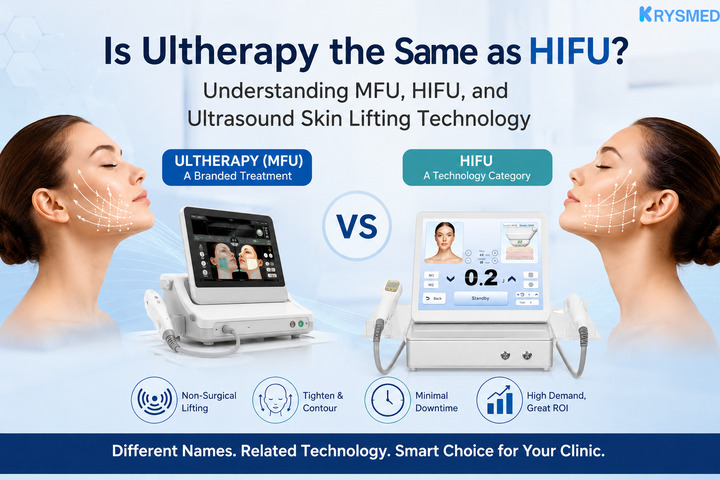
Is Ultherapy the Same as HIFU? Understanding MFU, HIFU, and Ultrasound Skin Lifting Technology
Many clinic owners hear Ultherapy, HIFU, and MFU used like they mean the same thing, but when it comes to choosing the right ultrasound skin lifting machine, the differences can affect your treatment results, pricing, and return on investment. If you are comparing Ultherapy vs HIFU for your clinic or distribution business, it is important to understand what is branding, what is actual technology, and what really matters when buying a professional HIFU machine. In this guide, we’ll break down Ultherapy, HIFU, and MFU in a simple way so you can choose the right skin tightening solution for your business.
1. Is Ultherapy the Same as HIFU?
Before comparing machines or treatment menus, it helps to clear up one common misunderstanding first.
The short answer: no, Ultherapy is not exactly the same as HIFU
No—Ultherapy is not the same as HIFU, even though both are used for ultrasound skin tightening and lifting. Ultherapy is a branded treatment platform, while HIFU is a broader technology category used in many professional skin tightening machines. In simple terms, Ultherapy is one well-known name in the market, but not every HIFU face lifting machine is Ultherapy.
Why people often confuse Ultherapy and HIFU
People mix them up because both use focused ultrasound energy to lift and tighten the skin without surgery, and both are often marketed for similar treatment areas like the jawline, cheeks, and neck. On top of that, terms like HIFU, MFU, and Ultherapy are often thrown around in sales materials as if they mean the same thing. For clinic owners and distributors who are not deep into the technical side, it is easy to assume they are just different names for the same ultrasound lifting treatment.
What clinic owners and distributors should actually compare instead
Instead of only asking “Ultherapy vs HIFU,” the better question is what kind of ultrasound lifting machine actually fits your business model, treatment goals, and budget. You should compare the real things that affect results and ROI: energy stability, cartridge depths, treatment comfort, shot output, training support, and overall machine cost. That is how you judge whether a professional HIFU machine is the right investment for your clinic or distribution business.
2. What Is Ultherapy?
To understand the Ultherapy vs HIFU discussion, you first need to know what Ultherapy actually is.
Ultherapy is a branded ultrasound skin lifting treatment
Ultherapy is a branded ultrasound skin lifting treatment designed for non-surgical skin tightening and lifting. It is mainly used on areas like the brow, lower face, jawline, and neck, where clients want a firmer look without surgery or long downtime. In other words, Ultherapy is not the name of a technology category—it is a specific brand in the ultrasound lifting market.
How Ultherapy uses MFU technology for skin tightening and lifting
Ultherapy works with MFU technology—short for microfocused ultrasound—which delivers focused energy into deeper skin layers to trigger collagen remodeling. The goal is to create a lifting and tightening effect over time, especially in areas where mild to moderate skin laxity is starting to show. That is why Ultherapy is often discussed together with HIFU skin tightening machines, even though the branding and technical positioning are not exactly the same.
Why Ultherapy became well known in the anti-aging market
Ultherapy became well known because it positioned itself early as a premium non-surgical facelift and skin tightening treatment using ultrasound energy. For many clinics, it helped popularize the idea that ultrasound lifting technology could target deeper tissue without cutting the skin. As a result, a lot of clients now use “Ultherapy” as a general label for HIFU face lifting treatments, even when the machine being used is a different system altogether.
3. What Is HIFU?
If Ultherapy is one brand, then HIFU is the bigger technology category behind many ultrasound lifting treatments on the market.
HIFU is a broader technology category, not one single brand
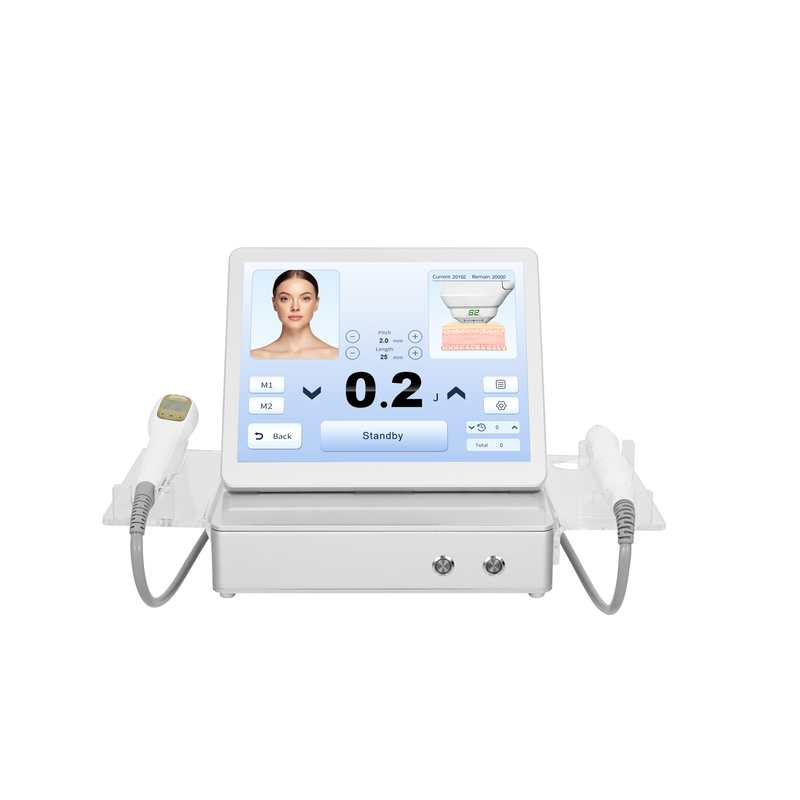
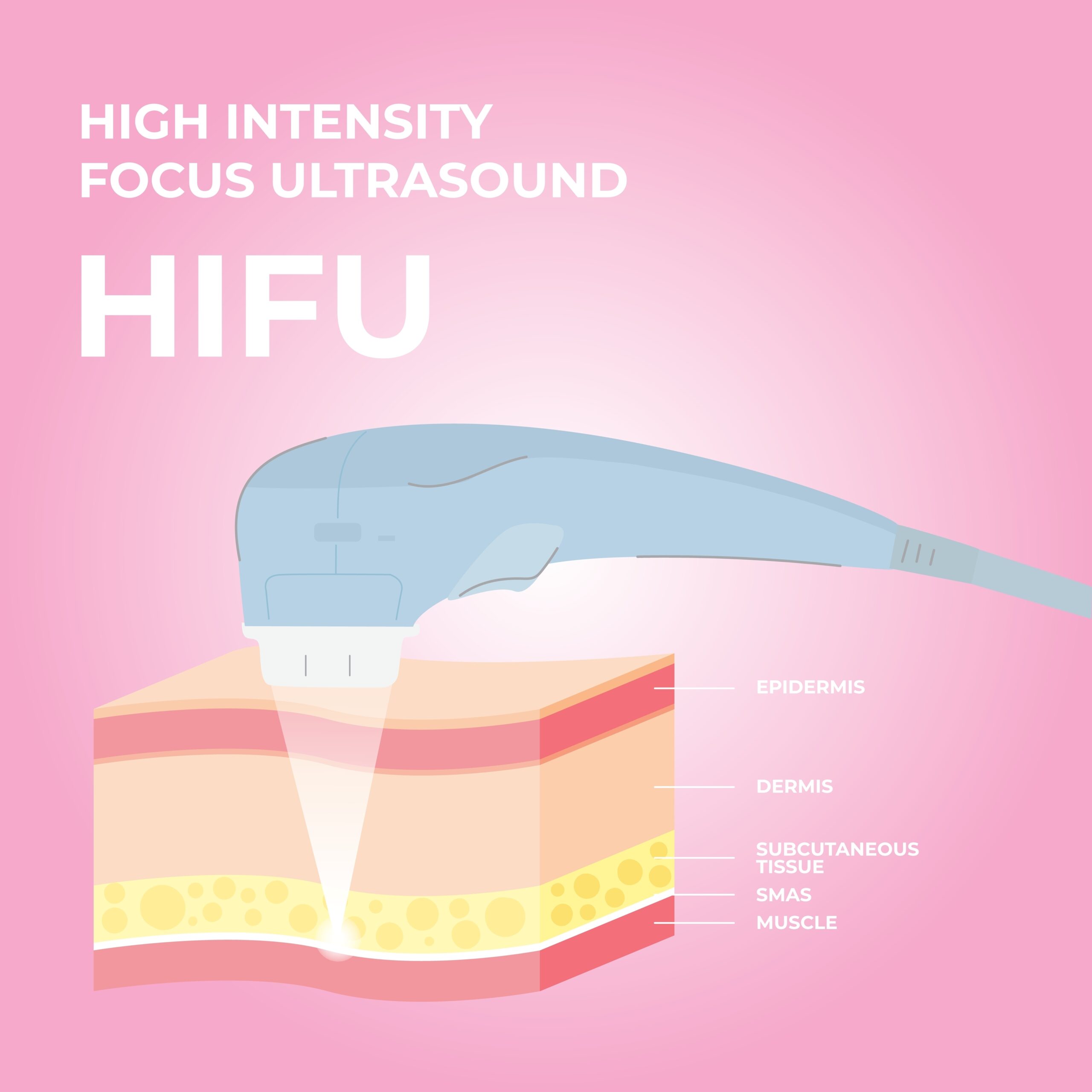
HIFU stands for High-Intensity Focused Ultrasound, and in aesthetics it refers to a technology used for skin tightening, lifting, and contouring. Unlike Ultherapy, HIFU is not one brand—it is a wider category that includes many different HIFU face lifting machines from different manufacturers. That is why when clinics compare Ultherapy vs HIFU, they are really comparing one branded system against a whole range of professional HIFU machines.
How HIFU works for non-surgical face lifting and skin tightening
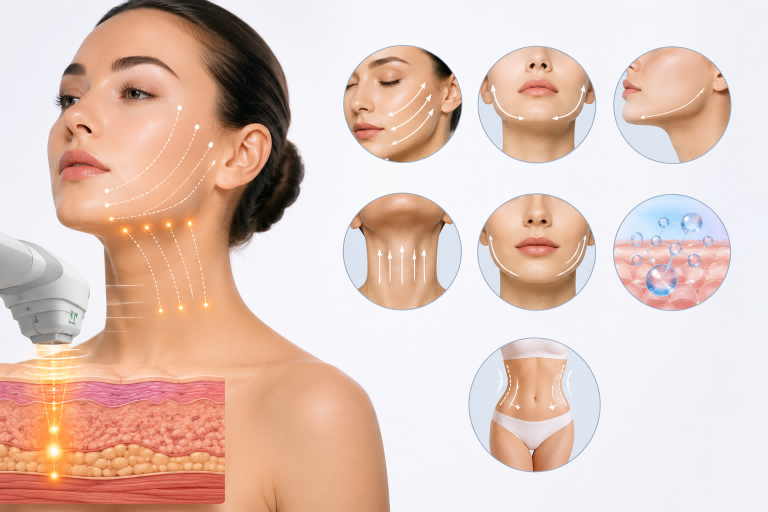
A HIFU machine sends focused ultrasound energy into specific skin depths to create controlled thermal points under the skin, which helps stimulate collagen production and tissue tightening over time. The treatment is commonly used as a non-surgical face lifting option for clients who want firmer skin without injections, surgery, or long recovery. In simple terms, HIFU works by heating the deeper support layers while leaving the skin surface mostly untouched.
Common treatment areas for HIFU face lifting machines
Most HIFU skin tightening machines are used for the jawline, cheeks, double chin area, neck, and forehead, where lifting and contouring are in high demand. Some systems are also used on the body for areas like the abdomen, arms, or thighs, depending on cartridge depths and treatment design. For clinics, this flexibility is one reason a professional HIFU machine can become a strong anti-aging and body contouring tool in the treatment menu.
4. MFU vs HIFU: What’s the Real Difference?
This is where a lot of buyers get confused, because MFU and HIFU are closely related but not always used in exactly the same way.
What MFU means in ultrasound lifting devices
MFU usually stands for Microfocused Ultrasound, a type of focused ultrasound used for skin lifting and tightening treatments. In the aesthetic market, MFU is often used to describe systems designed for more precise energy delivery at specific treatment depths, especially for facial lifting areas like the brow, jawline, and neck. That is why MFU often comes up in conversations around Ultherapy and premium ultrasound skin lifting machines.
Is MFU just another name for HIFU, or is there a technical difference?
In real-world clinic conversations, MFU and HIFU are often used almost interchangeably because both belong to the focused ultrasound skin tightening family. But technically, HIFU is the broader umbrella term, while MFU is more specific and is usually associated with more controlled, targeted ultrasound delivery for lifting treatments. So when someone asks MFU vs HIFU, the answer is not that one is completely different from the other—it is more about positioning, treatment precision, and how the machine is designed.
Why the MFU vs HIFU debate matters when choosing a machine
For clinic owners and distributors, the MFU vs HIFU debate matters because it affects how you compare treatment precision, comfort, branding, and machine value. If you only look at the label without understanding the actual technology, it is easy to overpay for a name or choose a machine that does not match your treatment goals. A smarter way to compare any professional HIFU machine is to look at energy stability, cartridge depths, treatment results, and supplier support—not just whether the brochure says MFU or HIFU.
5. Ultherapy vs HIFU: The 7 Real Differences Clinics Should Know
If you are comparing Ultherapy vs HIFU for your clinic, these are the differences that actually affect treatment results, pricing, and return on investment.
| Comparison Point | Ultherapy | HIFU | What It Means for Clinics |
|---|---|---|---|
1. Brand vs Technology Brand treatment or technology category? | Ultherapy Ultherapy is a branded ultrasound lifting treatment platform, not a general technology category. | HIFU HIFU is a broader technology category used by many different aesthetic machine manufacturers. | Clinics should understand that Ultherapy vs HIFU is not a simple one-to-one comparison. One is a brand, while the other includes a wide range of professional HIFU machines with different features, prices, and treatment positioning. |
2. Imaging & Visualization Can the operator see the treatment layer? | Ultherapy Known for using real-time ultrasound imaging, which helps the operator visualize the tissue layer before treatment. | HIFU Many standard HIFU face lifting machines do not include live imaging and rely more on cartridge depth selection and treatment protocol. | Imaging can add confidence and premium positioning, but it also usually comes with a higher machine cost. For some clinics, it is valuable; for others, it may not be necessary if ROI is the top priority. |
3. Cartridge Depths & Flexibility How many treatment options can the machine support? | Ultherapy Mainly associated with facial and neck lifting treatments. | HIFU Many HIFU machines offer multiple cartridge depths for face, jawline, double chin, neck, and even body contouring areas. | If your clinic wants to offer more than just facial lifting, HIFU can be more flexible. Cartridge options directly affect how many treatment areas and service packages you can build. |
4. Pain & Treatment Comfort How comfortable is the treatment experience? | Ultherapy Some clients report Ultherapy as quite uncomfortable, especially in bony or sensitive areas. | HIFU HIFU can also be uncomfortable depending on energy level, depth, machine quality, and operator technique. | Comfort is not only about the brand name. It often depends on machine design, treatment settings, and provider experience. Proper consultation and smart protocol settings can make a big difference. |
5. Treatment Speed & Ease of Use How efficient is the workflow? | Ultherapy May require more careful treatment planning, especially when using imaging and customized treatment mapping. | HIFU Some newer professional HIFU machines are designed for faster shot delivery and easier operation, which can suit busy clinics. | Treatment speed affects staff efficiency, appointment flow, and how many clients you can treat per day. Clinics should compare workflow, interface design, and training requirements, not just treatment theory. |
6. Machine Cost & ROI What does the investment look like? | Ultherapy Usually comes with a higher machine investment and often supports a more premium treatment pricing model. | HIFU A professional HIFU machine is often a more accessible investment for clinics that want lower entry cost and strong treatment margins. | This is one of the biggest decision points for clinic owners. If you want to add ultrasound skin tightening without putting too much pressure on cash flow, HIFU may offer a better return on investment. |
7. Branding & Business Positioning Are you selling a brand or building your own treatment identity? | Ultherapy Strong brand recognition can help some clinics charge premium treatment prices. | HIFU HIFU gives clinics and distributors more flexibility to build their own pricing strategy, packages, and positioning. | The real question is whether your clinic wants to rely on a famous treatment name, or use a good HIFU face lifting machine to create a profitable service with more control over pricing and marketing. |
6. How Ultrasound Skin Lifting Technology Actually Works
To choose the right ultrasound skin lifting machine, it helps to understand what the energy is actually doing under the skin.
How focused ultrasound energy reaches SMAS and deeper tissue layers
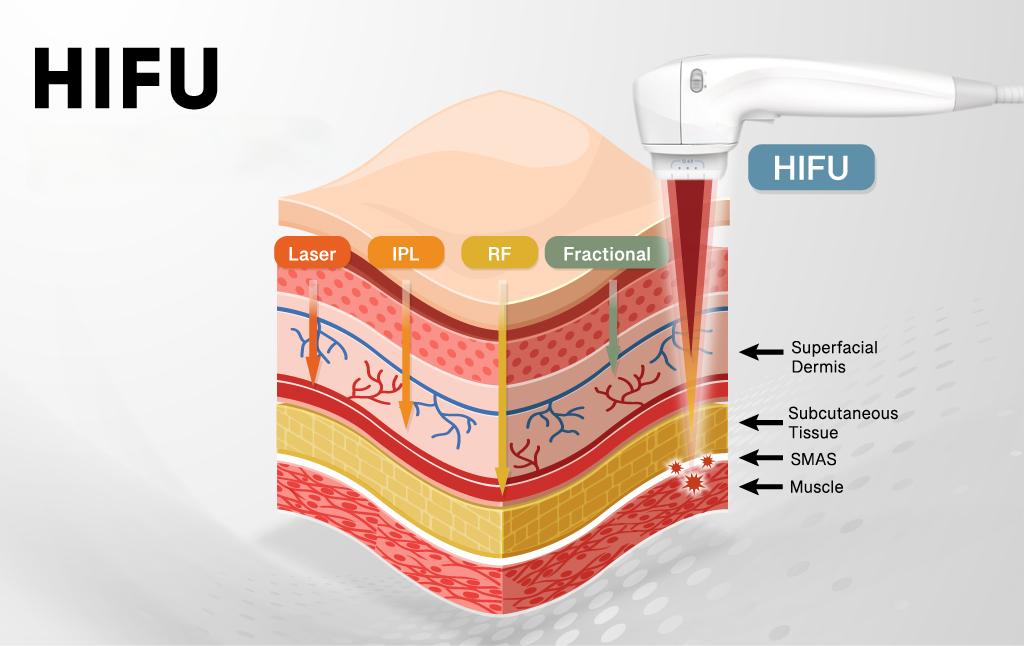
A HIFU or MFU machine sends focused ultrasound energy into specific depths under the skin without damaging the surface, creating tiny thermal coagulation points in the target layer. One of the key target areas is the SMAS layer, which is the same support layer surgeons work with during a facelift. That is why ultrasound skin tightening technology is often used as a non-surgical option for lifting the jawline, cheeks, and neck.
Why depth matters in face lifting and skin tightening treatments
Different skin concerns sit at different depths, so the machine needs the right cartridges to reach the right layer for the treatment goal. For example, more superficial depths may focus on skin tightening and collagen support, while deeper cartridges are used for lifting and contouring in areas like the lower face or double chin. This is why cartridge depth is such a big deal when comparing a professional HIFU machine or any Ultherapy alternative.
What happens after treatment: collagen remodeling and lifting results
After the treatment, the body starts a repair response that gradually stimulates new collagen production and tissue tightening over the following weeks and months. Clients usually do not walk out looking fully lifted on day one, because HIFU skin tightening results build over time as collagen remodeling happens. In simple terms, the machine creates the trigger, but the lifting effect comes from the body rebuilding firmer support under the skin.
7. Is Ultherapy Better Than HIFU?
There is no one-size-fits-all answer here, because the better option depends on your clinic’s positioning, budget, and the kind of clients you serve.
When Ultherapy may make sense for certain clinics
Ultherapy can make sense for clinics that want to lean on a well-known brand name and position their ultrasound skin lifting treatment as a premium service. If your client base already recognizes the Ultherapy name and is comfortable paying more for branded treatments, that brand value can help with marketing and pricing. For some high-end clinics, that alone is part of the business strategy.
When a professional HIFU machine can be the smarter business choice
A professional HIFU machine can be the smarter move for clinics that want more flexibility, lower machine cost, and stronger return on investment. Many HIFU face lifting machines offer multiple cartridge depths, broader treatment options, and a lower barrier to entry compared with premium branded systems. For startup clinics, growing medspas, and distributors, that often makes HIFU a more practical and scalable business tool.
The better question: not “which brand is better,” but “which tool fits your clients and budget”
Instead of asking whether Ultherapy is better than HIFU, it is more useful to ask which machine fits your treatment menu, pricing strategy, and customer expectations. A clinic serving luxury anti-aging clients may value brand recognition, while another clinic may care more about treatment flexibility, profit margin, and long-term machine ROI. In the end, the best ultrasound lifting machine is the one that helps you deliver good results and build a sustainable business—not just the one with the biggest name.
8. What Results Can Clients Expect from Ultherapy and HIFU?
Whether you choose Ultherapy or a professional HIFU machine, clients usually care about one thing most: what kind of lifting results they can realistically expect.
Typical lifting and tightening results on jawline, cheeks, neck, and brow
Both Ultherapy and HIFU treatments are commonly used to improve mild to moderate skin laxity on the jawline, cheeks, neck, under-chin area, and brow area. Clients may notice a firmer jawline, slightly lifted cheeks, smoother neck contour, and a more refreshed look rather than a dramatic surgical-style transformation. In simple terms, ultrasound skin tightening is best for subtle to moderate lifting, not for very loose skin that really needs surgery.
How long results usually take to show and how long they may last
Results from HIFU skin tightening or Ultherapy usually do not appear overnight, because the lifting effect builds gradually as collagen remodeling happens over the next 2 to 3 months. In many cases, results can last several months to over a year depending on age, skin condition, lifestyle, and how strong the treatment protocol is. This is why clinics need to explain clearly that ultrasound face lifting is a collagen-building treatment, not an instant one-day makeover.
Why results depend on machine quality, protocol, and client selection
The machine itself matters, but so do the cartridge depths, energy settings, treatment design, and whether the client is actually a good fit for HIFU or MFU treatment. A good HIFU face lifting machine in trained hands can deliver nice tightening results, but the same machine can underperform if the protocol is weak or the client has unrealistic expectations. That is why clinics should not only compare brand names—they also need solid training, proper consultation, and realistic treatment planning.
9. Who Is a Good Candidate for Ultherapy or HIFU Treatment?
Not every client with aging concerns is the right fit for Ultherapy or HIFU, so good consultation matters just as much as the machine itself.
Best age groups and skin laxity levels for ultrasound lifting
In general, ultrasound skin lifting treatments work best for clients with mild to moderate skin laxity rather than very heavy sagging. This usually means people starting to notice softening along the jawline, slight cheek drooping, early double chin, or loose neck skin—often in their 30s to 50s, though skin condition matters more than age alone. If the skin still has decent collagen potential, a HIFU face lifting treatment is more likely to give visible tightening and contouring results.
Who may need RF microneedling, CO2 laser, or combination treatments instead
If the main issue is acne scars, enlarged pores, rough texture, or fine lines on the skin surface, RF microneedling or fractional CO2 laser may be a better fit than HIFU alone. Some clients also benefit more from combination treatments—for example, HIFU for lifting deeper tissue, then RF microneedling or CO2 laser for surface tightening and texture improvement. For clinics, this is why it is important to match the treatment to the actual skin concern instead of trying to use one skin tightening machine for every problem.
Contraindications and situations where ultrasound lifting may not be ideal
HIFU and Ultherapy may not be ideal for clients with severe skin laxity, very thin skin in some areas, active skin infections, open wounds, or certain medical conditions that make energy-based treatment unsuitable. Clients with unrealistic expectations also need extra caution, because ultrasound lifting can improve sagging but it will not replace a surgical facelift. A proper consultation, health screening, and honest discussion about expected results are key before offering any professional HIFU treatment.
10. What Are the Risks, Side Effects, and Pain Differences?
Before adding any ultrasound skin tightening treatment to your menu, it is important to be honest about side effects, pain level, and the client experience.
Common side effects after Ultherapy or HIFU treatment
After Ultherapy or HIFU treatment, the most common side effects are temporary redness, swelling, tenderness, tingling, or mild soreness in the treated area. Some clients may also feel a bit of tightness or sensitivity along the jawline, cheeks, or neck for a few days, especially after higher-energy ultrasound lifting sessions. In most cases these reactions are short-term, but clinics still need to explain them clearly during consultation so clients know what is normal.
Why some HIFU treatments feel more painful than others
Pain levels vary because not all HIFU face lifting machines deliver energy in the same way, and not all operators use the same treatment settings or technique. The treatment depth, energy level, shot density, client pain tolerance, and the area being treated all affect how intense the session feels. So when people say one HIFU skin tightening treatment is “too painful,” it is often a mix of machine quality, protocol, and operator experience—not just the technology itself.
How clinics can improve comfort and reduce complaints
The best way to reduce pain complaints is to use a stable professional HIFU machine, choose sensible treatment settings, and explain the sensation honestly before starting. Good consultation matters a lot: when clients know what the treatment feels like, what results to expect, and why some discomfort is normal, they are less likely to panic or feel disappointed. Proper training, careful treatment mapping, and not over-treating just to “make it stronger” can make a big difference in both comfort and client satisfaction.
11. Ultherapy vs HIFU Cost: Which One Makes More Business Sense?
For most clinic owners and distributors, the real question is not just treatment results—it is whether the numbers make sense for the business.
Treatment pricing from the client side
From the client side, Ultherapy treatments are usually positioned at a higher price point because the brand already has strong recognition in the anti-aging market. A HIFU skin tightening treatment can often be offered at a more accessible price while still delivering visible lifting results for the right client. This gives clinics more flexibility to target different customer groups instead of only chasing the premium end of the market.
Machine cost, consumables, and ROI from the clinic side
From the clinic side, the difference becomes even bigger because a professional HIFU machine is often much easier to enter than a premium branded ultrasound platform. Clinics need to look at the full picture: machine price, cartridge cost, consumables, treatment pricing, number of sessions sold, and how fast the machine can pay itself back. A lower upfront investment with solid treatment demand can sometimes create a much better ROI for HIFU skin tightening than simply buying the most famous name.
Why many growing clinics compare Ultherapy alternatives instead of only looking at the brand
A lot of growing clinics compare Ultherapy alternatives because they want a treatment that fits their market, not just a brand that looks good in a brochure. If a HIFU face lifting machine can deliver strong results, support multiple treatment areas, and give better profit margins, it may be the smarter long-term business tool. For startup clinics, medspas, and distributors, that balance between treatment performance and affordability is often what matters most.
12. How Clinics Should Choose Between Ultherapy and a HIFU Machine
If you are deciding between Ultherapy and a HIFU machine, the smartest way is to compare what really affects treatment quality, clinic workflow, and long-term profitability.
Check the actual technology, not just the marketing name
Do not buy based on brand language alone—look at what the ultrasound skin lifting machine can actually do. Ask how the energy is delivered, what treatment depths it reaches, whether it is built for facial lifting only or both face and body, and how stable the output is during treatment. A fancy name does not automatically mean better results, especially if the machine does not fit your clinic’s real treatment needs.
Compare cartridge depths, shot output, treatment speed, and support
When comparing any professional HIFU machine, focus on the details that affect daily use: cartridge depths, number of shots, treatment speed, handpiece design, and how easy the system is to operate. These things directly affect the treatment menu you can offer, the comfort of the session, and how many clients you can handle in a day. For distributors, they also matter because the easier the machine is to explain and support, the easier it is to sell.
Choose a supplier that offers training, clinical guidance, and after-sales help
A good HIFU machine supplier should do more than ship a machine and disappear after payment. Clinics and distributors need training, treatment protocols, troubleshooting support, and practical advice on how to position HIFU skin tightening treatments in the market. In many cases, strong after-sales support is worth more than a slightly cheaper machine, because it directly affects treatment results, customer confidence, and repeat business.
13. What to Ask Before Buying a Professional HIFU Machine
Before you spend money on a professional HIFU machine, make sure you are asking the right questions—not just about price, but about treatment performance, support, and long-term business value.
Does it use stable MFU/HIFU energy and the right treatment depths?
First, ask whether the machine delivers stable HIFU or MFU energy and what treatment depths it actually supports for face and body work. A good HIFU face lifting machine should match real clinical needs, not just list a bunch of impressive numbers on a brochure. If the energy output is inconsistent or the cartridge depths do not suit your target treatments, the machine may not perform the way you expect.
What cartridges, shot counts, and treatment protocols are included?
You also need to know exactly which cartridges come with the machine, how many shots each one offers, and what treatment protocols the supplier provides for different areas. These details affect your treatment range, running cost, and how confidently your team can deliver ultrasound skin tightening treatments from day one. A machine may look affordable at first, but if the cartridge setup is limited or unclear, it can become a headache later.
Will the supplier help with training, troubleshooting, and marketing materials?
This is a big one, especially for new clinics and distributors: ask what happens after the machine arrives. A reliable HIFU machine supplier should offer training, troubleshooting support, treatment guidance, and even marketing materials to help you launch the service properly. If a supplier can only talk about specs but cannot help you use the machine, train your team, and sell the treatment, that is a red flag.
14. Why More Clinics Are Looking for Ultherapy Alternatives in 2026
In 2026, more clinics are not just asking which treatment is famous—they are asking which ultrasound skin lifting machine makes the most sense for real-world business growth.
High treatment demand but tighter clinic budgets
Demand for non-surgical skin tightening is still strong, but many clinics are being more careful with cash flow, machine upgrades, and new equipment purchases. That is why more buyers are comparing Ultherapy alternatives instead of jumping straight into a high-cost branded system. They want something that can deliver good lifting results without putting too much pressure on the clinic budget.
Clients still want lifting results without surgery or long downtime
From the client side, the demand has not disappeared at all—people still want firmer skin, a sharper jawline, and a more lifted look without surgery or a long recovery period. That keeps HIFU face lifting treatments and other ultrasound skin tightening options in demand, especially in clinics focused on anti-aging services. So the opportunity is still there; clinics just want a smarter way to serve that demand.
Distributors and clinics need machines with better ROI and flexible treatment menus
For distributors and growing clinics, it is no longer enough for a machine to just have a famous name—it also needs to make money and fit different treatment needs. A professional HIFU machine that supports multiple cartridge depths, flexible protocols, and a lower entry cost can be much easier to sell, use, and scale. That is why more buyers are looking for Ultherapy alternatives with better ROI, easier market positioning, and room to build a broader treatment menu.
Final Thoughts
At the end of the day, Ultherapy and HIFU are related, but they are not the same—Ultherapy is one branded MFU ultrasound lifting treatment, while HIFU is the broader technology category used across many skin tightening and face lifting machines. For clinics and distributors, the best ultrasound lifting machine is not simply the most famous one, but the one that fits your treatment goals, client base, pricing strategy, and budget. That is why a smart buying decision should go beyond the brand name and focus on real treatment results, machine usability, cartridge flexibility, training, after-sales support, and long-term ROI.
Ready to Add a Profitable Ultrasound Lifting Treatment to Your Clinic?
If you’re comparing Ultherapy alternatives or looking for a professional HIFU machine that fits your clinic, client base, and budget, Krysmed is here to help. We don’t just supply machines—we help clinics and distributors choose the right technology, understand the treatment logic, and launch with confidence through training, honest advice, and long-term support. If you’d like help finding the right ultrasound skin lifting machine for your business, feel free to contact the Krysmed team.
FAQ — People Also Ask About Ultherapy, HIFU, and MFU
These are some of the most common questions clinic owners, distributors, and beauty professionals ask when comparing Ultherapy, HIFU, and MFU.
Is Ultherapy the same as HIFU?
No, Ultherapy is not the same as HIFU. Ultherapy is a branded ultrasound skin lifting treatment, while HIFU is a broader technology category used in many different skin tightening machines. In short, Ultherapy is one specific system, but HIFU covers a wider range of machines and treatment platforms.
What is the difference between MFU and HIFU?
HIFU is the broader term for High-Intensity Focused Ultrasound, while MFU usually refers to Microfocused Ultrasound, which is often positioned as a more targeted type of ultrasound lifting technology. In clinic conversations, the two are often used very closely together because both are designed for skin tightening and lifting. The real difference is usually in how the technology is positioned, how precisely the energy is delivered, and how the machine is designed.
Is Ultherapy better than HIFU for skin tightening?
Not necessarily—Ultherapy vs HIFU is not a simple “better or worse” comparison. Ultherapy may suit clinics that want a premium branded treatment, while a professional HIFU machine may be a better choice for clinics focused on flexibility, lower machine cost, and stronger ROI. The better option depends on your client base, pricing strategy, and business model.
Does Ultherapy use HIFU or MFU?
Ultherapy is generally associated with MFU technology, which stands for Microfocused Ultrasound. That is one reason it is often discussed in the same category as HIFU skin tightening treatments, since both use focused ultrasound energy for lifting and collagen stimulation. In practical terms, they belong to the same ultrasound lifting family, but they are not marketed in exactly the same way.
Which is more painful, Ultherapy or HIFU?
Pain levels vary from client to client, so there is no universal answer. Some people find Ultherapy quite uncomfortable, while some HIFU treatments can also feel intense depending on the machine, treatment depth, energy settings, and operator technique. In real clinic work, comfort often depends more on machine quality and treatment protocol than on the brand name alone.
How long do Ultherapy and HIFU results last?
Results from Ultherapy and HIFU usually build gradually over 2 to 3 months as collagen remodeling happens under the skin. How long the lifting effect lasts depends on the client’s age, skin condition, lifestyle, and the treatment quality, but results may last from several months to over a year in many cases. These treatments are best viewed as non-surgical skin tightening options that improve firmness over time, not permanent one-time fixes.
Is HIFU a good alternative to Ultherapy for clinics?
Yes, for many clinics a HIFU machine can be a very good alternative to Ultherapy—especially if the goal is to offer ultrasound face lifting treatments with lower equipment cost and more flexible pricing. A strong professional HIFU machine can help clinics serve anti-aging clients without relying entirely on one premium brand. For growing clinics and distributors, that often makes HIFU a more practical business option.
What should I look for in a professional HIFU machine supplier?
Look beyond the brochure and ask whether the supplier can support you after the sale, not just before it. A reliable HIFU machine supplier should offer stable machine quality, clear cartridge and shot details, proper training, treatment guidance, troubleshooting help, and honest communication about what the machine can and cannot do. If a supplier understands both the technology and the business side of HIFU skin tightening, they are much more likely to help you succeed long term.
Our Contact
Ready to Elevate Your Business with Krysmed?
Let’s discuss your needs and find the best solution for your business. Our experts are here to provide personalized recommendations tailored to your business needs.
-
Call For Inquiry
-
Send Us Email
info@krysmed.com
Get A Custom Quote Now!
We value your privacy and guarantee a prompt, professional reply.
 WhatsApp
 info@krysmed.com
 +86 19867944875