

News
11
Jul
Fractional CO2 Laser Explained: How It Works, What It Treats, and Why Clinics Still Choose It
For many clinics, the challenge is not whether clients want better results for acne scars, wrinkles, pores, and rough skin texture — it’s choosing a treatment that can actually deliver visible improvement without turning the service menu into a confusing mess. That’s why fractional CO2 laser is still one of the most talked-about skin resurfacing treatments in aesthetics, and why many clinics are still actively looking for a reliable fractional CO2 laser machine that can handle real resurfacing work. In this guide, we’ll explain how a professional fractional CO2 laser works, what it treats best, and why it remains a smart option for clinics that want stronger treatment results and long-term revenue potential.
1. Why Fractional CO2 Laser Still Matters in Modern Aesthetic Clinics
Even with so many new skin devices on the market, fractional CO2 laser is still one of the treatments clinics keep coming back to when they need stronger, more visible resurfacing results.
Why clinics still keep fractional CO2 laser on their treatment menu
The main reason is simple: a fractional CO2 laser can treat concerns that many light-touch facials or entry-level devices cannot improve enough, especially acne scars, deeper wrinkles, rough texture, and visible pores. For clinics, that makes it a practical treatment to keep because clients are usually not just paying for a relaxing session — they are paying for real skin resurfacing results they can actually notice.
The skin concerns fractional CO2 laser is commonly used for
A fractional CO2 laser treatment is commonly used for acne scars, fine lines, sun-damaged skin, enlarged pores, uneven texture, and overall skin resurfacing. In many clinics, it is also used when clients want smoother skin, a fresher look, and more obvious improvement than basic skincare treatments can offer.
Why this treatment is often seen as a strong revenue service for clinics
From a business point of view, a professional fractional CO2 laser is often seen as a strong revenue treatment because it solves high-demand concerns and can be positioned as a premium service. It also works well as part of a bigger treatment menu, since clinics can combine fractional CO2 laser with consultation packages, skincare products, scar programs, or anti-aging plans to increase overall treatment value.
2. What Is a Fractional CO2 Laser and How Does It Actually Work?
To choose the right fractional CO2 laser machine or explain the treatment clearly to clients, it helps to first understand what the laser is actually doing to the skin.
What “fractional” means in simple words
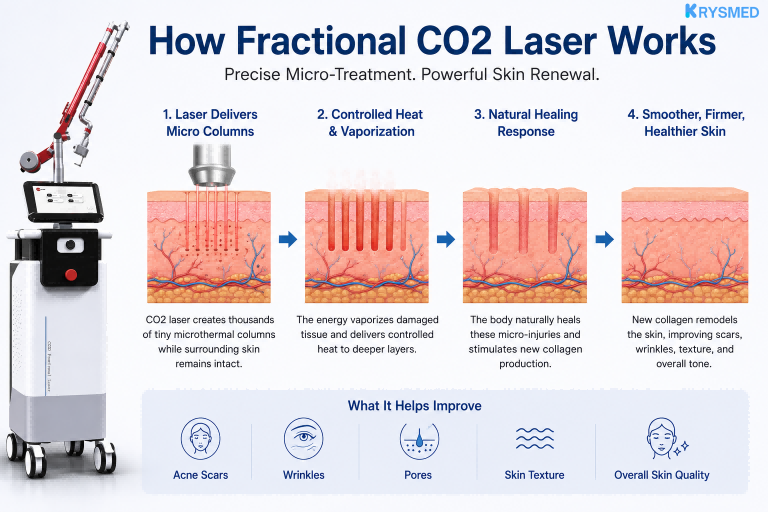
In simple terms, “fractional” means the laser does not remove the whole skin surface at once. A fractional CO2 laser creates many tiny treatment zones in the skin while leaving surrounding tissue untouched, which helps the skin heal faster than fully ablative resurfacing. That is why fractional CO2 laser treatment can give strong resurfacing results without the recovery being as heavy as old-style full-surface CO2 treatments.
How CO2 laser energy works on the skin
A CO2 laser uses a 10,600 nm wavelength that is strongly absorbed by water in the skin, so it can precisely vaporize damaged tissue and create controlled heat in the deeper layers. In real clinic work, this is what helps improve acne scars, wrinkles, rough texture, and overall skin resurfacing, because the treatment is not only removing old skin but also pushing collagen remodeling underneath. That is one reason why a professional fractional CO2 laser is still widely used for stronger texture correction.
Ablative vs non-ablative resurfacing: where fractional CO2 fits in
Fractional CO2 laser belongs to the ablative resurfacing category, which means it removes tiny columns of skin tissue instead of only heating the skin without breaking the surface. Compared with non-ablative treatments, it usually gives more dramatic improvement for acne scars, deeper lines, and uneven texture, but it also comes with more downtime. For clinics, this is an important difference because it affects treatment results, client expectations, and how you position the service.
Why treatment depth and controlled skin injury matter for results
The reason fractional CO2 laser resurfacing works so well is that it creates controlled micro-injury at a chosen depth, which triggers the skin to repair itself and build new collagen during healing. If the treatment is too light, the result may be weak; if it is too aggressive, downtime and risk go up. That is why a good fractional CO2 laser machine needs stable energy, adjustable settings, and proper operator training — not just a cheap price tag.
3. What Can a Fractional CO2 Laser Treat in Real Clinic Work?
A fractional CO2 laser is not just a “skin rejuvenation” buzzword — in real clinic work, it is mainly chosen for texture problems and visible skin damage that clients genuinely want to fix.
| Treatment Concern | How Fractional CO₂ Laser Helps | Best For |
|---|---|---|
| Acne Scars Atrophic acne scars Post-acne texture | Resurfaces damaged skin while stimulating new collagen production, helping soften depressed scars and improve overall skin texture. | Clients with acne scars, uneven skin texture, and post-acne roughness looking for noticeable resurfacing results. |
| Wrinkles & Fine Lines Early aging Crepey skin | Removes damaged surface skin and promotes collagen remodeling, making skin appear smoother, firmer, and more refreshed. | Clients with fine lines, mild-to-moderate wrinkles, and rough skin texture. |
| Skin Resurfacing Large pores Uneven texture Sun damage | Improves overall skin quality by reducing pore appearance, smoothing texture, and creating a more even-looking complexion. | Clients seeking complete skin resurfacing instead of treating just one concern. |
| Stretch Marks & Scars Stretch marks Selected scars | Stimulates collagen remodeling to improve skin texture and gradually blend scars or stretch marks with surrounding tissue. | Suitable for selected scar revision cases after professional consultation and treatment planning. |
4.What Happens During a Fractional CO2 Laser Treatment?
For many clients, the biggest concern is not the machine itself, but what the actual fractional CO2 laser treatment process feels like and how much downtime they should expect afterward.
How a typical consultation and skin assessment should be done
Before doing any fractional CO2 laser treatment, the clinic should first look at the client’s main concern, skin condition, scar type, downtime tolerance, and treatment expectations. For example, acne scars, rough texture, pores, and wrinkles may all be treated with a fractional CO2 laser machine, but the treatment settings, number of sessions, and expected results can be quite different depending on the skin problem.
What the treatment session usually looks like from start to finish
A typical fractional CO2 laser treatment usually starts with cleansing, photos, and topical numbing, followed by setting the treatment parameters based on the skin concern and treatment area. During the procedure, the fractional CO2 laser creates controlled micro-injuries in the skin to resurface damaged tissue and stimulate collagen remodeling, and the whole session often takes around 20 to 45 minutes depending on the area being treated. After that, the skin is cooled, protected, and the client is given aftercare instructions before leaving the clinic.
Pain level, numbing, treatment time, and what clients usually ask
Most clients will ask the same few questions: “Will it hurt?”, “How red will I be?”, and “When can I go back to work?” In real clinic settings, a professional fractional CO2 laser is usually tolerable with numbing cream, but it is still a stronger resurfacing treatment than a facial or light laser session, so clinics need to explain this honestly rather than oversell it as completely comfortable. Treatment time is usually manageable, but setting the right expectation on pain, redness, swelling, and recovery is what helps clients feel prepared and trust the clinic more.
5. Fractional CO2 Laser Downtime, Recovery, and Aftercare
One reason clinics need to explain fractional CO2 laser properly is that the results can be strong, but so is the recovery compared with lighter skin treatments.
What clients can expect in the first 24 hours, 3 days, and 7 days
In the first 24 hours after a fractional CO2 laser treatment, the skin is usually red, warm, and swollen, similar to a strong sunburn. By around day 3, clients often notice more dryness, rough texture, and tiny crusting or bronzing as the skin starts repairing itself, and by day 7, much of the visible healing has usually settled, although some redness can still remain depending on treatment intensity. This is why clinics should explain recovery in stages, not just say “a few days of downtime” and leave it at that.
How long fractional CO2 laser downtime usually lasts
Typical fractional CO2 laser downtime is often around 5 to 7 days for moderate treatments, but deeper settings or more aggressive resurfacing can take longer to fully calm down. Clients may be socially present sooner, but that does not always mean the skin is completely recovered, so it is important to separate “back to work” from “fully healed.” A professional fractional CO2 laser can deliver strong results, but clinics need to match the treatment intensity with the client’s downtime tolerance and lifestyle.
Post-treatment skincare, sun protection, and recovery tips clinics should explain clearly
After a fractional CO2 laser session, clients usually need gentle cleansing, barrier-repair skincare, good hydration, and strict sun protection while the skin heals. Clinics should clearly tell clients what to avoid as well, including active ingredients, exfoliation, picking, heat exposure, and direct sun during the early recovery period. Good aftercare is not a small detail — it directly affects healing, comfort, and the final skin resurfacing result.
| Recovery Stage | What Clients May Notice | Recommended Care |
|---|---|---|
| Day 1 | Redness, warmth, mild swelling | Cool the skin, hydrate, avoid touching |
| Day 2–3 | Dryness, bronzing, tiny crusts | Gentle cleansing, moisturizer, no picking |
| Day 4–7 | Peeling, smoother new skin appears | Continue hydration and SPF daily |
| After 1 Week | Most visible healing completed, mild redness may remain | Resume normal skincare gradually |
| 4–12 Weeks | Collagen remodeling continues | Protect from UV and maintain skincare |
6. Who Is a Good Candidate for Fractional CO2 Laser?
Not every skin concern needs a strong resurfacing treatment, so clinics need to know when a fractional CO2 laser is the right tool and when another option may make more sense.
The skin concerns and client profiles that usually respond well
A good candidate for fractional CO2 laser treatment is usually someone dealing with acne scars, rough skin texture, enlarged pores, fine lines, or visible signs of sun-damaged and aging skin. It tends to work best for clients who want real resurfacing results, understand that recovery is part of the process, and are willing to follow proper aftercare instead of expecting a quick “lunchtime treatment.”
When clinics should be more careful with treatment settings or timing
Clinics usually need to be more careful when the client has sensitive skin, recent sun exposure, active acne inflammation, a history of post-inflammatory pigmentation, or a lifestyle that makes downtime hard to manage. In these cases, a professional fractional CO2 laser can still be useful, but the settings, treatment timing, pre-care, and post-care need to be planned more carefully rather than treated like a routine one-size-fits-all session.
When fractional CO2 laser may not be the best first choice
A fractional CO2 laser machine is not always the best first option if the client mainly wants pigment treatment, has very little downtime tolerance, or is only looking for mild skin refreshing with minimal redness. In real clinic work, some clients are better suited to treatments like pico laser, RF microneedling, or lighter rejuvenation options first, depending on the skin problem, budget, and recovery expectations.
7. Fractional CO2 Laser Results: What Can Clients Realistically Expect?
One of the biggest mistakes clinics can make with fractional CO2 laser is talking only about the treatment itself and not clearly explaining what kind of results clients can realistically expect.
How many sessions are usually needed for acne scars, wrinkles, and texture
The number of fractional CO2 laser treatments needed depends on the concern, the skin condition, and how aggressive the settings are. Mild texture issues or early fine lines may improve after one or two sessions, while acne scars, deeper wrinkles, or more obvious skin resurfacing cases often need a treatment course rather than a single visit. In real clinic work, it is much better to present fractional CO2 laser as a results-building process instead of a one-shot miracle treatment.
When visible improvement usually starts to show
Some clients notice smoother skin and a fresher look once the first round of healing settles, but the more meaningful improvement usually continues over the following weeks as collagen remodeling develops. That is why clinics should explain that fractional CO2 laser resurfacing gives both short-term surface improvement and longer-term skin rebuilding underneath. If you explain the timeline well, clients are much less likely to panic when they do not see the “final result” immediately after recovery.
Why realistic expectations matter more than overpromising results
A professional fractional CO2 laser can do a lot, but it cannot erase every scar, remove years of skin damage in one session, or replace surgery-level lifting. Clinics that position fractional CO2 laser treatment honestly usually build more trust, because clients would rather hear a realistic plan for acne scars, texture, or wrinkles than be sold an unrealistic promise that leads to disappointment later.
8. Fractional CO2 Laser vs Other Skin Resurfacing Treatments
Clients do not compare treatments by technical terms — they usually just want to know which option will work best for their skin concern, budget, and downtime tolerance.
| Treatment | Best For | Downtime | Strength | Ideal Clients |
|---|---|---|---|---|
| Fractional CO₂ Laser | Acne scars, wrinkles, enlarged pores, rough texture, skin resurfacing | 5–7 days | Strong | Clients seeking dramatic skin texture improvement and collagen remodeling. |
| RF Microneedling | Mild-to-moderate acne scars, skin tightening, fine lines | 1–3 days | Medium | Clients wanting less downtime while improving texture and firmness. |
| Chemical Peel | Dull skin, uneven tone, mild texture | 1–5 days | Light | Clients looking for skin refreshment and brighter complexion. |
| Pico Laser | Pigmentation, melasma, tattoos, overall rejuvenation | Minimal | Medium | Clients whose main concern is pigment rather than skin texture. |
Quick Decision Guide for Clinics
✔ Choose Fractional CO₂ Laser for acne scars, wrinkles, enlarged pores, and significant skin resurfacing.
✔ Choose RF Microneedling if clients want skin tightening with shorter downtime.
✔ Choose Chemical Peels for mild texture improvement and brighter skin.
✔ Choose Pico Laser when pigmentation or tattoo removal is the primary concern.
9. What to Look for in a Fractional CO2 Laser Machine Before You Buy
Buying a fractional CO2 laser machine is not just about comparing price tags — it is about choosing a system that can deliver reliable treatment results, fit your clinic workflow, and make business sense long term.
Tube type, power stability, spot size, and treatment modes that affect real clinic use
When comparing a fractional CO2 laser machine, clinics should look beyond the brochure and focus on the specs that actually affect treatment performance, such as tube type, power stability, spot size, scanning patterns, and whether the system offers enough treatment modes for different skin concerns. These details matter because acne scars, wrinkles, pores, and scar revision cases do not all need the same settings, and an unstable machine can make results inconsistent. A good professional fractional CO2 laser should give you enough flexibility to handle real clinic work, not just one or two simple treatment indications.
User-friendly interface, parameter control, and treatment safety features
A machine can have decent specs on paper and still be frustrating to use if the interface is confusing or the settings are hard to control during treatment. Clinics should pay attention to whether the fractional CO2 laser machine allows clear adjustment of energy, density, treatment depth, and scan pattern, and whether it includes practical safety features that help reduce operator mistakes. In daily clinic use, a simple, stable, user-friendly system often matters just as much as the technical numbers on a product sheet.
Training, after-sales support, and why supplier support matters as much as machine specs
This is the part many buyers underestimate: even a good fractional CO2 laser can become a headache if the supplier disappears after the machine is delivered. Clinics and distributors should check whether the manufacturer can provide treatment training, protocol guidance, troubleshooting, parts support, and long-term after-sales help, because that support directly affects how confidently the machine can be used and how fast the clinic can start generating results. In other words, when buying a fractional CO2 laser machine, you are not only buying hardware — you are also choosing the team behind it.
Why clinics should think about ROI, treatment pricing, and long-term consumable cost
A fractional CO2 laser machine for sale may look affordable at first, but the smarter question is whether it can help the clinic build a profitable treatment menu over time. Clinics should think about how much they can charge for acne scar, wrinkle, and skin resurfacing treatments, how many sessions clients may need, and whether there are ongoing maintenance or consumable costs that will affect margins later. A lower upfront price is not always the better deal if the machine is harder to use, gives weaker results, or lacks the support needed to turn it into real revenue.
| Buying Checklist | Why It Matters |
|---|---|
| ✔ Stable RF / CO₂ Tube | Consistent energy output |
| ✔ Adjustable Energy & Density | Suitable for different skin concerns |
| ✔ Multiple Scan Modes | Greater treatment flexibility |
| ✔ User-Friendly Interface | Faster learning & safer operation |
| ✔ Safety Protection System | Reduces treatment risks |
| ✔ Clinical Training | Confident treatment delivery |
| ✔ Technical Support | Quick troubleshooting |
| ✔ Spare Parts Availability | Less machine downtime |
| ✔ OEM Branding | Supports business growth |
| ✔ Long-Term ROI | Better return than lowest price |
10. Why Supplier Choice Matters More Than Just the Fractional CO2 Laser Price
A fractional CO2 laser machine may look similar across different suppliers on paper, but in real business, the supplier behind the machine often makes the biggest difference after the payment is done.
What a reliable fractional CO2 laser manufacturer should help you with after the sale
A reliable fractional CO2 laser manufacturer should not just ship the machine and disappear — they should help with installation guidance, treatment training, parameter support, troubleshooting, replacement parts, and day-to-day technical questions. For clinics and distributors, this matters because even a good professional fractional CO2 laser can become difficult to use if there is no one helping you solve treatment or machine issues after delivery.
OEM support, training, and technical support for clinics and distributors
If you are a distributor or a clinic building your own brand, OEM support can be just as important as the machine itself. A good supplier should be able to support logo customization, training materials, treatment protocols, marketing support, and technical backup, so you are not left trying to figure everything out alone after buying the fractional CO2 laser machine. This is especially important for distributors, because your reputation also depends on how confidently you can support your own customers.
Common mistakes clinics make when buying a cheap CO2 laser machine
One common mistake is focusing only on the lowest fractional CO2 laser price without checking machine stability, training support, spare parts, or whether the supplier really understands clinic use. Another is buying based on a long feature list but skipping the important questions: who will train the team, who will help if the machine has an issue, and whether the treatment results are actually consistent enough to build a real resurfacing service around. In short, a cheap CO2 laser machine can become expensive very quickly if it creates treatment problems, downtime, or support headaches later.
11. Is Fractional CO2 Laser a Good Investment for Clinics in 2026?
For clinics thinking beyond “Can this machine work?” and asking “Can this machine make money?”, fractional CO2 laser is still a very practical treatment to evaluate in 2026.
The treatments that help clinics recover machine cost faster
A fractional CO2 laser machine usually makes the most sense when the clinic plans to use it for high-demand services like acne scar treatment, skin resurfacing, pore refinement, texture improvement, and wrinkle correction rather than just occasional add-on treatments. These concerns are common, treatment packages often need multiple sessions, and the pricing is usually higher than basic facial services, which helps clinics recover machine cost faster when the treatment is positioned properly.
How fractional CO2 laser can fit into a skin rejuvenation treatment menu
A professional fractional CO2 laser fits well into a clinic menu because it can sit in the middle of a full skin improvement journey rather than working as a standalone machine only. Clinics can use it alongside consultation packages, post-treatment skincare, scar programs, anti-aging plans, and even combine it with other technologies depending on the client’s skin condition, which makes the machine easier to monetize across different types of cases.
Why it still makes sense for clinics that want acne scar and resurfacing cases
If your clinic wants to attract clients with acne scars, rough texture, visible pores, and stronger resurfacing needs, a fractional CO2 laser machine still makes a lot of sense in 2026. There may be many new devices on the market, but when the goal is visible texture correction and real skin resurfacing, fractional CO2 laser treatment remains one of the more proven options for clinics that want stronger before-and-after potential instead of only mild rejuvenation results.
Ready to Upgrade Your Skin Resurfacing Services?
Ready to invest in a professional fractional CO2 laser machine?Contact Krysmed Technology today to get expert advice, explore our fractional CO2 laser machine solutions, and find the right system to help your clinic deliver better results and grow a more profitable aesthetic business.
FAQ About Fractional CO2 Laser
Below are some of the most common questions clinics and buyers ask when they are researching fractional CO2 laser treatment or looking for the right fractional CO2 laser machine for their business.
What does a fractional CO2 laser do?
A fractional CO2 laser creates controlled micro-injuries in the skin to remove damaged tissue, improve texture, and stimulate new collagen during healing. In simple terms, it is mainly used for skin resurfacing concerns like acne scars, wrinkles, enlarged pores, rough texture, and overall skin renewal. That is why many clinics still see fractional CO2 laser treatment as a strong option for clients who want more visible improvement rather than just a mild facial treatment.
Is fractional CO2 laser good for acne scars?
Yes, fractional CO2 laser is one of the most commonly used treatments for acne scars, especially when the main issue is uneven texture, shallow-to-moderate atrophic scarring, and post-acne skin roughness. It works by resurfacing the damaged skin and encouraging collagen remodeling underneath, which is why many clinics use a fractional CO2 laser machine for acne scar treatment plans. The exact result still depends on scar type, treatment depth, and how many sessions the client completes.
How long does it take to recover from fractional CO2 laser?
For many clients, visible fractional CO2 laser downtime is usually around 5 to 7 days for a moderate treatment, but stronger settings can mean a longer recovery period. Redness, swelling, dryness, and rough texture are common in the first few days, and the skin often continues calming down after the surface has already healed. Clinics should always explain that “social downtime” and “full skin recovery” are not always the same thing.
How many fractional CO2 laser sessions are needed?
There is no single answer because it depends on what the clinic is treating and how aggressive the fractional CO2 laser treatment plan is. Mild texture issues or early fine lines may improve after one or two sessions, while acne scars, deeper wrinkles, and more obvious skin resurfacing concerns often need multiple sessions for better results. In real clinic work, it is usually better to position fractional CO2 laser as a treatment course rather than a one-time miracle session.
Is fractional CO2 laser better than microneedling RF?
Not always — it depends on the skin concern, downtime tolerance, and the kind of result the client wants. In general, fractional CO2 laser is often stronger for surface resurfacing, acne scar texture, and more visible skin renewal, while RF microneedling may be a better fit for clients who want less downtime or a less aggressive treatment. For clinics, the better question is not which one is “better” overall, but which one matches the client’s skin condition and expectations better.
Is fractional CO2 laser painful?
A fractional CO2 laser treatment is usually more intense than a facial or a light rejuvenation treatment, so some discomfort is normal, especially with stronger settings. Most clinics use numbing cream to make the session much more tolerable, but it is still important to explain honestly that this is a real resurfacing treatment, not a completely sensation-free procedure. Good consultation and expectation-setting usually matter just as much as the treatment itself.
How much does a fractional CO2 laser machine cost?
The price of a fractional CO2 laser machine can vary a lot depending on the tube type, treatment modes, power stability, software, brand positioning, and the level of training and after-sales support included. In real buying decisions, clinics should not only compare the upfront machine cost, but also look at treatment performance, maintenance, supplier support, and how easily the machine can be turned into revenue. A cheaper CO2 laser machine is not always the better investment if it creates problems later.
What should clinics look for in a professional fractional CO2 laser machine?
Clinics should look at the things that affect real treatment work: stable energy output, adjustable treatment parameters, practical treatment modes, easy operation, and reliable safety features. Just as important, the supplier should be able to provide training, technical support, spare parts, and long-term after-sales service, because that support has a big impact on whether the professional fractional CO2 laser actually becomes a useful and profitable part of the clinic. In short, the right fractional CO2 laser machine is not only about specs — it is about results, usability, and the team standing behind it.
Our Contact
Ready to Elevate Your Business with Krysmed?
Let’s discuss your needs and find the best solution for your business. Our experts are here to provide personalized recommendations tailored to your business needs.
-
Call For Inquiry
-
Send Us Email
info@krysmed.com
Get A Custom Quote Now!
We value your privacy and guarantee a prompt, professional reply.
 WhatsApp
 info@krysmed.com
 +86 19867944875