

News
November 09, 2025

CO₂ Laser vs Other Laser Treatments: Costs, Benefits, and Which Is Right for Your Clinic
In the fast-paced world of aesthetic technology, clinic owners often ask: Is a CO2 laser still worth the investment compared to other laser treatments? With rising demand for non-surgical skin rejuvenation, understanding how CO2 lasers compare to fractional, diode, Er:YAG, and IPL systems is essential for delivering effective results and maximizing clinic ROI.
This guide compares CO2 laser with other commonly used aesthetic laser technologies from both treatment and clinic business perspectives, so you can understand where CO2 fits — and when another technology may be a better choice.
Key Takeaway CO2 laser is not automatically the best choice for every clinic. It can make strong business sense for practices that want to build a specialized skin resurfacing and rejuvenation service, while diode, Nd:YAG or IPL may be a better fit for clinics focused on hair removal, pigmentation, vascular treatments or broader light-based services. The right choice depends on your treatment menu, client demand, equipment cost and expected utilization. |
Quick Comparison: CO2 Laser vs Other Laser Treatments
| Factor | CO2 Laser | Nd:YAG Laser | Diode Laser | IPL |
|---|---|---|---|---|
| Main positioning | Skin resurfacing & rejuvenation | Pigmentation, vascular and selected skin applications | Hair removal | Multi-application light treatments |
| Energy approach | Ablative fractional/non-ablative options depending on configuration | Long-pulsed laser wavelengths such as 1064 nm | Wavelength-focused diode energy | Broad-spectrum pulsed light |
| Downtime | Depends on treatment mode and settings | Generally lower for many applications | Typically limited for hair removal | Depends on application |
| Best clinic use | Resurfacing-focused treatments | Pigmentation/vascular and selected applications | High-volume hair removal | Broader light-based treatment menu |
| Business role | Higher-value specialized treatment | Application-specific service | Core hair-removal service | Multi-service platform |
Which Treatment Makes Better Business Sense for a Clinic?
The best laser technology is not necessarily the one with the broadest feature list. For a clinic, the better choice is usually the system that matches its treatment menu, client demand, pricing and expected utilization.
| Clinic Situation | Potentially Better Fit | Why |
|---|---|---|
| High demand for skin resurfacing | CO2 Laser | Supports a specialized resurfacing service |
| Core business is hair removal | Diode Laser | Designed around a focused hair-removal workflow |
| Strong demand for pigmentation/vascular treatments | Nd:YAG | Can fit selected pigmentation and vascular applications |
| Clinic wants several light-based services | IPL | One platform may cover multiple applications |
| Premium clinic adding a specialized resurfacing service | CO2 Laser | Can create a higher-value treatment category |
The key question is not “Which laser is better?” but “Which treatment can your clinic sell consistently enough to justify the equipment investment?”
How the CO2 Laser Works
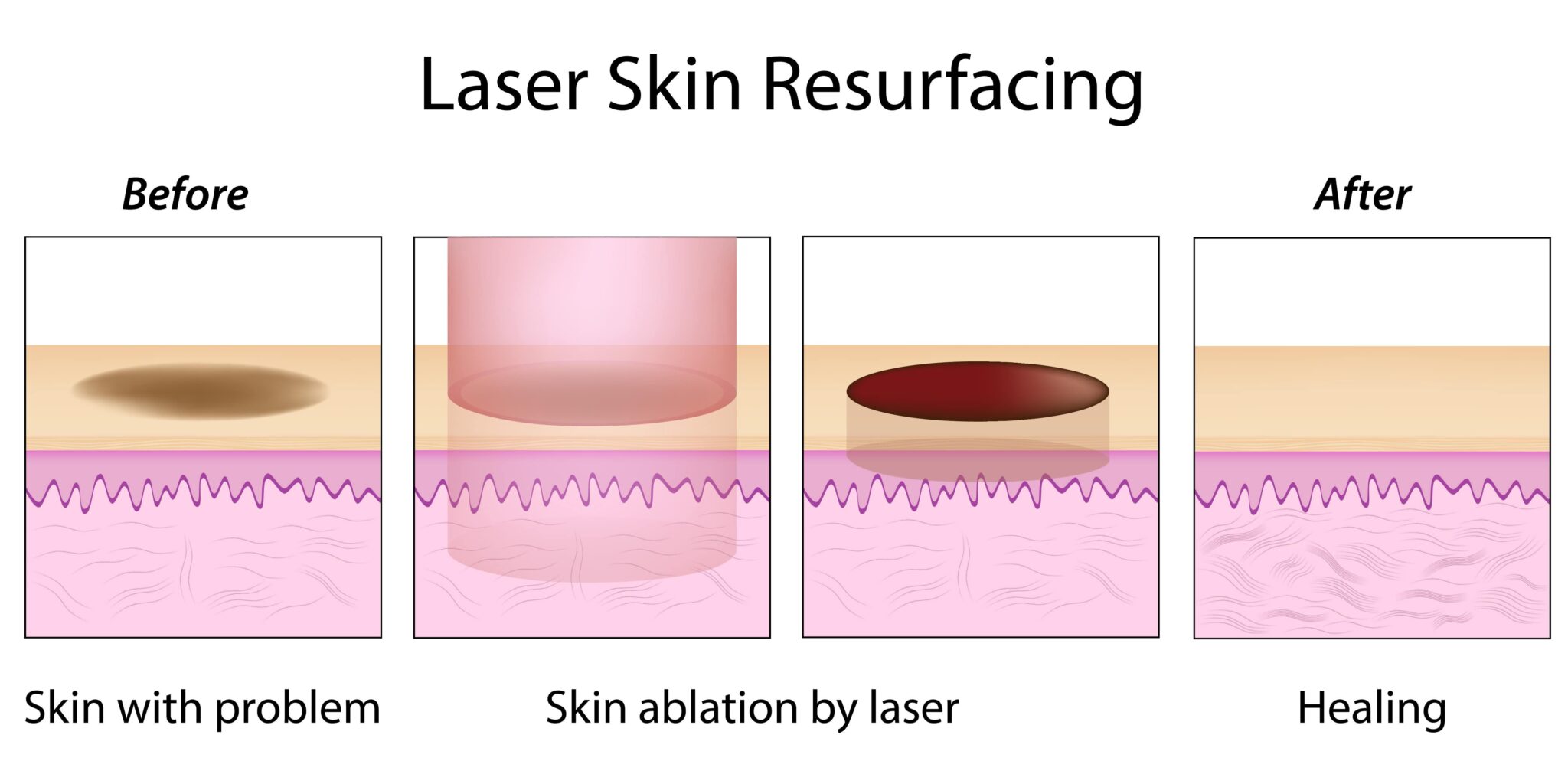
The CO2 laser operates at a 10,600-nanometer (nm) wavelength, which is absorbed efficiently by water molecules in skin tissue. Since human skin is rich in water, this wavelength allows the laser to precisely target and vaporize damaged skin cells while stimulating the natural regenerative process.
When the laser energy interacts with the skin:
It ablates the topmost damaged layers (removing dead cells and imperfections).
It heats the dermis beneath, causing collagen contraction and new collagen synthesis.
It activates fibroblasts, leading to tissue remodeling and long-term tightening.
The result is fresher, healthier skin with visibly reduced wrinkles, scars, and pigmentation issues.
Modes of Operation: Continuous, Pulsed, and Fractional
Modern CO2 laser devices can function in three modes, allowing practitioners to customize treatment intensity for different indications and skin types.
Continuous-Wave Mode
This traditional setting emits a steady beam of energy, suitable for precise surgical cutting or removal of benign lesions. It’s rarely used for full-face aesthetic procedures but still valuable for dermatologic applications.
Pulsed Mode
In this mode, the laser delivers short bursts of energy, reducing heat buildup and tissue damage. This is effective for moderate resurfacing and rejuvenation treatments where control and safety are priorities.
Fractional Mode (Fractional CO2 Laser)
The most popular choice for aesthetic clinics today. The laser beam is split into hundreds or thousands of microthermal zones, creating tiny columns of treated skin surrounded by intact tissue. This pattern allows for faster healing, less downtime, and reduced risk of complications, while still achieving impressive resurfacing results.
| Mode | Description | Typical Use |
|---|---|---|
| Continuous Wave (CW) | Emits a constant beam of laser light | Surgical cutting, removal of lesions |
| Pulsed Mode | Delivers energy in short, powerful bursts | Controlled resurfacing, minimizing heat damage |
| Fractional Mode | Treats microscopic columns of skin, leaving surrounding tissue intact | Skin rejuvenation, acne scars, wrinkles |
Scientific Basis: Water Absorption and Tissue Interaction
The CO2 laser’s effectiveness lies in its photothermal effect. Because water absorbs infrared light strongly at 10,600 nm, the laser can vaporize the targeted tissue instantly with minimal lateral damage. The thermal effect also stimulates collagen fibers and dermal regeneration, resulting in long-lasting improvement in skin elasticity and firmness.
Key tissue reactions include:
Vaporization: Controlled removal of damaged epidermal layers
Coagulation: Sealing of small vessels and stimulation of fibroblasts
Thermal Remodeling: Activation of new collagen and elastin production
Common Applications of CO2 Laser Treatments
Thanks to its precision and depth control, CO2 lasers can address a wide range of skin concerns effectively and safely:
Deep Wrinkle Reduction & Fine Line Smoothing
By stimulating collagen remodeling, CO2 laser treatment visibly reduces perioral and periorbital wrinkles (around the mouth and eyes).
Acne Scar and Trauma Scar Revision
Fractional CO2 laser resurfacing softens raised or pitted scars, promoting new tissue growth and smoother texture.
Pigmentation and Sun Damage Correction
The CO2 laser’s resurfacing ability removes pigmented, photo-damaged cells, revealing brighter, even-toned skin underneath.
Stretch Mark (Striae) Treatment
It helps restore collagen and elasticity to areas affected by stretch marks, particularly on the abdomen, thighs, and arms.
Eyelid Rejuvenation (Non-surgical Blepharoplasty)
A growing trend among clinics — CO2 lasers tighten and lift sagging eyelid skin without the need for invasive surgery.
Full-Face and Neck Skin Resurfacing
Provides overall rejuvenation by improving tone, texture, and elasticity for a refreshed, youthful appearance.
Post-surgical Scar Blending
Ideal for blending scars from cosmetic or reconstructive surgery, promoting smooth, uniform healing.
| Treatment Goal | Typical Settings | Client Benefit |
|---|---|---|
| Skin Resurfacing | Fractional mode, mid-depth | Smoother skin, even tone |
| Acne & Trauma Scar Revision | Deeper ablation, multiple passes | Collagen remodeling and scar softening |
| Wrinkle Reduction | Mid to deep dermal stimulation | Tighter, firmer skin |
| Pigmentation Issues | Light fractional resurfacing | Reduced age spots and sun damage |
| Stretch Mark Treatment | Body settings, fractional pattern | Improved skin texture and elasticity |
| Periorbital Rejuvenation | Precision tip around eyes | Non-surgical eyelid tightening |
Why Professionals Choose CO2 Lasers Over Other Systems
CO2 laser devices continue to dominate the medical aesthetic equipment market because they offer a combination of clinical power, versatility, and profitability unmatched by most non-ablative systems.
1. High Efficiency for Deep Skin Concerns
CO2 lasers penetrate deeply enough to remodel dermal collagen and address severe wrinkles or scars that other systems can’t fully treat.
2. Long-lasting Results After Fewer Sessions
While IPL or diode treatments require multiple visits, CO2 laser resurfacing achieves transformative results in just 1–2 sessions.
3. Customizable Treatment Intensity
Advanced systems let practitioners adjust pulse duration, energy, and density—ideal for tailoring treatments to sensitive areas like eyelids or deeper scars.
4. Wide Clinical Versatility
From facial rejuvenation to scar repair and gynecological applications, the CO2 laser serves as a multi-purpose device suitable for face, neck, décolletage, hands, and body.
5. Strong ROI from Premium Pricing
Because CO2 laser treatments are viewed as high-end procedures, clinics can charge $400–$1,200 per session depending on region and treatment depth. This ensures a fast return on investment and high patient satisfaction rates.
6. Enhanced Patient Retention
Clients who experience visible improvement in a single session are more likely to book complementary treatments—such as PRP or RF Microneedling—creating cross-selling opportunities and stable income streams.
Cost Efficiency and ROI
| Factor | Typical Range | Clinic Advantage |
|---|---|---|
| Device Investment | $8,000 – $25,000 USD | One-time cost for years of service |
| Session Price (U.S.) | $500 – $1,200 | High-value, low-competition offering |
| Avg. Monthly Clients | 20 – 30 | Steady revenue stream |
| Break-Even Timeline | 3 – 6 months | Fast ROI with consistent marketing |
CO2 Laser for Skin Rejuvenation
CO2 laser is commonly considered when a clinic wants to offer a more intensive skin resurfacing and rejuvenation service. Depending on the device configuration and treatment mode, it can be positioned around concerns such as skin texture, wrinkles and resurfacing, making it a different business proposition from hair-removal-focused diode systems or broader IPL platforms.
Comparing CO2 Laser vs. Other Laser Treatments: Er:YAG & Nd:YAG
Why Comparison Matters for Clinics
When choosing a professional laser system for your medical spa or dermatology clinic, understanding the differences between CO2, Er:YAG, and Nd:YAG lasers is essential. Each laser type interacts with the skin in distinct ways — dictated by its wavelength, depth of penetration, and absorption target (chromophore).
While CO2 lasers have long been considered the gold standard for ablative resurfacing, the Er:YAG and Nd:YAG lasers offer unique advantages for certain patient types and treatment goals. Comparing them helps you align your investment with your clinic’s specific needs, whether you specialize in scar treatment, anti-aging, skin rejuvenation, or pigmentation correction.
Overview of Other Laser Technologies
When clinics evaluate laser devices, it’s crucial to understand that the term “laser treatment” covers a broad family of technologies — each designed to interact with skin in a different way and each optimized for specific clinical goals. Beyond the fractional CO2 laser, commonly praised for deep skin resurfacing, the market includes Er:YAG lasers, Nd:YAG lasers, Thulium lasers, and a variety of hybrid and non-ablative platforms. These systems differ in wavelength, target chromophore (water, melanin, or hemoglobin), depth of penetration, and resulting clinical outcomes. For a clinic deciding which laser devices to offer, this overview helps align investment with the patient needs you most often treat — whether that’s aggressive resurfacing, gentle photorejuvenation, vascular work, or pigmentation correction.
Erbium Lasers
Erbium:YAG lasers (commonly called Er:YAG) operate at a wavelength of approximately 2,940 nm, which is also absorbed strongly by water in tissue — even more efficiently than CO2 in terms of superficial ablation. This results in highly precise removal of epidermal layers with minimal lateral thermal damage. Clinically, Er:YAG lasers are favored for superficial to moderate resurfacing, where the goal is texture improvement, fine line reduction, and removal of superficial sun damage without the extended downtime typically associated with aggressive CO2 resurfacing.
For clinics, Er:YAG presents a compelling option for patients who want visible rejuvenation but cannot accept long recovery windows. Because the thermal injury is more confined, healing tends to be faster and erythema (redness) resolves sooner, which translates to higher patient acceptance for daytime professionals and “lunchtime” procedures. However, the trade-off is that Er:YAG stimulates less deep collagen remodeling than CO2, so results for deep wrinkles or severe acne scarring are milder and may require more sessions.
Key clinical applications of Er:YAG include fine-line smoothing, peri-oral or peri-orbital rejuvenation (areas requiring delicate precision), and superficial pigmentation correction. For an aesthetic clinic offering a tiered service menu, Er:YAG devices serve as an excellent entry-level resurfacing option that complements deeper ablative systems like fractional CO2.
Nd:YAG Laser
The Nd:YAG laser (neodymium-doped yttrium aluminum garnet) typically emits at 1,064 nm, a wavelength that penetrates more deeply and is preferentially absorbed by hemoglobin and to some extent melanin, rather than water. This makes Nd:YAG an excellent tool for vascular lesions, telangiectasia, rosacea-related redness, and selective photothermolysis-based treatments. In non-ablative modes, Nd:YAG can also heat the dermis to stimulate collagen contraction and neocollagenesis, delivering modest tightening effects with minimal epidermal disruption.
For clinics, Nd:YAG offers versatility: it is safe across a wide range of Fitzpatrick skin types, can be used for benign pigmented lesions, and serves as a backbone device for vascular and certain pigmentation procedures. While Nd:YAG is not a resurfacing powerhouse like CO2, it pairs strategically with ablative treatments — for example, combining Nd:YAG vascular work with fractional CO2 resurfacing creates a comprehensive approach for clients who present with both textural issues and visible vessels or persistent redness.
Operationally, Nd:YAG treatments are usually comfortable, often requiring little to no downtime, and they scale well for high-throughput clinics. The device lifespan and maintenance costs are also favorable, making it a stable revenue driver for many practices.
Thulium Laser
Thulium lasers (commonly at wavelengths around 1,927 nm) represent an intermediate technology — they are designed to target superficial water chromophores with precision, delivering a controlled thermal effect that favors epidermal remodeling and superficial dermal stimulation. Thulium is particularly well-regarded for photorejuvenation tasks, including improving skin tone, reducing superficial pigmentation (like lentigines), and enhancing overall skin brightness. Because Thulium treatments are typically non-ablative or minimally ablative, downtime is limited while results in pigment and tone can be achieved in a series of sessions.
Clinically, Thulium fills a niche between IPL/BBL-type photorejuvenation and deeper fractional resurfacing. For clinics with a clientele seeking progressive improvement in sun-damaged or pigmented skin — but who cannot or will not accept the recovery associated with CO2 — Thulium offers a repeatable, comfortable alternative. It is also commonly marketed to patients who want maintenance treatments following a deeper resurfacing procedure.
Key Differences in Mechanism and Application
Understanding the mechanistic differences between these lasers is essential to crafting an effective treatment menu. The primary variables are wavelength (which determines the chromophore targeted), ablative vs. non-ablative action, and depth of penetration.
CO2 (10,600 nm): water-absorbed, ablative/fractional; deep dermal remodeling — best for severe texture, deep wrinkles, and scars.
Er:YAG (2,940 nm): high superficial water absorption, precise ablation with minimal heat — best for fine resurfacing and delicate areas.
Nd:YAG (1,064 nm): targets hemoglobin and melanin, penetrates more deeply — best for vascular lesions, some pigment, and non-ablative tightening.
Thulium (~1,927 nm): targets superficial water, non-ablative to minimally ablative — best for photorejuvenation and pigment improvement with short downtime.
For a clinic, the correct combination depends on patient demographics and the conditions you see most frequently. If your practice focuses on deep scar revision and anti-aging, CO2 should be core; if your practice caters to patients wanting low-downtime tone enhancement, Thulium or Er:YAG may be preferable; if vascular or pigment issues predominate, Nd:YAG becomes indispensable.
Effectiveness of CO2 Laser and Other Laser Skin Resurfacing Treatments
Effectiveness must be evaluated on two axes: clinical endpoint (what condition is being treated) and patient tolerance/profile (skin type, downtime tolerance). In controlled clinical settings and decades of aggregated evidence, fractional CO2 laser resurfacing consistently ranks highest for structural improvement — a measurable reduction in scar depth, dramatic wrinkle softening, and significant textural smoothing. That said, effectiveness is also a function of operator skill, appropriate parameter selection, and post-care protocols.
By contrast, Er:YAG shows strong results for superficial resurfacing with rapid recovery; Thulium and Nd:YAG excel in targeted photorejuvenation and vascular or pigment-related indications. Importantly, many clinics achieve superior outcomes when they combine modalities: using CO2 for deep remodeling and Nd:YAG for concurrent vascular correction, or scheduling a series of Thulium sessions as maintenance following a CO2 resurfacing.
Comparing Effectiveness for Common Skin Concerns
Acne Scars: CO2 fractional resurfacing drives the most consistent scar softening due to deep dermal remodeling. Er:YAG can help shallow scars but requires more sessions. Nd:YAG is less effective for texture but can help inflammatory acne through vascular modulation and heat-mediated effects.
Wrinkles and Skin Laxity: CO2 produces pronounced tightening and wrinkle reduction because it stimulates new collagen at depth. Nd:YAG provides modest tightening over repeated sessions. Er:YAG helps fine lines but lacks deep lift potential.
Pigmentation & Sun Damage: Thulium and Er:YAG are excellent for superficial pigmentation. CO2 can remove pigmented epidermis but must be used carefully to prevent post-inflammatory hyperpigmentation (PIH), especially in darker skin types. Nd:YAG can treat certain pigmented lesions and is safer on darker Fitzpatrick types when used correctly.
Vascular Lesions & Redness: Nd:YAG excels here; CO2 is not typically used for vascular reductions except as a complement to resurfacing in combined protocols.
In practice, matching the device to the specific lesion — not vice versa — yields the best results. This is a core marketing point: patients want the right tool for their problem, and clinics that explain why a particular laser is chosen tend to build trust and convert consultations into premium bookings.
Downtime, Recovery, and Comfort Levels of Laser Skin Treatments
Downtime and patient comfort form a primary decision factor for many clients.
CO2 Fractional Resurfacing: Expect the longest recovery among the group. Acute downtime ranges from 5–12 days depending on treatment intensity. Erythema, edema, and flaking are common; patients need diligent aftercare (moisturization, barrier repair, sun avoidance). Because results are dramatic, many patients accept this downtime.
Er:YAG Treatments: Downtime is shorter — typically 2–5 days — with less intense erythema. Discomfort is milder and healing is brisk, making Er:YAG attractive for those seeking notable improvement with limited disruption.
Thulium Treatments: Often minimal downtime; patients may experience transient redness and mild peeling but can usually resume normal activities within 24–72 hours.
Nd:YAG Treatments: Usually no significant downtime; mild transient erythema or bruising in vascular work is possible. Comfort is high, making it suitable for busy professionals.
Pain management strategies, such as topical anesthetics, built-in cooling, and oral analgesics, can significantly improve the patient experience across modalities. Clinics should set clear expectations during consultations to align treatment selection with patients’ lifestyle and recovery tolerance.
Longevity of Results and Maintenance for CO2 Laser and Other Treatments
The durability of outcomes varies:
CO2 Laser Resurfacing: Offers the longest-lasting structural change. Many patients enjoy significant visible improvement for 2–5 years depending on sun exposure, lifestyle, and maintenance. Periodic maintenance (annual or biennial touch-ups) plus topical regimens (retinoids, sunscreen, antioxidants) extend these results.
Er:YAG & Thulium: Improvements accumulate over a series of sessions; maintenance treatments every 6–12 months are common to sustain tone and texture.
Nd:YAG: Results for vascular or tightening effects are more incremental; repeated sessions at intervals (monthly or quarterly) may be necessary to achieve and retain goals.
Clinics can market maintenance programs and subscription packages — a profitable strategy that also increases adherence and long-term client loyalty.
CO2 Laser Treatment Cost vs. Other Laser Options
From a financial standpoint, evaluating CO2 laser systems against other common platforms such as Er:YAG, Thulium, and Nd:YAG involves more than simply comparing sticker prices.
Clinics must analyze device cost, consumables, per-session pricing, patient volume, maintenance, and ROI to make an informed and sustainable investment.
1. Capital Investment Comparison
CO2 laser systems typically fall into the $3,000 – $10,000 USD range depending on model sophistication, cooling systems, pulse technology (continuous, super-pulsed, fractional), and brand reputation.
By contrast, Er:YAG and Thulium lasers often cost $12,000 – $45,000 USD, while Nd:YAG platforms can range from $2,000 – $8,000 USD depending on whether they’re single- or multi-wavelength systems.
The higher initial cost of CO2 reflects its broader clinical capability, long-lasting components, and premium treatment positioning—patients associate CO2 resurfacing with dramatic results comparable to surgical correction.
2. Average Treatment Pricing and Market Demand
Pricing strategies vary by region, but across the global aesthetic market:
CO2 Fractional Resurfacing:
$500 – $2,000 per session (face)Er:YAG Resurfacing:
$300 – $900 per sessionThulium Laser Rejuvenation:
$250 – $700 per sessionNd:YAG Pigment/Vascular Treatments:
$150 – $500 per session
CO2 lasers, therefore, command the highest per-session revenue—a key advantage when calculating ROI and profit margin per treatment room.
3. ROI Timeline and Monthly Revenue Potential
Assuming moderate patient volume, here’s a conservative estimate of monthly and annual returns based on average international pricing:
| Laser Type | Average Device Cost (USD) | Typical Session Price | Clients / Month | Monthly Revenue | ROI Period (Est.) |
|---|---|---|---|---|---|
| CO2 Fractional Laser | $3,000 – $20,000 | $800 | 10 | $8,000 | 1 – 6 months |
| Er:YAG Laser | $8,000 – $20,000 | $600 | 10 | $6,000 | 2 – 6 months |
| Thulium Laser | $8,000 – $20,000 | $400 | 15 | $6,000 | 1 – 4 months |
| Nd:YAG Laser | $2,000 – $20,000 | $300 | 15 | $5,500 | 1 – 6 months |
4. Operating and Maintenance Costs
When analyzing total cost of ownership, clinics should consider:
Consumables:
CO2 lasers use durable optics and handpieces, with minimal consumables compared to systems requiring replaceable tips (like fractional RF).Maintenance frequency:
CO2 and Nd:YAG lasers generally require annual calibration or gas replacement; Er:YAG and Thulium often need optical alignment after heavy use.Training and support:
A supplier providing structured training and lifetime technical support (like KrysMed) significantly reduces downtime and staff learning costs.
A lower upfront price can easily be outweighed by expensive maintenance or limited warranty coverage.
Economic Summary
| Key Metric | CO2 Laser | Er:YAG Laser | Thulium Laser | Nd:YAG Laser |
|---|---|---|---|---|
| Initial Investment | High | Mid-High | Medium | Medium |
| Average Treatment Price | Highest | Moderate | Moderate | Low-Medium |
| Downtime | 5–10 days | 3–5 days | 1–3 days | None–1 day |
| Maintenance Cost | Medium | Medium | Low | Low |
| ROI Potential | Strongest | Strong | Moderate | Moderate |
| Best For | Deep resurfacing, scars, aging | Fine lines, texture | Mild rejuvenation | Pigment & vascular lesions |
Why Choose KrysMed for Laser Skin Resurfacing?
Selecting the right supplier for clinic-grade laser devices is just as important as choosing the laser technology itself. KrysMed stands out in the global aesthetic equipment market as a trusted partner for clinics seeking professional, high-quality, and reliable laser skin resurfacing solutions. Whether your focus is fractional CO2 laser treatments for deep wrinkles and acne scars, Thulium laser photorejuvenation, or Nd:YAG treatments for pigment and vascular concerns, KrysMed offers a portfolio of devices that address every layer of patient need.
1. Clinic-Grade Laser Technology
All KrysMed lasers are designed specifically for professional clinic use, prioritizing both patient safety and treatment effectiveness. Their CO2 fractional lasers feature high-power infrared output, precise pulse control, and advanced fractional technology to stimulate deep collagen remodeling. Thulium systems provide precision epidermal resurfacing with minimal downtime, while Nd:YAG lasers deliver safe and effective vascular and pigment correction across all skin types. This means clinics can confidently offer a full spectrum of treatments with predictable outcomes, enhancing patient satisfaction and repeat business.
2. Comprehensive Training and Support
A laser system is only as effective as the operator behind it. KrysMed provides comprehensive training programs for all their devices, covering treatment protocols, parameter settings, patient selection, and post-treatment care. For clinic owners and staff, this ensures that every treatment—whether it’s a deep CO2 resurfacing session delivered safely, effectively, and efficiently. Continuous support also includes online resources, live webinars, and step-by-step guides, empowering teams to maximize device potential from day one.
3. Warranty and Long-Term Service
Investing in clinic-grade lasers is a long-term commitment, and KrysMed ensures that your investment is protected. Their warranty programs cover critical components, and their after-sales service includes fast-response technical support, device maintenance guidance, and replacement parts availability. Clinics can focus on patient care and revenue growth without worrying about downtime caused by equipment issues.
4. Proven Results and Client Satisfaction
KrysMed has earned a strong reputation among medical spas, dermatology clinics, and anti-aging centers worldwide. Clinics using their CO2 lasers report impressive results in scar reduction, deep wrinkle softening, and overall skin rejuvenation, while Er:YAG and Thulium treatments deliver consistent improvements in skin texture, pigmentation, and tone. Nd:YAG lasers complement these outcomes by treating vascular lesions and persistent pigmentation. The combination of reliable technology and evidence-based protocols enables clinics to build trust and maintain long-term patient loyalty.
5. Tailored Solutions for Your Clinic
Every clinic is unique, with different patient demographics, space constraints, and service goals. KrysMed works closely with clients to customize device selection and treatment packages, helping clinics choose the right combination of fractional CO2, Thulium, and Nd:YAG lasers to maximize ROI while meeting patient demand. Whether you are a startup aesthetic practice or a well-established medspa, KrysMed provides strategic guidance for integrating multiple laser systems into a cohesive, profitable service menu.
6. Marketing and Business Support
Beyond devices and training, KrysMed offers practical support for clinic marketing and patient acquisition. They provide treatment brochures, before-and-after imagery, social media content ideas, and patient education materials, enabling clinics to effectively promote high-value treatments such as CO2 laser resurfacing or multi-wavelength photorejuvenation. This comprehensive approach not only enhances clinic credibility but also accelerates ROI on laser investments.
In summary, choosing KrysMed as your partner ensures access to high-performance clinic-grade lasers, professional training, robust technical support, and practical business resources. For clinics aiming to deliver top-tier skin resurfacing, anti-aging, scar treatment, and photorejuvenation services, KrysMed provides the tools and guidance needed to achieve superior clinical outcomes while optimizing profitability.
FAQs
1. What is a CO₂ laser and how does it work?
A CO₂ laser is an ablative laser device that emits light at a wavelength of 10,600 nm, which is absorbed by water in the skin. By vaporizing damaged skin layers in a controlled manner, it stimulates collagen remodeling and new tissue growth, leading to improved skin texture, wrinkle reduction, and scar correction. Fractional CO₂ lasers create tiny microzones while leaving surrounding tissue intact, enabling faster healing and safer treatments.
2. Is a CO2 laser a good investment for an aesthetic clinic?
A CO2 laser can be a worthwhile investment for clinics that have consistent demand for skin resurfacing and rejuvenation treatments. The business case depends on equipment cost, treatment pricing, expected booking volume, consumables, treatment time and how consistently the system can be used.
3. How much can a clinic charge for CO2 laser treatments?
Treatment pricing varies significantly by market, treatment area, treatment mode and the clinic's positioning. Instead of relying on a fixed industry price, clinics should compare their local market pricing with equipment cost, consumables, staff time and expected treatment volume when building a business case.
4. How long does it take for a CO2 laser to pay for itself?
There is no standard payback period for a CO2 laser. A clinic can estimate its potential payback by dividing the total equipment investment by the expected monthly contribution from CO2 treatments, using realistic local pricing, booking volume, consumables and operating costs.
5. Should a clinic choose CO2 laser or another laser treatment?
It depends on the clinic's treatment menu and client demand. CO2 may make more sense for a clinic building a specialized skin resurfacing and rejuvenation service, while diode, Nd:YAG or IPL may be a better fit when hair removal, pigmentation, vascular treatments or broader light-based services are the main business focus.
6. Why choose KrysMed CO₂ lasers for your clinic?
KrysMed’s DermaLaser CO₂ and CO₂ Pro systems combine professional treatment configurations with staff training and ongoing technical support, helping clinics build and expand their skin resurfacing services.
Our Contact
Ready to Elevate Your Business with Krysmed?
Let’s discuss your needs and find the best solution for your business. Our experts are here to provide personalized recommendations tailored to your business needs.
-
Call For Inquiry
-
Send Us Email
info@krysmed.com
Get A Custom Quote Now!
We value your privacy and guarantee a prompt, professional reply.
 WhatsApp
 info@krysmed.com
 +86 19867944875