

News
November 21, 2025

IPL vs Laser Hair Removal: Which is Better?
IPL and laser hair removal both use light energy to reduce unwanted hair, but they are not the same technology and they should not be evaluated on the same criteria. For clinics and beauty businesses, the better choice depends on the treatment menu, client profile, operating workflow, device configuration and the type of business you want to build.
Short answer: IPL uses a broad spectrum of light, while laser hair removal uses a specific wavelength delivered in a more targeted way. That does not mean laser is automatically better in every situation — the real question is whether the technology and device configuration fit the clients and treatments your clinic actually plans to offer.
Key Takeaway Don‘t choose between IPL and laser simply because one sounds more advanced. Look at the wavelength, cooling, treatment workflow, client profile and the services you actually plan to sell before choosing the machine. |
IPL vs Laser: What Is the Fundamental Difference?
At a basic level, the biggest difference is how the light energy is generated and delivered. IPL uses a broad range of wavelengths, while a laser system is designed around a specific wavelength or a selected set of wavelengths.
| Factor | IPL Hair Removal | Laser Hair Removal |
| Light source | Broad-spectrum pulsed light | Laser light |
| Wavelength | Multiple wavelengths within a range | Specific wavelength |
| Energy delivery | Broader light output | More targeted wavelength |
| Device configuration | Filters, pulse and energy settings vary | Wavelength, pulse, fluence, spot size and cooling vary |
| Best comparison point | Overall system configuration | Wavelength + operating parameters + cooling |
The important takeaway is that "IPL vs laser" is a technology comparison, but "device vs device" is a purchasing comparison. The sections below cover both.
IPL Hair Removal: Broad-Spectrum Light Platforms
How IPL Systems Work
IPL systems use flash-lamp-generated light covering a broad wavelength range, with filters and other controls used to shape the output for the intended application. For hair-removal businesses, that broader output can be useful when the system is also positioned as a multifunctional aesthetic platform, but actual performance depends heavily on the device design and operating settings.
One Platform Can Support More Than Hair Removal
Depending on the device, IPL machines can be configured for applications beyond hair reduction, such as skin rejuvenation, pigmentation correction, acne management and vascular treatments. That can be useful for businesses that want multifunctionality — but only when those additional applications are genuinely relevant to the local market.
Filters Are Part of the Device Strategy
An IPL machine is not simply a lamp with a handpiece. Filters, pulse structure, energy control and cooling all affect how the system is used. When comparing IPL machines, ask which filters are supplied, what each configuration is intended for, and whether the clinic will actually use those functions.
Laser Hair Removal: Wavelength-Focused Systems
Why the Wavelength Matters More Than the Word "Laser"
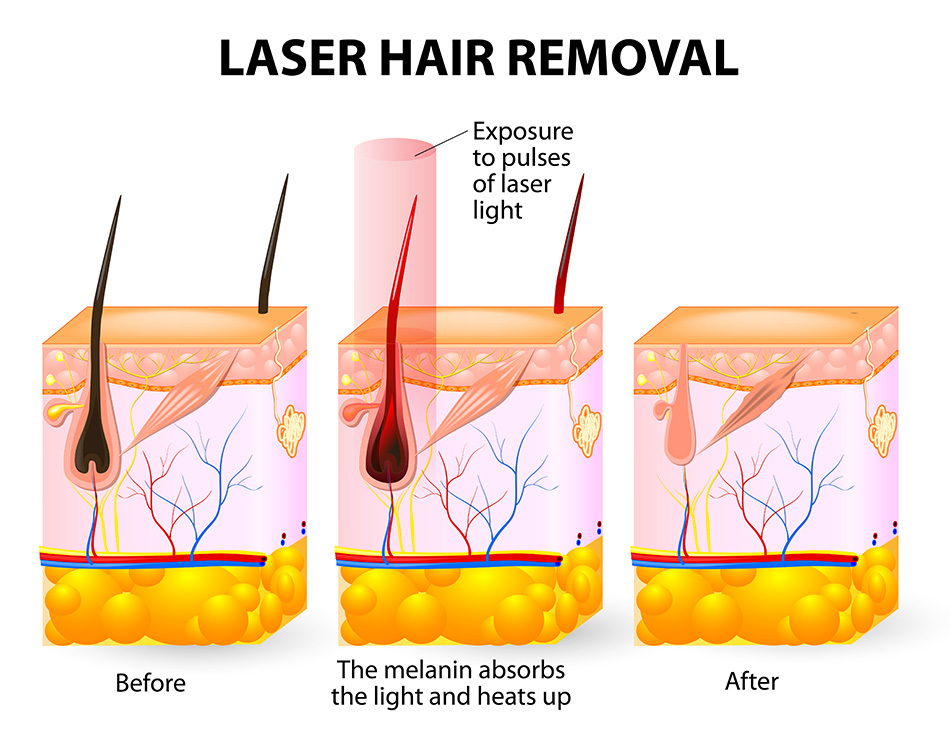
Two machines can both be called "laser hair removal machines" and still behave quite differently in daily use. A 755 nm system, an 808 nm diode laser and a 1064 nm Nd:YAG system have different wavelength characteristics, so the buyer should compare the actual configuration rather than simply choosing the machine labeled "laser."
| Wavelength | Best Suited For | Key Characteristics |
| Alexandrite 755 nm | Lighter skin types, fine or lighter hair | Strong melanin absorption; often considered useful for lighter skin and finer hair when appropriately selected |
| Diode 808 nm | Light to medium skin (Fitzpatrick I–IV), dark coarse hair | The workhorse wavelength for professional hair removal; deep penetration |
| Nd:YAG 1064 nm | Darker skin types (Fitzpatrick V–VI) | Lower melanin absorption than shorter wavelengths; often considered for darker skin types when appropriately selected |
Diode Lasers Are Common in Professional Hair Removal
Diode laser systems are widely used in professional aesthetic settings and are available in different wavelength configurations designed to address different operating and client requirements. In practice, buyers should compare the actual wavelength combination, cooling performance, pulse control, spot size, power stability and software of each diode laser hair removal machine rather than assuming every diode laser performs the same way.
Multi-Wavelength Diode Systems Offer More Flexibility
Some modern diode systems combine wavelengths such as 755, 808 and 1064 nm in one platform. For distributors and clinics serving a broad client base, this type of configuration can be useful because the business is not locked into a single wavelength strategy.
Cooling Is Part of the Treatment System
A strong cooling system can affect operator workflow and client comfort, but it should be evaluated together with the handpiece, treatment area, energy delivery and temperature monitoring — not as a standalone marketing number.
IPL vs Laser Hair Removal: Side-by-Side Comparison
There is no useful "winner" without knowing the business context. The following comparison is better treated as a buying framework than as a ranking.
| What You Are Comparing | IPL | Laser Hair Removal |
| Light delivery | Broad-spectrum | Specific wavelength |
| Hair-removal focus | Can be one of several applications | Commonly dedicated to hair removal |
| Wavelength selection | Determined by filters and system design | Determined by laser configuration |
| Device flexibility | Often higher for multifunctional platforms | Can be more specialized |
| Client coverage | Depends strongly on device design and settings | Depends on wavelength configuration and settings |
| Treatment speed | Depends on spot size, pulse rate and workflow | Depends on spot size, repetition rate and system configuration |
| Buying priority | Filters, pulse control, energy, cooling, applications | Wavelength, pulse, fluence, spot size, cooling |
| Business positioning | Multifunctional light platform | Dedicated or specialist hair-removal platform |
The Technology Is Only One Part of the Equation
A common mistake is comparing two machines using only the words "IPL" and "laser." A better comparison looks at the complete operating system: energy delivery, cooling, spot size, pulse control, handpiece design, software, training and expected treatment workflow.
Do Not Compare Wattage Alone
Higher wattage does not automatically mean better treatment performance. For a buyer, output stability, usable treatment settings, cooling, operator control and the ability to deliver treatments consistently can matter more than a single headline power number.
Treatment Sessions, Speed and Comfort
How Many Sessions Will Clients Need?
Clients usually need multiple sessions with either IPL or laser hair removal because hair grows in cycles. The actual number varies with the treatment area, hair characteristics, skin type, device settings and individual response, so clinics should avoid promising a fixed number of sessions. A more practical approach is to build a treatment plan around individual response and follow-up assessment.
Treatment Speed Depends on More Than Power
A larger spot size can cover more area per pulse, while a faster repetition rate can improve workflow when the system is properly configured. For a clinic, the useful metric is not simply "how many watts does the machine have?" but how much treatment area the operator can reasonably cover during a normal appointment.
Comfort Depends on the Complete System
Cooling is one of the most important parts of the client experience, but it is not the only factor. Pulse settings, energy selection, handpiece design, skin contact, treatment area and operator technique all play a role, so supplier demonstrations should focus on the complete workflow rather than one cooling temperature printed on a specification sheet.
Which Technology Fits Different Client Profiles?
The most appropriate technology depends on the type of clients you serve and the treatment positioning of your business. A clinic should evaluate its expected client mix instead of assuming that one technology is universally superior.
| Business Situation | Direction to Consider | Main Reason |
| Salon adding a broader light-based menu | IPL | Multifunctional positioning may be useful |
| Clinic focused mainly on hair removal | Professional laser | Dedicated hair-removal workflow |
| Distributor targeting premium hair-removal clinics | Advanced diode laser | Stronger specialist positioning |
| Business serving a broad range of clients | Multi-wavelength laser | More wavelength flexibility |
| Clinic with established IPL services | Upgrade or optimize IPL | Existing workflow and client familiarity |
For a Hair-Removal-Focused Clinic
A dedicated laser system may make more sense when hair removal is one of the clinic's core revenue services. In that situation, the buyer should pay particular attention to wavelength configuration, cooling, spot size, treatment speed and how easily the system can be integrated into daily bookings.
For a Multifunctional Beauty Business
IPL may make more sense when the business wants one platform that can support several light-based services. The important point is to confirm that the extra functions will actually be used, rather than paying for features that look good on a brochure but rarely enter the treatment menu.
For a Distributor
A distributor should think one step further than the treatment room. The better question is which platform is easier to position, train, price and support across the target market, and whether the supplier can provide the product configuration and technical support needed after the sale.
What Should Clinics Check When Comparing Devices?
Before comparing two machines, define the treatment service you are actually trying to build. Then compare the specifications that affect that service rather than getting distracted by the longest specification sheet.
| Buying Question | Why It Matters |
| Which wavelength(s) are available? | Determines the system's positioning and client coverage strategy |
| What is the spot size? | Affects treatment coverage and workflow |
| How fast can the system fire? | Influences appointment efficiency |
| How is cooling delivered? | Affects comfort and operating workflow |
| How stable is energy delivery? | Consistency matters in daily operation |
| Can operators adjust key parameters? | Different services may require different settings |
| What monitoring is built in? | Useful for controlling the operating process |
| How easy is the interface? | Training and daily use become easier |
| What training is included? | A machine is only useful when staff can operate it properly |
| What happens after delivery? | Technical support matters over the equipment's working life |
Look at the Handpiece, Not Just the Main Unit
The handpiece is what the operator actually uses during treatment, so its ergonomics, cooling, spot size and trigger response deserve as much attention as the main screen. This is one detail that often gets overlooked when buyers compare machines from supplier quotations.
Ask for the Real Workflow
A supplier can give you a beautiful specification sheet in five minutes. A more useful evaluation is to ask for a real demonstration of setup, parameter adjustment, cooling operation, shot counting, handpiece handling, cleaning and the steps required to complete a normal treatment.
Think About Consumables and Maintenance
The purchase price is only the first cost. Depending on the system, the long-term economics may also involve handpiece components, cooling-related maintenance, replacement parts, service time and operator training, so these should be part of the buying discussion.
Ready to Compare the Business Side?
The technology comparison is only the first step. If you are choosing between IPL and laser for a clinic, the next question is how treatment pricing, expected volume, equipment cost and operating workflow may affect the business case. For a dedicated comparison of treatment economics, break-even timelines and investment planning, read our business-focused guide: IPL vs Laser: Which Technology Is More Profitable for Aesthetic Clinics?
FAQ
Is laser hair removal better than IPL?
Not automatically. Laser uses a more targeted wavelength, while IPL uses broad-spectrum light, but the better option depends on the device configuration, client profile, treatment menu and business model.
Is IPL cheaper than laser hair removal?
Equipment cost can vary widely for both technologies, so there is no universal price rule. Compare the complete investment — including machine configuration, accessories, training, service and expected treatment capacity — rather than looking only at the purchase price.
Is IPL or laser better for a beauty salon?
It depends on what the salon plans to sell. A multifunctional salon may value IPL's broader positioning, while a business focused mainly on professional hair removal may prefer a dedicated laser system.
Which is better for a clinic: IPL or diode laser?
For a clinic where hair removal is a core service, a diode laser may be attractive because it is designed specifically around hair removal. However, the actual business case still depends on the system's wavelength configuration, cooling, treatment speed, purchase cost and local pricing.
Does a more expensive laser machine always perform better?
No. A higher purchase price may reflect a more advanced configuration, stronger cooling, premium components or additional software, but it does not automatically mean the machine is the better fit for every clinic.
How many laser or IPL sessions will a client need?
There is no fixed number that applies to every client. Both IPL and laser hair removal normally require multiple sessions because hair grows in cycles, while the actual treatment plan depends on the area, hair characteristics, skin type, device and individual response.
Should a clinic choose IPL because it can perform multiple treatments?
Only when those additional applications match the clinic's actual demand. Multifunctionality can be useful, but unused features still represent part of the equipment investment.
What should I ask a supplier before buying a hair removal machine?
Ask for the actual wavelength configuration, spot size, cooling method, operating controls, training, warranty, technical support, replacement components and a complete quotation. It is also worth asking the supplier to demonstrate the real operating workflow rather than relying only on catalogue specifications.
Conclusion
IPL and laser hair removal are different technologies, but the buying decision should not be reduced to "Which one is better?" For clinics and salons, the better question is: which technology, device configuration and workflow make the most sense for the clients and services you actually plan to serve?
A practical comparison should cover wavelength, energy delivery, cooling, spot size, treatment speed, operator workflow, training, after-sales support and total treatment economics — not just the headline power or purchase price. For a professional aesthetic business, the best machine is usually not the one with the longest specification sheet. It is the one your team can use consistently, position clearly and build into a sustainable treatment service.
Ready to Compare Your Hair Removal Options?
Tell us about your target market, treatment menu and business model. Krysmed Technology can help you compare suitable IPL and laser configurations based on the way you plan to operate them.
Our Contact
Ready to Elevate Your Business with Krysmed?
Let’s discuss your needs and find the best solution for your business. Our experts are here to provide personalized recommendations tailored to your business needs.
-
Call For Inquiry
-
Send Us Email
info@krysmed.com
Get A Custom Quote Now!
We value your privacy and guarantee a prompt, professional reply.
 WhatsApp
 info@krysmed.com
 +86 19867944875