

News

September 19, 2026

755nm vs 808nm vs 1064nm: How Should Clinics Choose a Diode Laser Configuration?
Short Answer
There is no single "best" diode laser wavelength for every clinic. 755nm, 808nm and 1064nm have different light-absorption and penetration characteristics, so the right configuration depends on the skin tones, hair characteristics and treatment areas your clinic actually expects to handle. In practice, 808nm is commonly positioned as a versatile core wavelength, 755nm is often considered for lighter or finer hair on suitable skin, while 1064nm is commonly selected when treating darker skin tones and deeper hair follicles.[1] For buyers, the bigger question is not "Which wavelength is strongest?" but "Which configuration gives my clinic enough flexibility without paying for features I will rarely use?" |
Why Does Wavelength Matter in Diode Laser Hair Removal?
A laser hair-removal system works by delivering light energy that is preferentially absorbed by melanin in the hair and converted into heat, creating a thermal effect on the targeted follicular structures. Because different wavelengths interact with melanin differently and penetrate to different depths, wavelength selection affects which client and hair profiles a system is suited to.[1]
This is why two machines can both be marketed as "professional diode lasers" while offering quite different practical capabilities.
For clinics comparing professional diode laser hair removal machines, wavelength should therefore be evaluated together with cooling, fluence, pulse width, spot size, treatment workflow, warranty and expected utilization.
755nm vs 808nm vs 1064nm: The Basic Difference
The simplest way to understand the three wavelengths is to look at where each one fits in a clinic's treatment strategy.
| Wavelength | Common Positioning | Typical Consideration | Business Use Case |
| 755nm | Higher melanin absorption | Often considered for lighter skin and finer or lighter hair when appropriately selected | Useful when a clinic regularly serves lighter-skinned clients or needs greater flexibility for finer hair |
| 808nm | Versatile core diode wavelength | Commonly used for facial and body hair-removal applications | Practical choice for clinics where general hair removal is the core service |
| 1064nm | Longer wavelength with deeper penetration | Often considered for darker skin tones and deeper hair follicles | Useful for clinics serving a broader range of skin tones |
These descriptions are general technical positioning rather than fixed treatment rules. Actual treatment parameters and wavelength selection should follow the device configuration, professional training, client assessment and applicable local requirements.[1]
755nm: When Does It Make Sense?
755nm has higher melanin absorption than longer wavelengths and is commonly associated with Alexandrite hair-removal systems, where it is often considered useful for lighter skin and finer hair.[1]
755nm for Finer Hair
Finer or lighter hairs generally contain less pigment than coarse dark hairs, so wavelength selection becomes more important when a clinic's client base includes these cases. A 755nm configuration can be considered when the clinic wants a wavelength with stronger melanin absorption for selected lighter-skin applications.
755nm for Lighter Skin
Because shorter wavelengths have stronger interaction with melanin, 755nm is generally more relevant to lighter skin profiles than to heavily pigmented skin. This does not mean a 755nm system should be automatically excluded from every darker-skin application, but it does mean that clinics should pay close attention to skin pigmentation, tanning status and treatment parameters.[1]
What Buyers Should Check
When a supplier advertises a 755nm diode configuration, ask whether the 755nm source is part of a true multi-source platform and how the manufacturer defines its output specifications. This is especially important because 755nm is traditionally associated with Alexandrite technology, while 808nm is commonly associated with diode lasers.[1]
808nm: Why Is It Still a Core Wavelength?
808nm is widely used in professional hair-removal systems and is generally positioned as a versatile wavelength for facial and body applications. Its combination of penetration and melanin absorption has made the 800–810nm range a common choice for professional hair reduction.[1]
808nm for Everyday Hair Removal
For many clinics, 808nm can serve as the main workhorse wavelength because a large portion of their appointments involve relatively common facial and body hair-removal applications. That makes it particularly relevant when the clinic wants a straightforward configuration rather than a highly specialized platform.
808nm for New Clinics
A new clinic does not necessarily need the most complicated multi-wavelength configuration on day one. If most expected clients fall within the clinic's intended treatment profile, a well-configured 808nm system with appropriate cooling and parameter control can be a practical starting point.
808nm Is Not the Whole Story
Choosing 808nm does not remove the need to consider fluence, pulse duration, spot size, cooling and treatment technique. A wavelength number alone cannot tell you how a complete machine will perform in daily clinical workflow.
1064nm: When Should Clinics Consider It?
1064nm is a longer wavelength with lower melanin absorption than shorter hair-removal wavelengths and deeper penetration characteristics, which is why it is commonly considered when treating darker skin types.[1]
1064nm for Darker Skin Profiles
For clients with more epidermal melanin, the competition between the hair target and epidermal pigment becomes more important. Longer-wavelength 1064nm systems are commonly used because they interact less strongly with epidermal melanin than shorter wavelengths, although actual treatment suitability still depends on the client and treatment parameters.[2]
1064nm for Deeper Hair
The longer wavelength also penetrates more deeply, making 1064nm relevant when the treatment strategy includes deeper hair follicles. Clinics serving a broad range of client profiles may therefore see 1064nm as a useful complement to shorter wavelengths.
1064nm Does Not Mean "For Everyone"
A common buying mistake is to assume that adding 1064nm automatically makes a machine suitable for every client. Wavelength is only one part of the system, and the actual protocol still depends on skin tone, hair characteristics, treatment area, fluence, pulse width and cooling.
Which Wavelength Is Right for Your Clinic?
The answer becomes much easier when you start with your customer mix, rather than with the machine brochure.
| Clinic Profile | Typical Requirement | Configuration to Consider |
| New salon with mainly standard hair-removal services | Simple workflow and controlled initial investment | 808nm-focused system |
| Clinic serving mostly lighter skin profiles | Flexibility for lighter and finer hair | 755nm + 808nm configuration |
| Clinic serving a diverse skin-tone population | Broader wavelength flexibility | 755nm + 808nm + 1064nm or broader multi-wavelength configuration |
| Clinic with a significant darker-skin client base | Longer-wavelength option | Configuration including 1064nm |
| High-volume premium clinic | Wider client coverage and more configuration flexibility | Multi-wavelength platform with appropriate cooling and workflow features |
| Distributor entering multiple markets | Ability to adapt the product to different customer profiles | Flexible multi-wavelength platform where commercially justified |
These are business-planning examples, not clinical protocols. The actual configuration should be matched to the intended market, local requirements and trained professional use.
Single-Wavelength vs Multi-Wavelength Diode Laser
The decision is not simply about whether more wavelengths are better.
When a Single-Wavelength System Can Make Sense
A single-wavelength system can be practical when a clinic has a relatively focused customer base and a clear hair-removal service model. It may also help a new business control its initial equipment investment instead of paying for configuration options it does not expect to use.
When Multi-Wavelength Makes More Sense
A multi-wavelength platform becomes more commercially interesting when a clinic expects a wide range of skin tones and hair characteristics. It can also be useful for distributors who need one platform that can be marketed across different customer segments and markets.
More Wavelengths Also Mean More Questions
More wavelengths can increase flexibility, but they can also increase equipment complexity and price. Before paying extra, ask whether your expected treatment volume and customer mix are sufficient to make those additional options useful.
Don't Choose a Wavelength Before Looking at Your Client Mix
One of the easiest ways to choose the wrong configuration is to start with technology and only think about customers afterward. A better approach is to create a simple customer profile.
| Question | What to Record |
| What skin tones do you commonly treat? | Approximate client distribution by skin type |
| What hair characteristics are most common? | Dark, coarse, fine, lighter or mixed |
| Which treatment areas sell most often? | Face, underarms, bikini, legs, back, arms, etc. |
| How many new hair-removal clients do you expect each month? | Realistic lead and booking estimate |
| Do you need one machine for different customer segments? | Yes / No |
| Are there specific local market requirements? | Regulatory and professional-use requirements |
Once you have these answers, wavelength selection becomes a business decision supported by technical information rather than a specification-sheet guessing game.
Wavelength Is Only One Part of the Machine
This is where many online comparisons become too simplistic.
Two systems can offer the same 808nm wavelength but still behave differently because of differences in fluence, pulse duration, spot size, repetition rate, cooling, handpiece design and power delivery.
Krysmed's own market-launch guidance recommends looking at the relationship between fluence, pulse width, repetition rate, spot size, cooling and actual laser output rather than comparing headline wattage or wavelength count alone.[4]
| Specification | Why It Matters | Buyer Question |
| Wavelength | Determines the light spectrum being delivered | Which client and hair profiles is it intended for? |
| Fluence | Describes energy delivered per unit area | What is the usable range in the real treatment system? |
| Pulse width | Affects how energy is delivered over time | What range is available for different treatment requirements? |
| Spot size | Influences coverage and workflow | What areas is the handpiece designed to work efficiently on? |
| Repetition rate | Affects treatment workflow and coverage speed | How does actual operating speed compare with headline Hz? |
| Cooling | Supports epidermal protection and client comfort | What type of cooling is used and how is temperature monitored? |
| Laser source | Determines the underlying system architecture | What source technology is used for each wavelength? |
How Cooling Changes the Buying Decision
Cooling should be evaluated together with wavelength and operating parameters, not as an isolated marketing number. A strong cooling system can support treatment comfort and workflow, but buyers should ask what cooling method is actually used, how the temperature is controlled, and whether the performance is maintained during repeated treatments.
Sapphire Cooling
Sapphire contact cooling is commonly used in professional hair-removal systems to cool the treatment interface. When comparing machines, ask about the actual cooling structure rather than comparing only a single temperature figure.
TEC Cooling
TEC or thermoelectric cooling can be incorporated into a broader cooling architecture. The important commercial question is whether the cooling system remains effective and reliable during the clinic's expected workload.
Cooling and High-Volume Clinics
For high-volume businesses, cooling becomes even more relevant because the machine may be used repeatedly throughout the day. This is one reason premium systems often justify their higher price through the overall system rather than through wavelength count alone.
How Much Should You Pay for More Wavelengths?
There is no universal premium that makes an additional wavelength "worth it." Instead, calculate the commercial value of the added flexibility.
Example: A Small Salon
Suppose a small salon expects most of its clients to fall within a relatively narrow profile and plans to perform only a modest number of hair-removal treatments each month.
In this case, a simpler 808nm-focused system may be easier to justify because the clinic has fewer opportunities to use additional wavelength options.
Example: A Multi-Segment Clinic
Now consider a clinic that serves clients across a wider range of skin tones and wants hair removal to become a major service category.
The additional flexibility of a 755nm + 808nm + 1064nm or broader configuration may have more commercial value because the clinic has more situations in which those options could be useful.
The lesson is simple: pay for additional capability when you expect to use it.
A Practical ROI Test for Multi-Wavelength Systems
A more expensive machine should be evaluated against the additional business capability it provides. Use this basic framework:
Additional Investment = Multi-Wavelength System Price − Basic System Price Additional Monthly Contribution = Additional Treatments or Revenue Enabled by the Extra Configuration − Additional Monthly Costs |
A simplified planning example might look like this:
| Planning Variable | Basic Configuration | Multi-Wavelength Configuration |
| Equipment investment | $8,000 | $12,000 |
| Difference in investment | — | $4,000 |
| Expected monthly treatments | 30 | 45 |
| Average treatment price | $120 | $120 |
| Additional monthly revenue | — | $1,800 |
This is only an illustrative planning scenario. It does not mean a multi-wavelength machine will automatically generate additional bookings. The additional revenue must come from actual market demand, appropriate service positioning and realistic treatment capacity.
What If Your Market Has Many Different Skin Tones?
This is one of the strongest business reasons to consider a multi-wavelength system.
A clinic in a diverse market may have very different client profiles from one operating in a more homogeneous local market. A distributor also faces the same issue when selling across different countries or regions.
A multi-wavelength platform can reduce the need to maintain several separate laser platforms, but buyers should still verify the actual specifications and intended use of each wavelength.
Krysmed's market guidance similarly recommends selecting wavelength configuration based on the customer population rather than assuming every market needs the same system.[4]
Should Clinics Choose 755nm + 808nm + 1064nm?
This configuration is commercially attractive because it combines three commonly discussed wavelength positions in one platform.
| Configuration | Potential Business Advantage | Main Consideration |
| 808nm only | Simple, focused configuration | Less flexibility across different client profiles |
| 755nm + 808nm | More flexibility for lighter-skin and hair profiles | Still lacks the longer 1064nm option |
| 808nm + 1064nm | Balances general applications with longer-wavelength flexibility | Less emphasis on 755nm applications |
| 755nm + 808nm + 1064nm | Broad wavelength flexibility | Higher investment and more configuration complexity |
| 755nm + 808nm + 940nm + 1064nm | Broader multi-wavelength platform | Buyers should understand the specific role of each source before paying more |
There is no universal winner in this table. The correct choice depends on which capabilities your clinic can actually turn into services.
What Should Distributors Consider?
For distributors, wavelength selection is also a market-positioning decision.
A distributor selling into one relatively focused market may prefer a simple configuration that is easier to explain and price. A distributor covering several markets may find a multi-wavelength platform easier to position across different customer requirements.
Check the Market Before Choosing the SKU
Before ordering inventory, look at the dominant client profiles, competitor configurations, local regulations and expected price range. The goal is to avoid stocking a machine that has attractive specifications but does not match the needs of local clinics.
Don't Sell "More Wavelengths" as the Whole Story
A customer may initially be impressed by four wavelengths, but serious buyers will eventually ask how those wavelengths are used. A better sales conversation explains the role of each wavelength and connects it to a specific customer or business requirement.
Standardize the Core Configuration
If you distribute in multiple countries, consider whether you need one standard model or several configurations. Standardization can simplify training, spare parts and marketing, while regional configurations may make more sense when customer needs differ significantly.
For more on this commercial decision, see Krysmed's guide to launching a diode laser hair-removal machine in a new market.
755nm vs 808nm vs 1064nm: A Buyer Checklist
Before requesting a quotation, prepare answers to these questions.
| Question | Why You Should Ask |
| What wavelength configuration is included? | Confirms exactly what you are buying |
| Are all wavelengths available from the same handpiece? | Important for workflow and operational convenience |
| What is the source technology for each wavelength? | Helps you understand the actual system architecture |
| Can wavelengths be selected independently? | Important for configuration flexibility |
| What are the fluence, pulse width and frequency ranges? | Provides context beyond wavelength alone |
| What cooling system is included? | Relevant to comfort and repeated daily use |
| What spot sizes are available? | Affects treatment workflow and treatment areas |
| What is the actual electrical input? | Useful for operating-cost calculations |
| What training is included? | Important for professional implementation |
| What warranty and technical support are provided? | Relevant to long-term equipment ownership |
How Much Does the Configuration Affect the Total Machine Price?
Wavelength count is one of several factors affecting the price of a professional diode laser.
Cooling architecture, laser sources, power supply, handpiece design, software, user interface, certifications, warranty and manufacturer support can all affect the quotation.
For a broader look at professional laser equipment investment, see our guide to professional laser hair-removal machine cost.
The important point is that you should compare the complete system configuration, not simply the number printed next to "nm."
How Krysmed Configures Different Diode Laser Systems
Krysmed approaches diode laser configurations according to different business requirements rather than assuming every customer needs the same setup.
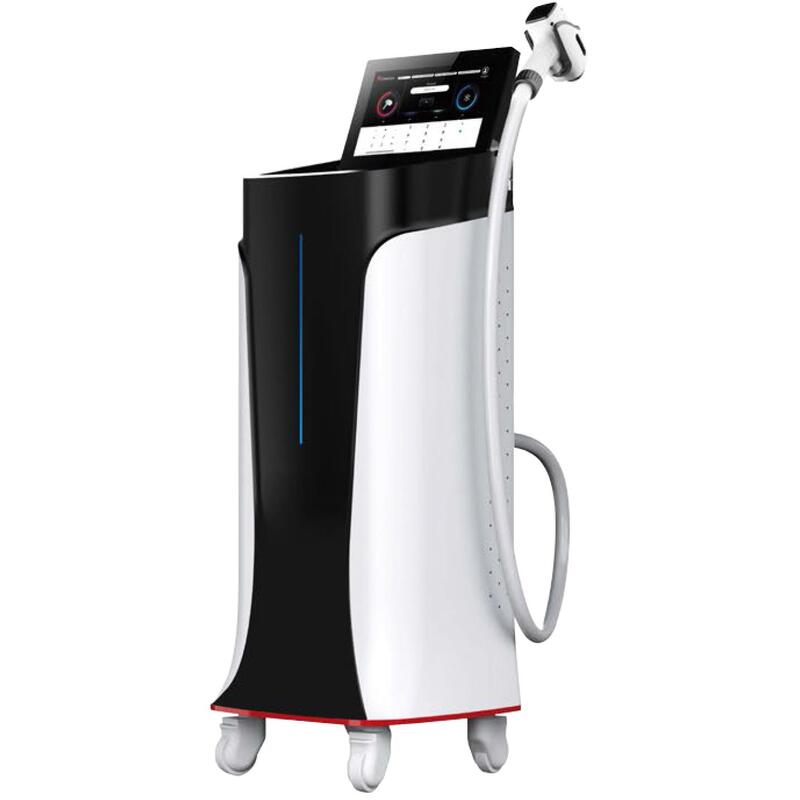
The KrySmooth Smart Laser is positioned as a more practical professional option for businesses that want to focus on core hair-removal services without necessarily moving into a premium configuration.
The KrySmooth AI Diode Laser is positioned at the premium end, with a four-wavelength configuration of 755nm, 808nm and 1064nm, together with additional system and data-management features.[3]
You can compare the KrySmooth Smart Laser and KrySmooth AI Diode Laser based on your expected client profile and business model rather than choosing purely by wavelength count.
Which Diode Laser Configuration Fits Your Business?
Think about the decision in four steps.
Step 1 Define Your Main Customer
Identify the skin tones, hair characteristics and treatment areas that represent the majority of your expected appointments.
Step 2 Decide How Much Flexibility You Actually Need
A focused business may not need every wavelength, while a diverse clinic or distributor may benefit from broader configuration flexibility.
Step 3 Compare the Complete System
Look at wavelength, source type, fluence, pulse width, spot size, repetition rate, cooling, warranty, service and training together.
Step 4 Run the Business Numbers
Compare the additional equipment investment with expected utilization, treatment pricing and the additional customer segments the configuration could realistically support.
This approach is more useful than asking which wavelength is "the strongest."
Final Takeaway
755nm, 808nm and 1064nm should be viewed as different tools within a treatment system, not as competing numbers where one is automatically better than the others.
755nm is commonly associated with stronger melanin absorption and lighter-skin or finer-hair applications, 808nm is widely used as a versatile core wavelength, and 1064nm offers longer-wavelength characteristics that are commonly considered for darker skin tones and deeper follicles.[1]
For most buyers, the real decision is whether a single-wavelength system is enough or whether a multi-wavelength configuration provides enough additional flexibility to justify its higher investment.
And that decision should start with your customers — not the brochure.
FAQ
Is 808nm the best diode laser wavelength?
There is no single best wavelength for every clinic. 808nm is widely used as a versatile professional hair-removal wavelength, while 755nm and 1064nm can provide different options for specific client and hair profiles.[1]
Is 755nm better than 808nm for fine hair?
755nm has higher melanin absorption and is commonly considered for lighter skin and finer hair, but actual suitability depends on the hair characteristics, skin pigmentation and treatment parameters.[1]
Is 1064nm better for darker skin?
1064nm is commonly considered for darker skin because its longer wavelength has lower melanin absorption and deeper penetration than shorter hair-removal wavelengths. This does not replace individual assessment and appropriate professional treatment parameters.[1]
Should a new salon buy a multi-wavelength diode laser?
Not necessarily. A new salon should first estimate its customer profile, expected treatment volume and budget, then decide whether the additional flexibility of multiple wavelengths is likely to be useful.
Are 755nm and 1064nm actually diode lasers?
755nm is traditionally associated with Alexandrite lasers, while 1064nm is traditionally associated with Nd:YAG lasers. When these wavelengths are offered within a product marketed as a multi-wavelength diode platform, buyers should ask the manufacturer about the source architecture and technical documentation rather than assuming all wavelengths come from identical diode sources.[1]
What is the difference between a 3-wavelength and 4-wavelength diode laser?
A four-wavelength system adds another wavelength option, such as 940nm, to the more commonly discussed 755nm, 808nm and 1064nm combination. Whether the additional wavelength is commercially useful depends on the manufacturer's system design and the clinic's actual customer requirements.[4]
Does more wavelength mean better hair-removal results?
Not automatically. Wavelength count is only one specification, and buyers should also compare fluence, pulse width, spot size, cooling, laser source, workflow and treatment parameters.
How should distributors choose a diode laser configuration?
Start with the skin-tone and hair profiles in the target market, then compare the configuration, regulatory requirements, investment level, support model and expected sales volume. Krysmed's market-launch guidance recommends selecting the configuration based on the actual customer base rather than simply choosing the largest number of wavelengths.[4]
Need Help Choosing the Right Diode Laser Configuration?
Still comparing 755nm, 808nm, 1064nm or multi-wavelength diode laser configurations?
Tell Krysmed about your target market, typical client profile, treatment areas, expected monthly volume and preferred investment range. Our team can help you compare practical configurations and discuss the KrySmooth Smart Laser or KrySmooth AI Diode Laser based on your business requirements.
Contact Krysmed for a personalized recommendation and quotation.
| Contact Krysmed → |
Sources & References
This article draws on the following external clinical references and Krysmed product and business guides.
External References
[1] Laser Hair Removal — StatPearls, NCBI Bookshelf [2] Comparison among Intense Pulsed Light, Alexandrite, and Long-Pulsed Neodymium-Doped Yttrium Aluminum Garnet 1064 nm Lasers for Lower Leg Hair Removal: Case Series — PMC |
Krysmed References
[3] KrySmooth AI Diode Laser — product configuration (755nm / 808nm / 940nm / 1064nm) [4] How to Launch a Diode Laser Hair Removal Machine in a New Market: A Practical Guide for Distributors |
External references are provided for general technical background. Wavelength selection, treatment parameters, client suitability and treatment protocols should always be determined by appropriately trained professionals according to the specific device, client assessment and applicable local requirements.
Our Contact
Ready to Elevate Your Business with Krysmed?
Let’s discuss your needs and find the best solution for your business. Our experts are here to provide personalized recommendations tailored to your business needs.
-
Call For Inquiry
-
Send Us Email
info@krysmed.com
Get A Custom Quote Now!
We value your privacy and guarantee a prompt, professional reply.
 WhatsApp
 info@krysmed.com
 +86 19867944875