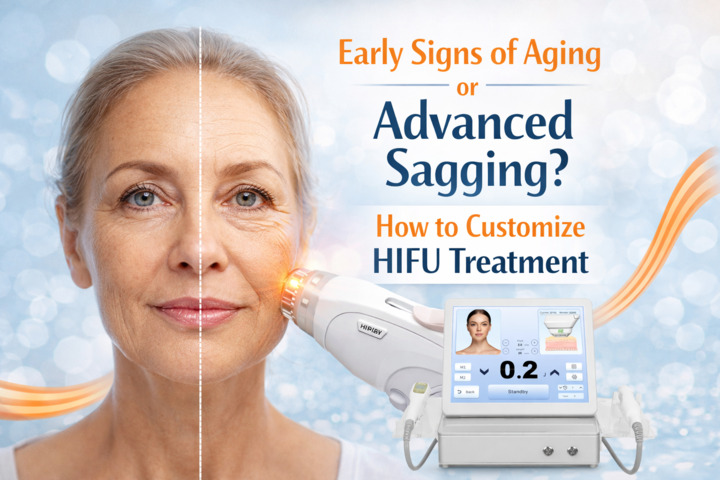
Early Signs of Aging or Advanced Sagging? How to Customize HIFU Treatment
HIFU is not a one-size-fits-all treatment—early aging and advanced sagging require very different protocols. Many disappointing HIFU lifting results come from using the same depth, energy, and shot mapping on every patient. In this guide, practitioners will learn how to customize HIFU treatment based on aging stage, select the appropriate cartridge depth, and build a more effective treatment plan for both early signs of aging and severe skin laxity.
1. Why HIFU Results Depend on Aging Stage
HIFU outcomes vary because early aging and advanced sagging involve different levels of collagen decline, tissue descent, and structural support. Practitioners must adjust depth, energy, and treatment design based on severity rather than applying one standard protocol.
Early Aging Responds Faster
In early aging, collagen structures are still relatively intact, so HIFU mainly works through stimulation and tightening. Results tend to appear more naturally with moderate intensity and preventive treatment planning.
Advanced Sagging Requires Deeper Strategy
Advanced sagging often includes ligament laxity, heavier tissue descent, and volume loss, which limits how much lifting HIFU alone can achieve. A multi-layer approach with realistic expectations is essential for better clinical results.
2. Understanding Early Aging: The Ideal HIFU Candidate
Early aging patients are often the best candidates for HIFU because their skin still has strong collagen potential and only mild laxity. For practitioners, this stage is ideal for preventive tightening, subtle lifting, and long-term maintenance planning.
Common Early Signs of Facial Aging
Typical early aging includes slight jawline softening, mild cheek looseness, and the first appearance of fine lines or folds. These patients usually seek natural-looking improvement rather than dramatic lifting.
Treatment Goals for Early Aging Patients
The main goal is collagen stimulation and firmness, not aggressive repositioning. Using moderate energy with appropriate depth selection helps achieve smoother, tighter skin while maintaining comfort and safety.
3. Advanced Sagging: When HIFU Needs a Different Strategy
Advanced sagging requires a more structured HIFU protocol because tissue descent is deeper and skin laxity is more severe. Practitioners must focus on realistic lifting outcomes, multi-depth planning, and stronger treatment mapping rather than expecting the same response seen in early aging.
Clinical Features of Advanced Skin Sagging
Common signs include visible jowls, heavier lower-face drooping, and neck laxity, often combined with volume loss. These factors reduce the skin’s ability to rebound with collagen stimulation alone.
Setting Realistic Expectations for Severe Laxity
HIFU can improve firmness and contour, but it may not fully replace surgical lifting in advanced cases. A staged approach or combination therapy is often necessary to achieve balanced clinical results.
4. How to Customize HIFU Treatment Depth and Cartridge Choice
Choosing the correct HIFU depth is essential for safe and effective lifting results, especially when treating early aging versus advanced sagging. Practitioners should match cartridge selection to the patient’s tissue thickness, laxity severity, and treatment goal rather than using a fixed setting for every case.
Dermis vs SMAS — Targeting the Right Layer
Superficial depths focus on dermal tightening and collagen stimulation, while deeper cartridges reach structural layers responsible for lifting. Understanding which layer needs support is key to customizing HIFU treatment protocols.
Depth Selection Guide for Early vs Advanced Cases
Early aging patients often respond well to moderate dermal-focused tightening, whereas advanced sagging usually requires a multi-layer approach combining deeper and mid-level depths. Proper depth planning improves contour outcomes while reducing the risk of overtreatment.
5. Treatment Planning by Age and Severity
An effective HIFU treatment plan by age should reflect how quickly collagen responds and how advanced tissue laxity has become. Practitioners achieve better results when protocols are customized by severity rather than applying the same shot count and depth to every patient.
HIFU Treatment Plan for Patients in Their 30s
Patients in their 30s usually require fewer lines and moderate energy because laxity is mild and collagen stimulation is the main goal. A preventive schedule with maintenance sessions every 6–12 months often delivers the best long-term tightening outcomes.
Protocol Adjustments for Patients 40+
For patients over 40, advanced sagging often benefits from staged sessions instead of one aggressive treatment. Stronger vector mapping and multi-depth planning are essential to support lifting and contour improvement safely.
6. Operator Techniques That Improve Lifting Outcomes
Following a proper HIFU protocol for practitioners ensures predictable results and reduces patient discomfort. Strategic planning and precise execution are more important than applying maximum energy or full-face coverage.
Mapping Treatment Vectors Instead of Full Coverage
Targeting specific lifting directions, such as the jawline, helps achieve a natural contour while avoiding random shot placement. Vector-based mapping maximizes efficacy and maintains skin safety.
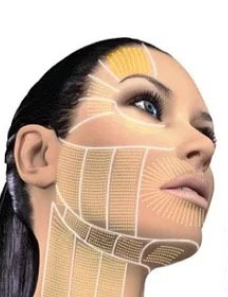
Energy and Shot Count: More Is Not Always Better
Maintaining safety margins and avoiding overtreatment protects tissue and nerves. Using only the necessary energy and shot count ensures effective collagen stimulation without compromising patient comfort.
7. Common Practitioner Mistakes That Reduce HIFU Results
Many disappointing HIFU outcomes are due to simple practitioner errors rather than device limitations. Avoiding these mistakes is key to achieving consistent, professional lifting results.
Using One Protocol for All Patients
Applying the same depth, energy, and shot count to every patient ignores differences in aging stage and tissue laxity, reducing effectiveness.
Superficial-Only Treatment in Advanced Sagging
Treating deep sagging with only dermal-level HIFU limits lifting results and can lead to patient dissatisfaction.
Overpromising Surgical-Level Lifts
Setting unrealistic expectations can harm credibility and patient trust, especially in cases of severe laxity.
Incorrect Depth in Thin Areas
Failing to adjust depth for thinner tissue increases risk of side effects and uneven results.
| Mistake | Key Point |
|---|
| One Protocol for All | Ignores patient differences |
| Superficial-Only | Limits lift in advanced sagging |
| Overpromising Lifts | Harms credibility |
| Incorrect Depth | Increases side effect risk |
8. When to Combine HIFU With Other Modalities
HIFU is highly effective on its own for many patients, but combination therapy can enhance results, especially in advanced sagging or volume-deficient areas. Practitioners should evaluate each patient’s needs and select complementary treatments strategically.
RF Tightening for Skin Texture
Radiofrequency can improve skin elasticity and texture in areas where HIFU alone may not fully stimulate collagen.
Fillers for Volume Loss
Injectable fillers restore lost volume and support lifting, particularly in the cheeks and mid-face, enhancing HIFU contouring effects.
Microneedling or CO2 for Surface Rejuvenation
For fine lines, superficial wrinkles, and skin tone improvement, combining HIFU with microneedling or fractional CO2 treatments provides a more complete anti-aging solution.
Final Thoughts: Matching Strategy to Aging Stage
HIFU delivers the best clinical results when treatment protocols are tailored to the patient’s aging stage. Early aging responds well to moderate-depth collagen stimulation and preventive tightening, while advanced sagging requires multi-layer planning, realistic expectations, and sometimes combination therapies. Practitioners who customize depth, energy, and shot mapping for each patient consistently achieve safer, more effective lifting outcomes.
Ready to Customize Your HIFU Protocols?
If you want to maximize lifting results and patient satisfaction, it’s essential to tailor HIFU treatment depth, energy, and shot mapping for each aging stage. Contact Krysmed today for professional guidance, cartridge selection advice, and operator training to build safer, more effective HIFU protocols.
FAQ
1: Can HIFU be effective for both early aging and advanced sagging?
Yes, but the approach differs. Early aging responds well to moderate-depth collagen stimulation, while advanced sagging often requires deeper layers and careful vector planning.
Q2: How do I know which cartridge depth to use?
Depth selection depends on tissue thickness and laxity. Dermal cartridges (3.0mm) are ideal for mild laxity, while SMAS cartridges (4.5mm) target structural lifting in advanced sagging.
Q3: How often should patients receive HIFU?
Early aging patients benefit from maintenance every 6–12 months, whereas advanced sagging may require staged sessions spaced 8–12 weeks apart for optimal results.
Q4: Is HIFU safe for thin or sensitive areas?
Yes, if proper depth, energy, and shot mapping are used. Avoid overtreatment in delicate areas to minimize discomfort and risk.
Q5: Can HIFU replace surgery for severe sagging?
HIFU can improve firmness and contour but cannot fully replace surgical lifts in cases of advanced tissue descent. Combining with RF, fillers, or microneedling may enhance results.
Q6: What is the most common operator mistake?
Applying the same protocol for all patients is the biggest error. Customizing depth, energy, and treatment mapping according to aging stage is key to consistent clinical outcomes.


 WhatsApp
 info@krysmed.com
 +86 19867944875