

News
23
Jan
Facial vs Body HIFU: Indications and Limitations
High-Intensity Focused Ultrasound (HIFU) is a leading non-surgical solution for lifting, tightening, and body contouring. However, facial and body HIFU are not interchangeable, as differences in tissue depth, treatment goals, and safety directly affect results. Understanding these distinctions helps clinics deliver predictable outcomes, patient satisfaction, and long-term ROI.
1. Understanding the Core Technology Behind HIFU
High-Intensity Focused Ultrasound (HIFU) is a non-invasive technology that delivers focused ultrasound energy to precise depths beneath the skin without disrupting the epidermis. By creating controlled thermal coagulation points, HIFU induces localized heating that triggers collagen contraction and long-term collagen remodeling.
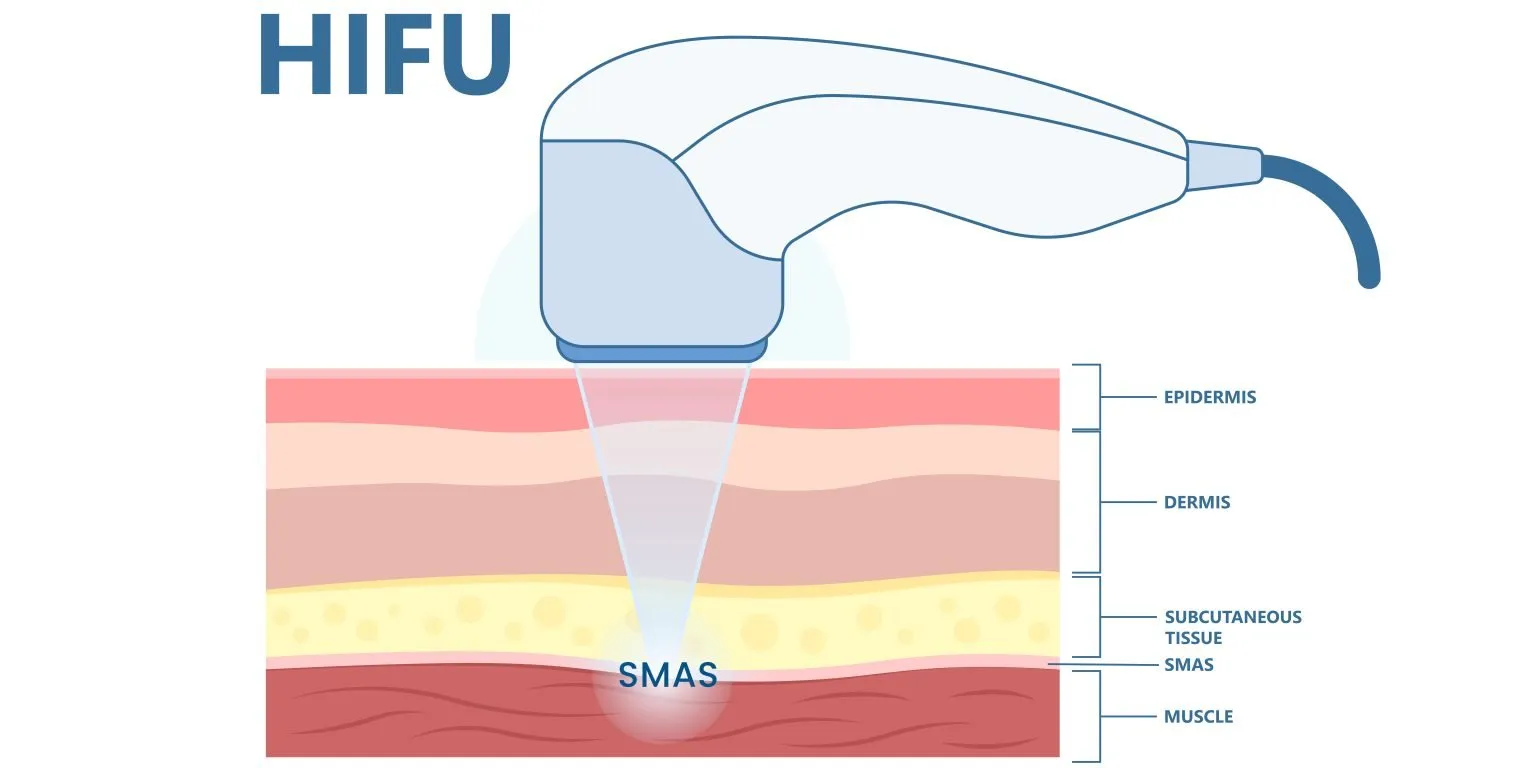
How HIFU Delivers Energy to Targeted Tissue Layers
Unlike radiofrequency or laser systems, HIFU concentrates energy at predefined focal depths, allowing practitioners to treat specific anatomical layers with high precision. This depth-selective delivery is the foundation of both facial lifting and body contouring applications.
Tissue Targets in Facial and Body HIFU Treatments
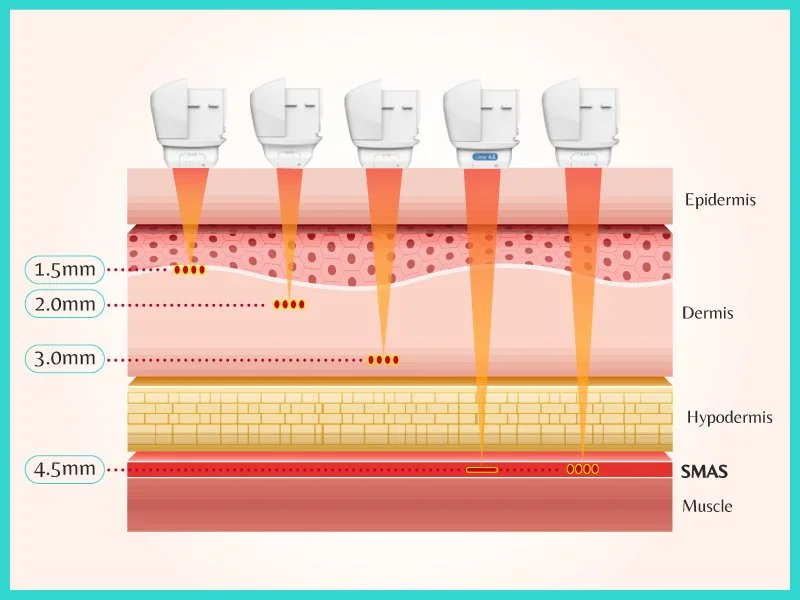
In facial treatments, HIFU primarily targets the deep dermis and the superficial musculoaponeurotic system (SMAS), where thermal stimulation leads to structural tightening, improved jawline definition, and enhanced midface support. In body treatments, deeper focal depths are applied to the subcutaneous fat layer and fibroseptal network, supporting fat volume reduction while stimulating secondary skin tightening. The ability to reach different tissue planes explains why facial HIFU and body HIFU require distinct treatment strategies and cartridge configurations.
Why Depth Precision Determines Clinical Outcomes
The effectiveness of HIFU depends not only on energy output, but on accurate depth selection, cartridge choice, line placement, and operator technique. Incorrect targeting may result in insufficient lifting, uneven contouring, or unnecessary discomfort. For clinics, understanding tissue anatomy and energy–depth matching is critical to achieving predictable results, high patient satisfaction, and long-term treatment success across both facial and body indications.
2. Understanding the Core Differences Between Facial and Body HIFU
Although both facial and body HIFU use the same ultrasound technology, their tissue targets, treatment depths, and clinical objectives differ significantly. These differences determine treatment safety, effectiveness, and device configuration, making proper indication selection essential for predictable results.
Treatment Objectives
Facial HIFU is primarily designed for lifting and tightening, focusing on repositioning sagging tissues and improving facial contours such as the jawline, midface, and neck. Body HIFU targets body contouring and localized fat reduction, with secondary skin tightening in areas including the abdomen, flanks, thighs, and arms. The different clinical goals determine distinct treatment strategies and protocols.
Penetration Depths and Target Tissues
Facial HIFU typically uses 1.5 mm, 3.0 mm, and 4.5 mm depths to treat the dermis and SMAS layer, where structural lifting occurs. Body HIFU operates at deeper focal depths, commonly 6.0 mm to 13.0 mm, targeting the subcutaneous fat layer and connective tissue to support contouring and tightening. Correct depth selection is essential for safety and consistent results.
Energy Delivery and Treatment Parameters
Facial treatments require precise energy control and refined line placement to achieve lifting while minimizing discomfort and nerve risk. Body treatments involve higher energy output and wider coverage patterns to address thicker fat layers and larger treatment zones. These differences explain why facial and body HIFU systems are not interchangeable.
3. Clinical Indications for Facial HIFU
Facial HIFU is designed for patients seeking non-surgical lifting and skin tightening. Understanding which areas and patient profiles respond best ensures safe, effective, and predictable results.
Ideal Treatment Areas
Facial HIFU is most effective in areas where deep structural support and skin tightening are required. Common treatment zones include the brow, periorbital region, midface, nasolabial folds, jawline, submental area, and neck. These regions benefit from precise energy delivery to the dermis and SMAS layer, allowing visible lifting and contour enhancement without surgical intervention.
Suitable Patient Profiles
The ideal candidates for facial HIFU are patients with mild to moderate skin laxity and early signs of aging. Patients typically present with jawline softening, mild jowling, cheek descent, or cervical laxity while maintaining adequate skin thickness and elasticity.
Facial HIFU is less effective in cases of severe ptosis, excessive skin redundancy, or advanced facial aging, where surgical lifting or combined treatment approaches may provide superior outcomes.
Expected Clinical Outcomes
Properly selected facial HIFU treatments result in gradual lifting, improved facial contours, and progressive skin tightening over 8 to 12 weeks as collagen remodeling develops. The most consistent improvements are observed in jawline definition, midface support, and neck firmness.
Results typically last 9 to 18 months, depending on patient age, skin quality, and maintenance protocols, making facial HIFU a reliable modality for long-term non-surgical rejuvenation.
4. Clinical Indications for Body HIFU
Body HIFU is intended for patients seeking targeted fat reduction and body contouring. Understanding the ideal treatment areas, patient profiles, and treatment parameters ensures safe and predictable outcomes.
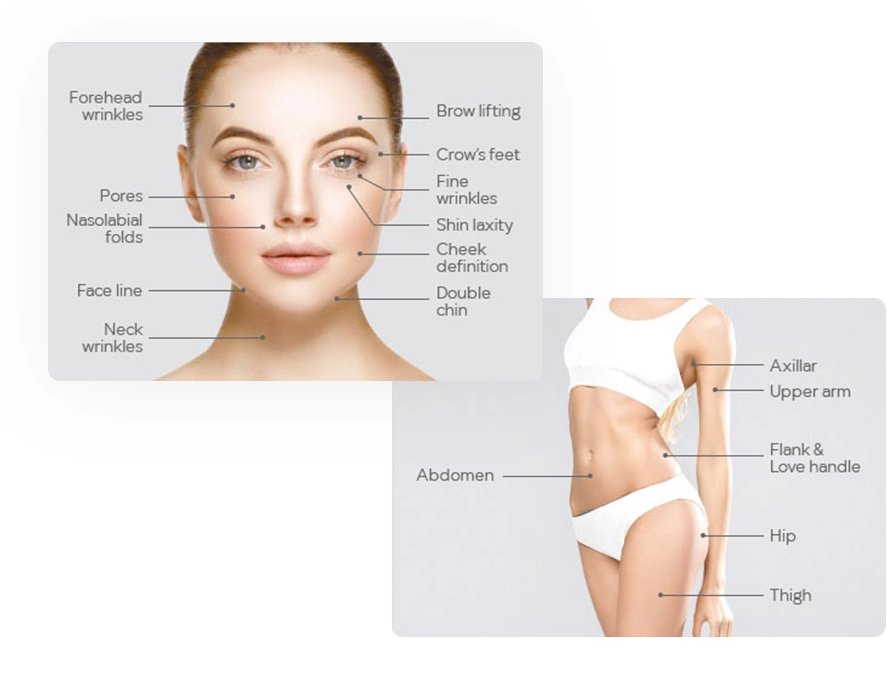
Target Body Areas and Goals
Body HIFU is commonly applied to the abdomen, flanks, thighs, arms, and buttocks. The primary goal is localized fat reduction, while secondary effects include skin tightening and contour improvement. Correctly selecting the treatment area is key to achieving visible results without over-treating.
Candidate Selection
Ideal candidates have moderate fat deposits and mild skin laxity. Patients with high BMI or excessive loose skin may require combination treatments or surgical options for optimal results. Proper patient selection improves satisfaction and treatment predictability.
Treatment Cycles and Recovery
Body HIFU typically requires 1–3 sessions per area, depending on fat thickness and patient response. Downtime is minimal, with most patients experiencing only mild redness or temporary sensitivity. Understanding tissue depth and energy settings ensures effective fat reduction while maintaining safety.
5. Technical Limitations of Facial HIFU
Although facial HIFU is effective for non-surgical lifting and tightening, specific technical limitations must be considered to ensure patient safety and predictable results.
Risks in Thin or Sensitive Areas
Certain facial regions, such as the periorbital area and around the mouth, have delicate structures and nerve pathways. Treating these areas requires careful planning to minimize pain, swelling, or temporary nerve irritation. Proper energy settings and handpiece control are essential for patient comfort and safety.
Limits in Advanced Skin Laxity
Facial HIFU is less effective for severe skin sagging. Patients with extensive laxity may require surgical lifting for optimal results. Additionally, repeated HIFU sessions can reach a plateau effect, where additional treatments provide minimal improvement.
Operator Dependency and Technique Sensitivity
Successful facial HIFU depends on precise vector design, accurate energy control, and correct cartridge selection. Inexperienced operators risk uneven lifting, under-treatment, or patient discomfort. Training and adherence to protocols are critical for consistent outcomes.
6. Technical Limitations of Body HIFU
Body HIFU is effective for fat reduction and skin tightening, but its technical limitations must be understood to ensure safe, consistent, and predictable results.
Depth and Energy Challenges
Body HIFU requires deeper focal depths and higher energy to effectively target fat layers. Incorrect depth selection or insufficient energy may lead to uneven contouring or suboptimal fat reduction. Careful calibration is essential for both safety and efficacy.
Skin Laxity Considerations
Patients with excessively loose skin may not achieve optimal tightening with HIFU alone. Over-treating or relying solely on HIFU can result in limited improvement or dissatisfaction, making combination treatments or alternative modalities necessary.
Operator Technique and Coverage
Effective body HIFU depends on accurate line placement, consistent hand speed, and proper overlap. Inconsistent technique can cause uneven fat reduction, hotspots, or temporary discomfort. Adequate training and adherence to protocols are key to predictable outcomes.
7. Facial vs Body HIFU – Key Comparison
Understanding the differences between facial and body HIFU helps clinics select the right treatment for each patient and ensures predictable outcomes.
Comparison Table of Facial and Body HIFU
| Feature | Facial HIFU | Body HIFU |
|---|---|---|
| Primary Goal | Lifting & tightening | Fat reduction & contouring |
| Target Tissue | Dermis & SMAS layer | Subcutaneous fat & connective tissue |
| Typical Depths | 1.5 mm – 4.5 mm | 6 mm – 13 mm |
| Energy Requirements | Lower energy, precise control | Higher energy, broader coverage |
| Treatment Areas | Brow, jawline, midface, neck | Abdomen, flanks, thighs, arms |
| Ideal Candidates | Mild to moderate skin laxity | Moderate fat deposits, mild laxity |
| Limitations | Severe sagging, thin/sensitive areas, operator-dependent | Excessive loose skin, depth/coverage sensitive, multiple sessions needed |
| Downtime | Minimal | Minimal to mild redness/sensitivity |
| Number of Sessions | Usually 1–2 per area | 1–3 per area depending on fat thickness |
Summary and Practical Takeaways
Both facial and body HIFU are safe, non-invasive solutions for lifting, tightening, and contouring, but they are not interchangeable. Facial HIFU excels at structural lifting in delicate areas, while body HIFU focuses on fat reduction and shaping larger regions. Clinics that understand these distinctions can maximize treatment efficacy, patient satisfaction, and device utilization.
8. How to Choose the Right HIFU Strategy for Your Clinic
Selecting the right HIFU strategy is essential for clinical effectiveness, patient satisfaction, and long-term ROI. Clinics that understand treatment goals, technology options, and device flexibility can maximize results for both facial and body applications.
Matching Treatment Goals with Technology Platforms
Clinics should align their technology platform with their treatment objectives. Single-platform systems are suitable for practices focusing exclusively on facial treatments, while multi-depth or dual-use machines enable treatment of both facial and body areas. Choosing the appropriate platform ensures that treatment depth, energy delivery, and tissue coverage match clinical goals, leading to predictable and safe outcomes.
Cartridge Configuration and Upgrade Flexibility
HIFU systems with flexible cartridge configurations allow clinics to manage costs initially while maintaining the ability to expand as patient demand grows. By adding cartridges or adjusting treatment depths over time, clinics can deliver both facial lifting and body contouring treatments effectively, maximizing device utilization and protecting long-term investment.
ROI Considerations for Facial and Body HIFU
Facial HIFU encourages repeat sessions for maintenance, while body HIFU often commands higher fees due to larger treatment areas. Combining treatments or offering complementary modalities can increase patient retention and overall clinic revenue. A strategic approach to device selection and treatment planning ensures clinics achieve a strong return on investment while delivering consistent, high-quality results.
9. Combining Facial and Body HIFU for Comprehensive Rejuvenation
Integrating facial and body HIFU treatments allows clinics to provide full-spectrum rejuvenation for patients seeking both facial lifting and body contouring. A combined approach enhances overall aesthetic outcomes while increasing patient satisfaction and clinic revenue potential.
Full-Face and Neck Protocols
Comprehensive facial protocols target the deep dermis and SMAS layer across the brow, midface, jawline, and neck. Sequential treatment planning ensures consistent lifting and contouring, providing visible improvement in skin tightness and structural support without invasive surgery.
Body Contouring and Post-Weight Loss Tightening
Body HIFU protocols focus on larger areas such as the abdomen, flanks, thighs, and arms, with the goal of localized fat reduction and skin tightening. These treatments are particularly effective for patients who have experienced post-weight loss laxity, allowing clinics to deliver noticeable contouring results while enhancing skin firmness.
Synergy with RF, Microneedling, and Injectables
Combining HIFU with complementary modalities like radiofrequency, microneedling, or injectables can amplify results. This multimodal approach targets multiple layers of the skin and underlying tissue, enhancing collagen remodeling, skin texture, and volume restoration, while positioning the clinic as a provider of comprehensive, advanced aesthetic solutions.
Take the Next Step for Your Clinic
Ready to offer advanced facial and body HIFU treatments with predictable results? Contact Krysmed today to learn more about our systems and training support.
Frequently Asked Questions About Facial and Body HIFU
1. Is HIFU safe for all skin types?
Yes. HIFU is generally safe for most skin types because it delivers focused ultrasound energy beneath the skin without affecting the epidermis. However, patients with active infections, open wounds, or severe skin conditions should avoid treatment until fully cleared by a clinician.
2. How long do results from facial HIFU last?
Results typically appear gradually over 8 to 12 weeks as collagen remodeling occurs, with effects lasting 9 to 18 months, depending on age, skin quality, and lifestyle. Maintenance sessions can help prolong the results.
3. Can body HIFU replace surgical fat removal?
HIFU is effective for localized fat reduction and mild skin tightening, but it is not a substitute for surgical fat removal in patients with large fat volumes or excessive skin laxity. Multiple sessions or combination treatments may be needed for optimal results.
4. How many sessions are usually required?
Facial HIFU typically requires 1–2 sessions per area, while body HIFU may need 1–3 sessions per area, depending on fat thickness and patient response. Treatment frequency should be individualized for each patient.
5. What is the downtime after HIFU treatments?
Most patients experience minimal downtime. Facial HIFU may cause temporary redness or mild swelling, while body HIFU can produce mild tenderness or redness that usually resolves within a few hours to a couple of days.
6. Are HIFU results immediately visible?
Some tightening may be noticeable immediately, but full results develop gradually over several weeks as collagen remodeling and tissue contraction take place. Patient education is important to set realistic expectations.
Our Contact
Ready to Elevate Your Business with Krysmed?
Let’s discuss your needs and find the best solution for your business. Our experts are here to provide personalized recommendations tailored to your business needs.
-
Call For Inquiry
-
Send Us Email
info@krysmed.com
Get A Custom Quote Now!
We value your privacy and guarantee a prompt, professional reply.
 WhatsApp
 info@krysmed.com
 +86 19867944875