

News
12
Aug
Q Switched Nd YAG Laser vs IPL: What's the Difference?
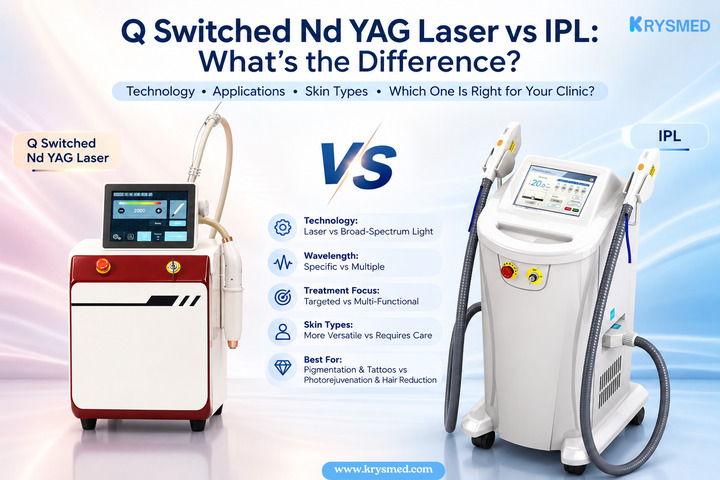
Clinics compare Q-Switched Nd:YAG lasers and IPL all the time, mostly because both get pitched for pigmentation, skin rejuvenation, and other aesthetic treatments. The core difference is straightforward: a laser fires specific wavelengths, while IPL delivers a broad spectrum of light.
Whether one is "better" really depends on your treatment goals, your patients, and your service menu — and after 15 years building these machines at our factory, we'd rather hand you the facts than push one box over the other.
What Is a Q Switched Nd YAG Laser?
Before you can pick between the two, it helps to understand what a Q-switched Nd:YAG laser actually is and what it's built to do.
How Q Switched Nd:YAG Laser Technology Works
The Q-switched Nd:YAG uses very short, high-energy pulses to hit specific targets — mainly melanin — inside the skin. Those fast pulses create a mix of heat and a tiny shockwave that breaks pigment into particles small enough for the body to clear. Don't confuse it with long-pulsed Nd:YAG either; "Q-switched" means nanosecond pulses for pigment, not the slower pulses used for hair removal.
1064 nm and 532 nm Wavelengths Explained
Most Q-switched Nd:YAG machines give you two key wavelengths: 1064 nm and 532 nm. The 1064 nm reaches deeper and is the workhorse for darker pigment and many tattoo colors, while 532 nm sits closer to the surface and targets lighter browns and reds. Picking the right wavelength matters because pigment sits at different depths, and using the wrong one just wastes sessions.
Common Applications of Q Switched Nd:YAG Laser
In a clinic, you'll mainly use it for pigmentation, freckles, sun spots, and tattoo removal. It also helps with overall skin tone and some rejuvenation work where pigment is the issue. Just remember it's the Q-switched version for pigment and tattoo, while hair removal is a different job for long-pulsed systems.
What Is IPL and How Does IPL Work?
IPL looks similar on the outside but works on a completely different principle, which is exactly why it's often confused with lasers.
IPL Is Not a Laser
IPL stands for Intense Pulsed Light, and the big thing to know is that it is not a laser at all. Instead of one tight wavelength, it fires a broad band of light that you shape with filters to reach different targets like pigment or blood vessels. That broad coverage is why many clinics treat it as a do-a-bit-of-everything platform.
Common IPL Treatment Applications
IPL is commonly used for sun spots, redness and visible vessels, general photorejuvenation, unwanted hair, and some acne-related concerns. Because one machine covers so many categories, it's a favorite for busy clinics building a varied menu. The catch is that results depend heavily on using the right filters, settings, cooling, and a well-trained operator.
Why IPL Is Popular for Multi-Functional Clinics
The appeal is simple: one platform, many treatment types, and broad coverage for different patient complaints. For a salon serving a mixed crowd, that versatility can mean faster payback than a single-purpose device. Just keep in mind the value comes from choosing the right filters, parameters, cooling system, and proper training — not from the machine alone.
Q Switched Nd YAG Laser vs IPL: What's the Difference?
Now to the question everyone asks — here's how the two stack up across real treatment scenarios.
| Treatment area | Q-Switched Nd:YAG | IPL | Usually better |
|---|---|---|---|
| Deep / stubborn pigmentation | ████░ | ██░░░ | Nd:YAG |
| Surface sun spots | ██░░░ | ████░ | IPL |
| Tattoo removal | █████ | ✗ | Nd:YAG |
| Photorejuvenation | ██░░░ | ████░ | IPL |
| Hair reduction | ✗ | ███░░ | IPL / diode |
| Redness & vascular | █░░░░ | ████░ | IPL |
| Acne-related | █░░░░ | ███░░ | IPL |
Legend: █████ excellent · ███░░ good · ██░░░ moderate · █░░░░ limited · ✗ not suited
Laser vs Broad-Spectrum Light
The simplest difference is specific wavelength versus many wavelengths at once. A laser like Q-switched Nd:YAG targets more precisely, while IPL spreads its energy across a wider range of chromophores. That trade-off between precision and coverage is what drives most of the other differences below.
Q Switched Nd:YAG vs IPL for Pigmentation
For stubborn, deeper pigment and tattoos, the targeted energy of Q-switched Nd:YAG usually wins. IPL can handle lighter sun spots and surface discoloration well, but epidermal versus deeper pigment changes the right choice. Honestly, diagnosis and pigment type matter far more than grabbing the "stronger" box — and melasma needs extra caution, not aggressive blasting.
Q Switched Nd:YAG vs IPL for Skin Rejuvenation
IPL shines in photorejuvenation and evening out overall tone across a large area. Nd:YAG's role is more specific, stepping in for selected pigment and rejuvenation protocols where a targeted approach fits. They're not interchangeable, so think of them as different tools rather than rivals.
Q Switched Nd:YAG vs IPL for Hair Removal
IPL does target hair follicles and is a common entry-level hair-reduction option. But don't mix up Q-switched Nd:YAG with the long-pulsed Nd:YAG systems built for hair removal — they're separate machines with separate jobs. If hair removal is a core service, a dedicated diode or long-pulsed platform will serve you better than either of these.
Q Switched Nd:YAG vs IPL for Darker Skin Types
Darker skin carries more epidermal melanin, which raises the risk for both technologies if settings aren't managed. Different wavelengths give different safety margins, but no device is automatically "safe for all skin types" without care. Conservative parameters, good cooling, test spots, and an experienced hand are what actually keep patients safe.
| Fitzpatrick skin type | Nd:YAG 1064 nm | Nd:YAG 532 nm | IPL |
|---|---|---|---|
| I–II (very fair) | Safe | Safe | Safe |
| III–IV (medium) | Safe | Use with caution | Use with caution |
| V–VI (dark) | Preferred option | Avoid | High caution + test spot |
Q Switched Nd YAG Laser vs IPL Comparison Table
A side-by-side view makes the trade-offs easier to digest at a glance.
| Factor | Q-Switched Nd:YAG Laser | IPL |
|---|---|---|
| Light source | True laser | Broad-spectrum pulsed light |
| Wavelength | 1064 nm / 532 nm (specific) | ~500–1200 nm (filtered) |
| Pulse characteristics | Nanosecond, high peak energy | Millisecond, broad |
| Target chromophores | Melanin, tattoo ink | Melanin, hemoglobin, hair |
| Pigmentation | Deep/stubborn pigment, tattoos | Surface spots, sun damage |
| Photorejuvenation | Selected pigment protocols | Broad tone improvement |
| Hair reduction | Not (that's long-pulsed Nd:YAG) | Yes (entry-level) |
| Vascular concerns | Limited | Good (redness, vessels) |
| Tattoo removal | Excellent | Not suited |
| Acne-related | Limited | Some applications |
| Skin-type fit | Depends on wavelength/settings | Depends on filters/settings |
| Operator skill | Moderate–high | Moderate (param-dependent) |
| Typical clinic | Pigment/tattoo focused | Multi-service salon/clinic |
Which Is Better for Your Clinic: Q Switched Nd:YAG or IPL?
So which one should you actually buy — here's how to match the machine to your clinic.
| If your clinic mainly… | Recommended | Reason |
|---|---|---|
| Treats pigment & tattoo | Q-Switched Nd:YAG | Deep, targeted pigment power |
| Runs a mixed treatment menu | IPL | One platform, broad coverage |
| Wants full-service range | Both | They cover different needs |
Choose Q Switched Nd:YAG If Your Clinic Focuses on Pigmentation
If pigmentation and tattoo removal are your money services, a Q-switched Nd:YAG gives you the targeted power patients ask for. You'll want those specific wavelengths when dealing with deeper or stubborn pigment. It's the more focused platform when pigment is your core business.
Choose IPL If You Want a Multi-Functional Treatment Platform
IPL is the pick when you want photofacials, redness control, hair reduction, and pigment work from a single system. Salons and clinics with a mixed patient base love that broad coverage. It's the practical choice when one machine needs to do a lot of different jobs.
When Buying Both Technologies Makes Sense
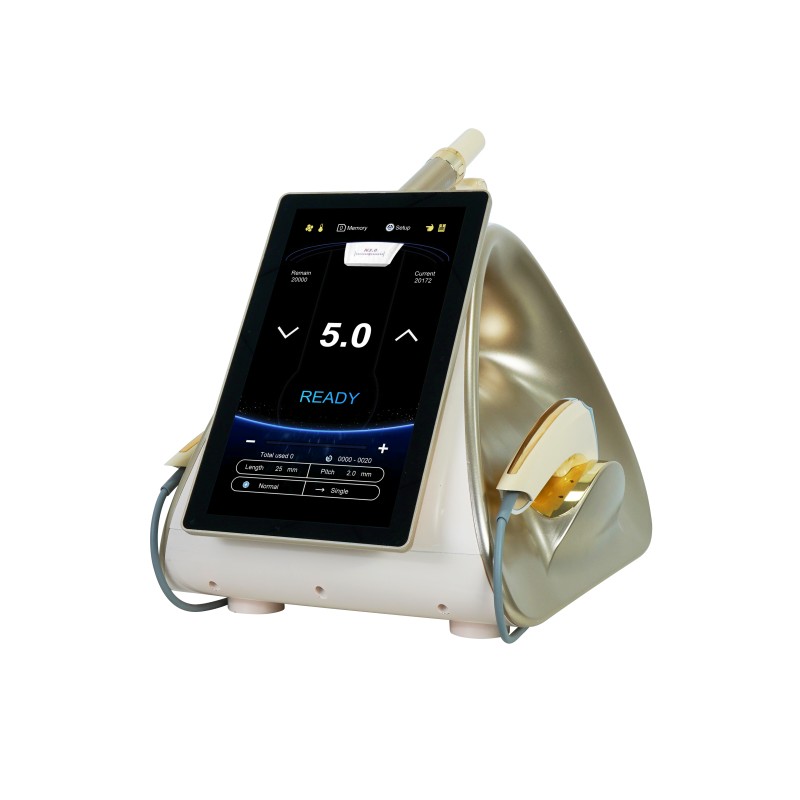
Many clinics find that one machine simply can't cover everything well, so they run both. Different technologies serve different treatment categories, and together they build a fuller menu. When you're ready to add skin tightening later, a professional HIFU machine for sale from the same trusted source keeps that portfolio growing.
What Should You Look for When Buying a Q Switched Nd:YAG Laser or IPL Machine?
Once you've picked a direction, the next trap is buying on specs alone — here's what actually matters.
Evaluate the Actual Laser or Light Source
Check the real wavelength setup, pulse stability, and whether energy stays consistent across shots. Spot size and the handpieces included decide what you can actually treat day to day. A pretty spec sheet means nothing if the beam wanders between pulses.
Check Cooling and Treatment Safety Features
Good contact or integrated cooling keeps patients comfortable and protects the skin. You also want proper eye protection, emergency stops, and solid safety systems built in. Cooling and safety aren't extras — they're what keep a treatment from becoming a complaint.
Look Beyond the Machine Specifications
The machine is only half the story; the other half is the partner behind it. Look for manufacturer experience, clinical and technical training, after-sales support, warranty, spare parts, and real certifications. At Krysmed we've spent 15 years as a source factory precisely so clients get training, OEM options, and strict quality control — not just a box that ships and disappears.
Ask the Manufacturer the Right Questions Before Buying
Before you pay, ask what the machine is actually designed for and which wavelengths and handpieces come included. Find out which skin types it supports, what training you'll get, and what support exists after purchase. A serious manufacturer should also hand you the certifications and documentation without you having to chase them.
Common Mistakes Clinics Make When Comparing Q Switched Nd:YAG and IPL
Over the years we've seen the same costly mistakes repeat — here are the big ones to avoid.
Assuming More Wavelengths Always Means Better Results
More wavelengths on paper don't automatically mean better outcomes in the treatment room. What matters is whether each wavelength is stable and right for the job you're doing. Chasing numbers usually just pads the brochure.
Comparing Energy Numbers Without Understanding Pulse Duration and Spot Size
Two machines with the same energy number can behave nothing alike once pulse duration and spot size enter the picture. Those two factors shape how deep and how safely the energy lands. Judge the whole picture, not a single digit.
Treating All Pigmentation as the Same Problem
Sun spots, melasma, and tattoo ink are completely different targets that need different approaches. Lumping them together is how clinics end up with poor results and unhappy patients. Correct diagnosis always comes before machine choice.
Confusing Q-Switched Nd:YAG With Long-Pulsed Nd:YAG
This mix-up catches a lot of first-time buyers and it's an expensive one. Q-switched is for pigment and tattoo; long-pulsed is the hair-removal cousin. Know which one you're actually looking at before signing.
Choosing a Machine Based Only on Price
The cheapest machine often costs the most later through downtime, weak support, and lost clients. Price matters, but it's the last thing you should decide on. Value is about results, reliability, and the partner standing behind the unit.
Ignoring Operator Training and Patient Selection
Even the best machine fails in untrained hands or on the wrong patient. Training and proper patient selection are what turn a purchase into profit. Skip them and you're gambling with your reputation.
Expert Takeaway: Q Switched Nd:YAG vs IPL
If you remember nothing else, remember this.
The Key Difference in One Sentence
Q-switched Nd:YAG is a more wavelength-specific, targeted laser treatment, while IPL is a broader-spectrum, multi-application light treatment. That single distinction explains almost every other difference between them. Keep it in mind and the marketing noise gets a lot easier to ignore.
The Better Question Is Not "Which Machine Is Better?"
The smarter question is which technology fits your treatment demand, your patient demographics, and your business model. Weigh versatility, safety, training, and long-term support, not just the headline feature. The right answer is the one that fits how your clinic actually runs.
FAQ
Here are the questions we hear most from clinic owners and agents deciding between the two.
Is Q Switched Nd:YAG better than IPL for pigmentation?
For deeper or stubborn pigment and tattoos, yes, the targeted energy of Q-switched Nd:YAG usually performs better. IPL still works well on lighter surface spots. Match the tool to the pigment type rather than declaring one a universal winner.
Is IPL better than Q Switched Nd:YAG for skin rejuvenation?
For overall tone, redness, and broad photorejuvenation, IPL is generally the more flexible choice. Nd:YAG helps in specific pigment-focused cases. They cover different angles of "rejuvenation," so it depends on the result you're after.
Can IPL remove pigmentation?
Yes, IPL handles many types of surface pigmentation like sun spots and mild discoloration. Deeper or tattoo pigment is better left to Q-switched Nd:YAG. A proper skin assessment tells you which one fits.
Can Q Switched Nd:YAG be used for hair removal?
Not the Q-switched version — that's built for pigment and tattoo, not hair. Hair removal belongs to long-pulsed Nd:YAG or diode systems. Mixing them up is one of the most common buying mistakes we see.
Is IPL a laser?
No, IPL is not a laser; it's broad-spectrum pulsed light shaped by filters. A laser like Nd:YAG delivers a single, focused wavelength. That distinction drives most of their differences in practice.
Which is safer for darker skin, Q Switched Nd:YAG or IPL?
Neither is automatically safe for all dark skin tones without careful settings. Different wavelengths offer different margins, but cooling, test spots, and operator skill do the real safety work. Judge by protocol, not by a marketing claim.
What is the difference between Q Switched Nd:YAG 1064 nm and 532 nm?
1064 nm penetrates deeper and handles darker pigment and many tattoo colors. 532 nm targets shallower, lighter browns and reds near the surface. Picking the right one depends on how deep the pigment sits.
Can Q Switched Nd:YAG and IPL be used in the same clinic?
Absolutely, and many clinics run both to cover different needs. They serve different treatment categories rather than competing. Together they let you build a fuller, more profitable menu.
Which machine is better for a small aesthetic clinic?
If space and budget favor one machine, IPL's versatility often suits a small clinic with mixed clients. If pigment and tattoo are your niche, a Q-switched Nd:YAG earns its spot. Let your most common patient requests decide.
How many treatments are usually needed with IPL or Q Switched Nd:YAG?
It varies with the condition, depth, and skin type, but pigment and tattoo work usually runs several sessions spaced weeks apart. IPL rejuvenation often follows a similar multi-visit plan. A proper consultation sets the realistic count.
What should I consider before buying a Q Switched Nd:YAG or IPL machine?
Look at your target treatments, patient skin types, the real machine specs, and the support behind it. Don't buy on price alone — training, certification, and after-sales matter just as much. The right partner makes the machine pay for itself.
Final Buying Checklist for Clinics
Before you sign anything, walk through this quick checklist.
Define Your Most Profitable Treatment Applications
Pin down which treatments actually bring in money for your clinic first. That shortlist should drive the technology choice, not the other way around. Everything else flows from this step.
Identify Your Main Patient Skin Types and Concerns
Know the skin types and complaints your clients show up with most. That tells you which wavelengths and safety margins you really need. It also protects you from buying power you'll never use.
Compare Technology, Not Just Machine Price
Weigh what each machine can actually do for your menu, not the sticker alone. The cheaper unit can cost more in downtime and lost clients. Technology fit beats a low number every time.
Verify Manufacturer Qualifications, Certifications, Training, and Support
Check the factory's track record, paperwork, and the training and support they promise. At Krysmed, 15 years as a source factory means OEM customization, strict QC, and hands-on training are part of the deal. A solid partner is the difference between a purchase and a partnership.
Choose the Platform That Fits Your Existing Treatment Menu
Pick the machine that slots into what you already offer and the clients you already have. Adding the right tech should feel like a natural extension, not a gamble. That's how equipment turns into steady income.
Conclusion
Choosing between a Q-switched Nd:YAG laser and IPL isn't about crowning a winner — it's about matching the right tool to your patients, your menu, and your business plan. Get the fundamentals right and either technology can become a steady income source for your clinic. The clinics that win are the ones that buy with a clear strategy, not a blurry guess.
Ready to Choose the Right Aesthetic Laser for Your Clinic?
If you're weighing a Q-switched Nd:YAG, an IPL system, or building a full treatment portfolio, our team at Krysmed Technology is ready to help you decide without the sales fluff. As a 15-year Chinese source factory, we back every machine with training, OEM options, and strict quality control so your business actually grows. Reach out through krysmed.com today and let's find the setup that makes you money.
Our Contact
Ready to Elevate Your Business with Krysmed?
Let’s discuss your needs and find the best solution for your business. Our experts are here to provide personalized recommendations tailored to your business needs.
-
Call For Inquiry
-
Send Us Email
info@krysmed.com
Get A Custom Quote Now!
We value your privacy and guarantee a prompt, professional reply.
 WhatsApp
 info@krysmed.com
 +86 19867944875