

News
January 04, 2026

IPL vs Laser: Which Technology Is More Profitable for Aesthetic Clinics?
When investing in aesthetic equipment, most clinic owners aren’t asking which technology sounds more advanced—they want a device that can generate stable income and recover costs quickly. For new beauty salons and clinics, choosing between IPL vs Laser is one of the most important business decisions, as the wrong choice can tie up cash flow and limit treatment options.
This article compares IPL and laser technology from a practical, profit-focused perspective. Instead of technical jargon, we look at investment cost, treatment versatility, client demand, and real ROI—helping clinics decide which technology makes more financial sense and why IPL remains a low-risk, profitable solution for many aesthetic practices.
Key Takeaway IPL is not automatically the more profitable option, and laser is not automatically the better investment. IPL may suit multi-service clinics that want broader treatment options from one platform, while laser may suit businesses focused on high-volume hair removal. The right choice comes down to demand, utilization, pricing, investment and your overall treatment menu. |
IPL vs Laser: The Business-Relevant Difference
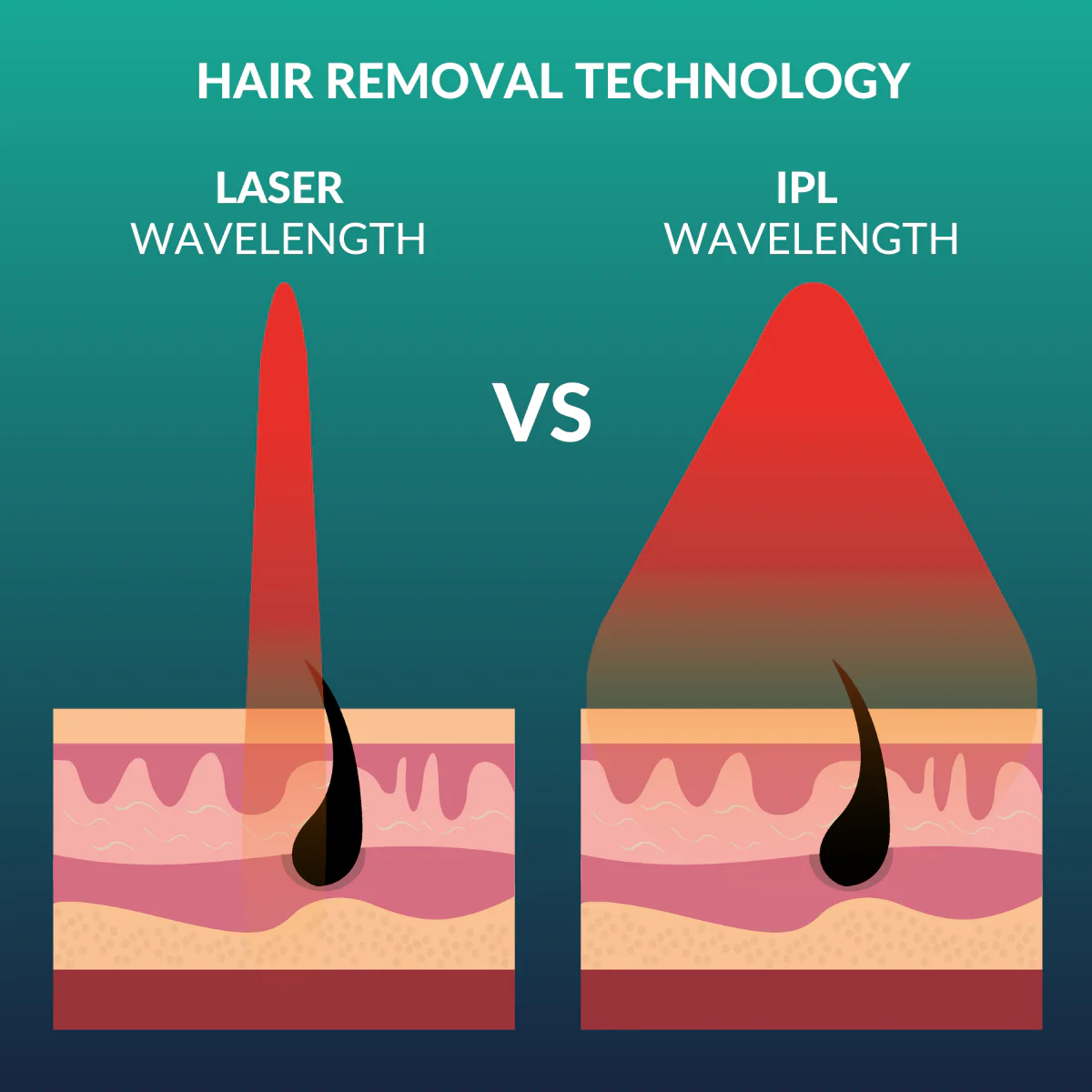
IPL uses broad-spectrum pulsed light, while laser systems are built around specific wavelengths. For a clinic owner, the practical difference is not only how the energy is delivered, but how that configuration affects treatment range, equipment cost, workflow and the services you can build around it.
That is the only technical background needed for this article. If you want the full device-level comparison — wavelength configurations, spot size, cooling, treatment speed, session planning and comfort — read our dedicated technical guide: IPL vs Laser Hair Removal: Which is Better?
Treatment Versatility: One Device or Multiple Revenue Streams?
| Business Factor | IPL System | Laser System |
| Service positioning | Often suitable for a broader light-based treatment menu | Often more focused on specific treatment applications |
| Revenue model | Can support multiple services from one platform, depending on configuration | Often strongest when positioned around a focused, high-demand service |
| Initial investment | Depends on system configuration and included functions | Varies significantly by wavelength, platform and configuration |
| Workflow | Can support multiple service types with one platform | Often optimized around specialist workflows |
| Best business fit | Clinics that value multifunctionality | Clinics with strong demand for dedicated laser treatments |
IPL versatility can make it easier for some clinics to build packages across multiple light-based services, while dedicated laser systems may be more attractive for businesses with strong demand for specialized hair-removal services. Neither model is inherently more profitable — the right fit depends on what your clients actually book.
Client Demand: What Will Your Clients Actually Book?
The most reliable predictor of equipment ROI is not the spec sheet — it is your booking sheet. If your market shows strong, repeatable demand for one core service such as hair removal, a dedicated laser built around that workflow may be booked more consistently and at a premium price. If your clients ask for hair removal plus skin rejuvenation, pigmentation and vascular work, one configurable IPL platform can serve that mix without buying several machines.
Before comparing any two devices, write down your current or target client profile: which treatments they ask for, how often they return, what your local competitors charge and which skin types you serve. The technology should follow the demand — not the other way around.
A Simple Way to Think About IPL Investment
Illustrative planning example — the figures below are placeholders, not benchmarks. Two typical purchase routes look like this:
| Scenario | Clinic A | Clinic B |
| Equipment route | Dedicated laser (hair removal) | Multifunctional IPL |
| Typical investment level | Depends on configuration | Depends on configuration |
| Monthly treatments | 40 (one core service, high volume) | 25 (spread across several services) |
| Main services | Hair removal only | Hair removal + skin + pigmentation |
| Utilization risk | Low — if local demand is steady | Low — if the extra services actually sell |
| Business case | Depends on demand | Depends on demand |
Neither route automatically wins. A higher-priced laser that is fully booked can outperform a cheaper IPL that sits half-idle — and the reverse is just as true. Utilization, not the price tag, usually decides the payback equation.
ROI Analysis: Which Technology Pays Back Faster?
Faster Break-Even for New Clinics
For a new clinic, the key question is how much capital is tied up before the first treatment is sold. A multifunctional IPL platform may be attractive when one device can support several services that the clinic already expects to market — but this only holds if those services match real local demand.
Stable Returns for Established Clinics
For an established clinic, equipment utilization can matter more than the purchase price alone. A machine that supports services with steady demand may generate a stronger business case when it is consistently booked rather than sitting unused between appointments.
Distributor Perspective
For distributors, the equation also includes how easily the platform can be positioned across different clinic types, how simple it is to train users and whether the product can support the target market's expected price range.
What Actually Determines ROI?
Before comparing any two machines, list the variables that actually move the ROI calculation. Most of them sit in your business plan, not in the device's spec sheet:
| Factor | Why It Matters |
| Machine cost | Determines initial investment |
| Average treatment price | Determines revenue per treatment |
| Treatments per month | Determines utilization |
| Treatment time | Affects daily capacity — often a laser advantage in hair removal |
| Consumables | Affects treatment cost |
| Additional applications | Can broaden service revenue — often an IPL advantage |
| Staff cost | Affects operating margin |
| Maintenance | Affects long-term cost |
| Local demand | Determines realistic booking volume |
Estimated Payback Period = Total Equipment Investment ÷ Monthly Contribution From the Treatment Service This is a planning formula rather than a guarantee. Use realistic booking volume, local pricing and operating costs when building your estimate. |
The Business Case for IPL
IPL's commercial logic is built on range. It tends to fit these situations:
| Situation | Why a Multifunctional IPL Platform Can Fit |
| Broader service menu | One platform can cover hair removal, skin rejuvenation, pigmentation and vascular applications, depending on configuration |
| Lower complexity for a multi-service business | One machine, one training track and one maintenance routine instead of several single-purpose devices |
| Testing demand with limited capital | A new clinic can use one device to test several services before committing budget to dedicated equipment |
The Business Case for Laser
Laser's commercial logic is built on focus and throughput. It tends to fit these situations:
| Situation | Why a Dedicated Laser System Can Fit |
| High-volume hair removal as the core service | A dedicated laser system may offer a more efficient workflow for high-volume hair removal, depending on spot size, repetition rate and device configuration — supporting higher throughput and specialist positioning |
| Serving darker skin types | Specific wavelengths such as 1064 nm are generally considered for clients with deeper skin tones, subject to appropriate device selection, training and clinical judgment |
| One well-used machine beats three underused ones | A focused investment in a single high-demand service can outperform a multifunctional device whose extra functions never get booked |
Which Technology Fits Your Business Model?
Bringing both sides together, the decision usually comes down to your service mix and client profile:
| If Your Business Model Is... | Often the Better Fit | Why |
| Multi-service clinic (hair removal + skin + pigmentation) | IPL | One platform covers several light-based services without extra machines |
| Dedicated high-volume hair removal studio | Laser | Efficient workflow and specialist positioning may support higher throughput and pricing |
| Client base includes many darker skin types | Laser | Specific wavelengths are generally more suitable for deeper skin tones |
| New clinic testing demand with limited capital | IPL | One device can trial several services before dedicated equipment makes sense |
| Established clinic with steady bookings in one core service | Laser | A focused, fully utilized machine often produces the strongest business case |
| Distributor serving diverse clinic types | Both | Carrying both categories lets you match each client's actual business model |
Either Way, Krysmed Can Support the Decision
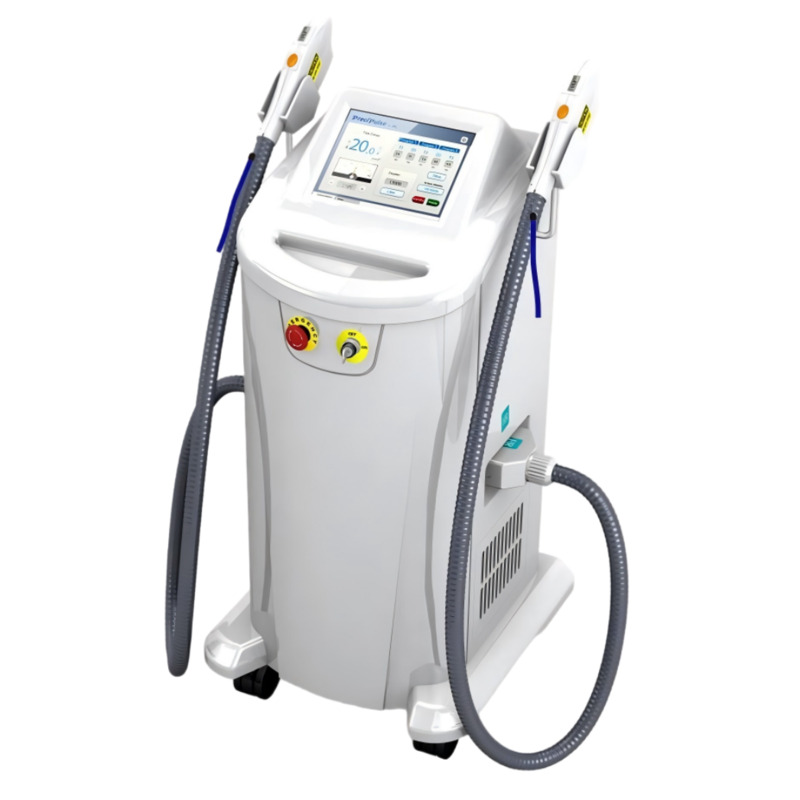
Krysmed manufactures both categories — which is exactly why we don't pretend there is a universal winner. If your evaluation points to IPL, the KrysLume Pro IPL is a multifunctional configuration designed around multiple light-based applications, with adjustable settings, clinic training and technical support. If your evaluation points to laser, our diode laser hair removal systems are built for clinics where hair removal is the core business.
Either way, we would rather help you pressure-test the business case first: send us your treatment menu, expected booking volume and local price points, and we will tell you honestly which route — or which combination — fits.
Conclusion: Which Technology Makes More Business Sense?
There is no universal winner between IPL and laser. The stronger investment depends on your treatment menu, expected booking volume, client profile, local pricing, equipment cost and how consistently the system can be used.
For clinics that value multifunctionality and want one platform to support several light-based services, IPL can be a practical option. For businesses built around high-volume, specialist hair-removal services — or serving client bases that include darker skin types — a dedicated laser system may make more sense.
Ready to Build Your Business Case?
Contact Krysmed to review both technology routes, request a quote or talk through the ROI planning table above with a specialist — before you commit to either one.
FAQ: IPL vs Laser for Aesthetic Clinics
Which technology is more profitable, IPL or laser?
Neither one is universally more profitable. A dedicated laser can outperform IPL in a high-volume hair removal business, while a multifunctional IPL can outperform a laser when clients book several different light-based services. Profitability follows utilization and local demand, not the technology label.
Can IPL replace laser devices in a clinic?
It can in some multi-service clinics, but not every clinic will have the same requirements. Clinics built around high-volume hair removal, or serving many clients with darker skin types, may still benefit from a dedicated laser system.
How long does it take to see ROI on an aesthetic device?
There is no standard payback period. A clinic can estimate its own timeline by comparing the total equipment investment with realistic monthly contribution from treatments, taking into account treatment price, bookings, consumables, staff costs and other operating expenses.
Is IPL or laser better for clinics serving darker skin types?
From a business perspective, this matters: if a significant share of your clients have deeper skin tones, specific laser wavelengths (such as 1064 nm) are generally considered more suitable, which may make the system a better fit for clinics serving clients with deeper skin tones, subject to appropriate device selection, training and professional judgment.
Should a clinic offer both IPL and laser?
Larger clinics and chains often do — one multifunctional IPL for the broader menu and one dedicated laser for high-volume hair removal. For smaller clinics, starting with the single route that matches core demand and expanding later is usually the more disciplined approach.
Our Contact
Ready to Elevate Your Business with Krysmed?
Let’s discuss your needs and find the best solution for your business. Our experts are here to provide personalized recommendations tailored to your business needs.
-
Call For Inquiry
-
Send Us Email
info@krysmed.com
Get A Custom Quote Now!
We value your privacy and guarantee a prompt, professional reply.
 WhatsApp
 info@krysmed.com
 +86 19867944875