

News

September 19, 2026

OEM Diode Laser Hair Removal Machines: What Distributors Should Decide Before Production
Short Answer
An OEM diode laser project should be decided before you start discussing the final price. The biggest decisions are usually not the logo or housing color. They are the target market, machine configuration, wavelength combination, treatment workflow, software, regulatory documentation, customization depth, MOQ, quality-control requirements, warranty, spare parts and who is responsible for each stage after production. For distributors, the safest approach is to treat OEM as a product-development project rather than simply asking a factory to "put my logo on your machine." You do not necessarily need to redesign an entire diode laser from scratch. In many cases, starting with an existing professional platform and customizing the parts that matter to your market can reduce development risk, shorten the launch process and make the final product easier to support. |
Why OEM Diode Laser Projects Often Go Wrong Before Production Starts
Most OEM problems are not caused by the factory suddenly changing the machine after production begins. They usually start earlier, when important decisions were never clearly defined.
A distributor may initially say:
"I want a diode laser with my own logo and a different housing." |
That sounds simple until the project reaches questions such as:
Which wavelengths? Which handpiece? What spot size? What cooling system? What software language? Whose logo appears on the startup screen? What documents are needed in the destination market? Who owns the customized housing? How many units are required? What happens when the first customer needs a spare part? What exactly does the manufacturer test before shipment? |
The earlier these questions are answered, the fewer expensive changes are likely to appear during production.
Start With Your Market, Not the Machine
Before discussing customization, define who is going to buy the finished OEM product.
A distributor selling into professional aesthetic clinics has a different requirement from one targeting small beauty salons, premium spas or another equipment distributor. If your market is primarily clinics, the product may need to emphasize professional specifications, documentation, training and long-term support. If your customers are premium spas, the housing, interface and overall presentation may carry more commercial weight.
Define the customer you actually want
| Target Customer | What They May Care About | OEM Implication |
| Beauty salons | Investment, ease of operation, treatment workflow | Keep configuration practical and easy to explain |
| Aesthetic clinics | Performance, documentation, reliability, training | Prioritize technical specifications and support |
| Premium aesthetic spas | Equipment presentation, technology, client experience | Invest more in industrial design and software presentation |
| Medical or professional practices | Documentation, regulatory requirements, technical support | Confirm market-specific compliance requirements early |
| Local distributors | Margin, differentiation, serviceability | Focus on repeatable configuration and spare-parts support |
Before asking for an OEM quotation, you should be able to describe your target customer in one or two sentences.
That simple exercise can prevent you from building a machine with expensive features that your customers never ask for.
OEM, Private Label or ODM: Which One Are You Actually Looking For?
These terms are often used interchangeably during equipment sourcing, but they can describe very different projects.
Private Label
Private label usually means the manufacturer's existing product is sold under your brand with relatively limited changes. Typical changes may include the logo, packaging, labels, manuals and sometimes software language or visual elements. This is usually the simplest route when your priority is getting your own branded product to market without changing the underlying machine substantially.
OEM
OEM generally means you are working with an existing manufacturing platform but defining agreed specifications or customization requirements for your market. That might include the housing, logo, software interface, wavelength configuration, accessories, packaging or other product details.
ODM
ODM usually involves deeper product development, where the manufacturer contributes substantially to the design and engineering of the product. This can provide more differentiation, but it also creates more development work, longer timelines and usually more decisions to make.
| Model | Typical Customization | Development Effort | Best Fit |
| Private Label | Logo, packaging, labels | Lower | Testing a market or building a branded product quickly |
| OEM | Logo + selected hardware/software/design changes | Moderate | Distributors building a differentiated product |
| ODM | Deeper product and engineering customization | Higher | Established brands with a clear product strategy |
You do not need the deepest possible customization simply because an OEM manufacturer can offer it.
For a commercial view of how the OEM and ODM choice affects margin, brand control and intellectual property, see our article on OEM vs ODM from a profit and brand perspective.
The better question is: Which changes will actually help you sell the product? |
Decide the Core Diode Laser Configuration First
Before discussing colors, logos or packaging, freeze the technical configuration.
This is the part that is expensive to change later. For example, decide whether the machine will use a single-wavelength or multi-wavelength architecture, what power and parameter ranges are required, what cooling system will be used, and which handpiece configuration fits your target customer.
For distributors who need more context on how different wavelengths fit different markets, see our guide to 755nm vs 808nm vs 1064nm diode laser configurations.
Do not start by asking for "the most powerful version"
A specification becomes commercially useful only when it solves a customer requirement. A high-power configuration may sound impressive in a brochure, but if the target market values compact design, simple operation and controlled investment, that extra specification may not help you sell more machines.
Define the specification in writing
Your OEM specification sheet should clearly state:
| Specification Area | What to Define Before Production |
| Wavelengths | Exact wavelength configuration |
| Laser source | Source type and agreed configuration |
| Energy range | Required operating range |
| Pulse width | Required adjustment range |
| Frequency | Required operating range |
| Spot size | Exact treatment spot |
| Cooling | Cooling architecture and control requirements |
| Handpiece | Design, connector, cable and user interface |
| Display | Screen size, type and mounting |
| Software | Functions, language, branding and data management |
| Electrical configuration | Voltage, frequency and plug requirements |
Do not leave important specifications as phrases such as "high power," "strong cooling" or "large spot." Those descriptions are too vague for an OEM production document.
Decide Whether Your OEM Needs One Wavelength or Multiple Wavelengths
Wavelength configuration can affect the product's market positioning, price and the customer groups you can target.
For example, a distributor serving a very focused market may choose a simpler configuration, while a distributor serving a wider range of clinics may want more flexibility. The important thing is to decide this before production, because the laser-source architecture is not something you should treat as a cosmetic customization.
A practical OEM question
Ask yourself:
"Would my customers actually use the additional wavelength options, or am I adding them because competitors advertise them?" |
That question can save a surprising amount of money.
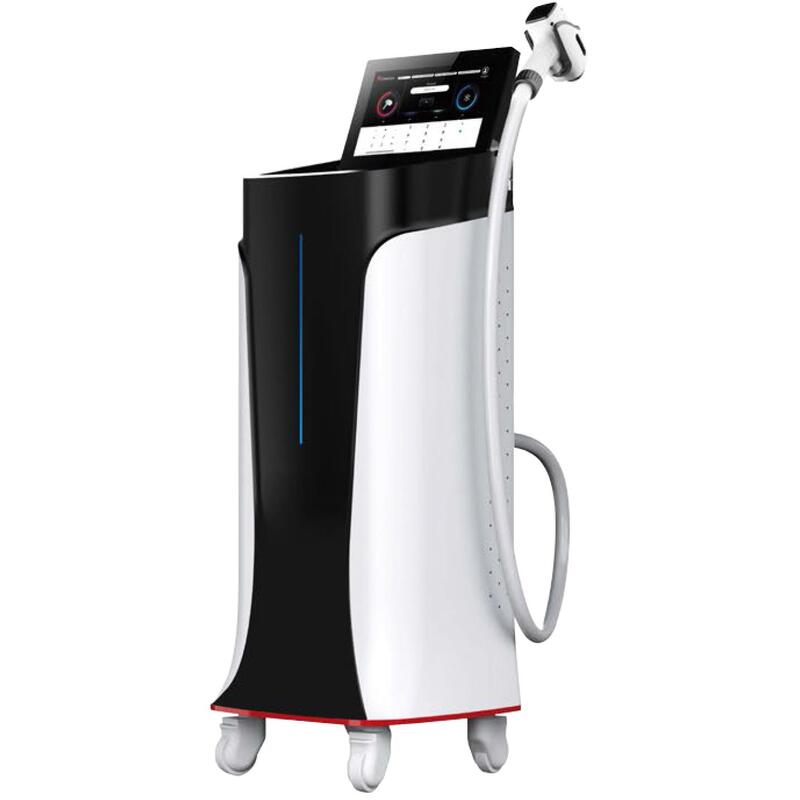
For Krysmed's current premium KrySmooth AI Diode Laser, the defined configuration is 755nm + 808nm + 1064nm. This gives distributors a clear three-wavelength platform to build an OEM or branded-market discussion around rather than starting from an undefined specification list.
You can review the base platform here: KrySmooth AI Diode Laser.
Decide What Should Actually Be Customized
Not every component needs to be changed.
In fact, one of the most practical OEM strategies is to customize the areas customers see and care about while retaining proven internal components where possible.
Common OEM customization areas
| Customization | Commercial Value | Difficulty |
| Logo | Builds brand recognition | Low |
| Housing color | Creates visual differentiation | Low to moderate |
| Housing design | Creates a distinct product identity | Moderate to high |
| Touchscreen interface | Supports brand experience | Moderate |
| Software logo | Improves brand consistency | Low to moderate |
| Software language | Supports local market use | Low to moderate |
| Packaging | Improves branded delivery experience | Low |
| Manuals and labels | Supports local sales and operation | Low |
| Handpiece appearance | Supports product differentiation | Moderate |
| Internal hardware | Changes product architecture | High |
The biggest commercial mistake is assuming that more customization automatically creates more value.
Often, a cleaner housing, branded interface and strong local packaging are more useful than changing internal hardware that customers will never see.
Housing Design: Bring Your Own Concept or Modify an Existing Platform?
This is one decision worth making early. You may already have a product appearance in mind, or you may prefer to start with the manufacturer's existing housing.
Use an existing housing when speed matters
If the main goal is to launch quickly, adapting an existing housing can reduce development work, tooling requirements and approval time. It also gives you a product that has already been manufactured rather than starting with a completely untested design.
Develop a custom housing when differentiation matters
A custom housing becomes more attractive when your market is already crowded with similar-looking diode lasers and you want customers to recognize your product immediately. However, custom housing development involves more than changing the exterior shape.
It can affect internal component layout, cooling airflow, cable routing, screen mounting, handpiece storage, service access, packaging dimensions, shipping cost and tooling.
That is why the housing should be treated as part of the machine engineering, not simply graphic design.
A useful rule
If you change the appearance, confirm that the manufacturer has also checked what happens inside the machine. A beautiful housing that makes servicing difficult is not a strong OEM product. |
Software Branding Is More Important Than Many Distributors Expect
The customer may only see the machine for a few minutes before purchasing, but the operator sees the software every working day. That makes the interface part of the product experience.
Decide the software scope early
Before production, clarify:
Startup logo · Main interface branding · Software language Parameter display · User access · Client records Treatment history · Data storage · Report functions Remote support · Software update method |
You do not need to develop a completely new software platform to create a branded product.
Sometimes changing the visual identity, language and key workflow screens provides enough differentiation.
Be precise about "AI"
This is particularly important for marketing.
If your product includes data-management or AI-assisted features, define exactly what they do. Do not allow the sales team to turn "AI-assisted data tracking" into claims such as automatically selecting treatment parameters, diagnosing skin conditions or guaranteeing treatment outcomes.
A technically credible OEM product is easier to market than one built around exaggerated claims.
Regulatory Documentation Should Be Decided Before Production
One of the most expensive OEM mistakes is checking market requirements after the machine has already been manufactured. Your manufacturer may have extensive documentation, but that does not automatically mean the finished OEM product meets every requirement of your destination market.
Decide who is responsible for what
| Area | Questions to Clarify |
| Product documentation | Which technical documents can the manufacturer provide? |
| Labeling | Who prepares the local product labels? |
| User manual | Which languages are required? |
| Electrical documentation | What test reports are available? |
| Market registration | Who handles local registration or notification where required? |
| Importer responsibilities | What must the distributor provide locally? |
| Intended use | Does the intended use match the destination market requirements? |
Do this before the deposit, not after production.
For distributors entering a new market, our practical guide on launching a diode laser hair removal machine in a new market covers the broader market, documentation, training and after-sales considerations.
MOQ Should Be Negotiated Around Your Real Business Plan
MOQ is one of the first commercial questions distributors ask, but the lowest possible MOQ is not always the best deal. There is a simple reason.
Customization costs money. A manufacturer may be able to put your logo on one standard machine with little extra work. A custom housing, customized software, new packaging and dedicated components may require development costs that only make sense at a larger volume.
Separate the different types of MOQ
| MOQ Type | What It Usually Relates To |
| Sample quantity | Testing the platform before commercial production |
| Logo MOQ | Minimum quantity for branding |
| Housing MOQ | Minimum quantity for custom housing production |
| Packaging MOQ | Minimum quantity for custom boxes and printed materials |
| Software MOQ | Minimum quantity for dedicated software customization |
| Production MOQ | Minimum commercial order |
Ask the manufacturer to separate these requirements instead of giving you one unexplained "OEM MOQ."
That makes it much easier to plan your first order.
Do Not Approve Mass Production From a Render
A 3D rendering can show what the machine is supposed to look like. It cannot tell you how the finished machine actually feels, operates or gets serviced. For deeper customization, a physical sample or production-equivalent prototype is worth the extra attention.
What should you inspect on the sample?
| Area | What to Check |
| Appearance | Logo placement, colors, panel gaps, finish and overall proportions |
| Screen | Position, visibility, interface and touch response |
| Handpiece | Ergonomics, storage and cable routing |
| Controls | Ease of navigation and parameter display |
| Cooling | System behavior during repeated operation |
| Mobility | Wheels, handles and machine balance |
| Service access | Ability to inspect or replace service components |
| Packaging | Fit, protection and transport handling |
The sample approval should be documented. A simple "Approved for Mass Production" sign-off can prevent a surprising number of disagreements later.
Build a Factory Acceptance Checklist Before Production
The specification sheet says what the machine should be. The acceptance checklist says what the factory must actually verify.
A practical pre-shipment QC structure
| QC Stage | What to Check |
| Incoming components | Key components meet the agreed specification |
| Assembly | Machine assembled according to approved design |
| Electrical testing | Electrical and functional checks completed |
| Laser system | Output and operating parameters checked according to factory procedures |
| Cooling system | Cooling operation tested |
| Software | Approved version and branding installed |
| Appearance | Housing, logo and finish match approved sample |
| Accessories | Correct quantity and configuration included |
| Documentation | Manuals, labels and required documents included |
| Packaging | Correct export packaging and protection |
The exact testing method should come from the manufacturer's technical and quality procedures.
The important part for the distributor is that the acceptance criteria are agreed before production.
Warranty and Spare Parts Should Be Part of the OEM Agreement
This is where an OEM project becomes a long-term business relationship rather than a one-time purchase.
You are not only buying machines. You are creating a product that your customers will expect you to support.
Define warranty before production
Clarify:
Warranty duration · Covered components · Exclusions Troubleshooting process · Spare-parts handling · Shipping responsibility Remote technical support · Software support Repair procedure · Replacement policy where applicable |
For a distributor, these details matter because your customer sees your brand, not the factory's internal organization.
Plan Spare Parts Before You Need Them
Do not wait for the first failure to discover which parts are difficult to source. Ask the manufacturer which components are considered service parts and which should be stocked locally.
A useful spare-parts discussion
| Question | Why It Matters |
| Which components are most commonly serviced? | Helps build a practical spare-parts list |
| Which parts can be replaced locally? | May reduce downtime |
| Which parts require factory support? | Helps plan technical escalation |
| What is the typical lead time for spare parts? | Important for service planning |
| Can the manufacturer provide service training? | Supports local technical capability |
This is especially important if you plan to sell the OEM product across several countries.
Packaging Is Part of Your Brand
For an OEM product, the customer's experience starts before they switch on the machine. Packaging can communicate whether the product is positioned as a professional system or as a generic imported device.
But packaging should also be practical. A good OEM packaging project considers machine protection, foam or internal support, accessory organization, shipping dimensions, labels, warning information, brand identity, easy unpacking and replacement packaging availability.
Do not spend heavily on printed packaging while overlooking physical protection during transport.
A damaged premium machine does not become premium because the box looks good.
Calculate Your Real OEM Cost Before You Set the Selling Price
OEM pricing should not be based on the factory quotation alone. Your real cost may include:
| Cost | Examples |
| Machine | Base equipment price |
| Customization | Housing, logo, software, labels |
| Tooling | Custom molds or production fixtures |
| Sample | Prototype or approval unit |
| Testing | Additional testing required for the market |
| Packaging | Custom box and printed materials |
| Shipping | Freight and local handling |
| Import costs | Duties, taxes and customs |
| Warranty reserve | Spare parts and service |
| Sales and marketing | Demo machines, content and customer acquisition |
For a more detailed treatment-level business calculation, see our guide to the real cost of running a diode laser hair removal machine.
Do Not Let Customization Destroy Your Margin
It is tempting to add every requested feature once the project starts. A different housing. A larger screen. A new software interface. A different handpiece. Another wavelength. Another language. Custom packaging. A new trolley. A new accessory kit.
Individually, each change may seem reasonable. Together, they can turn a commercially attractive machine into a product that is expensive to manufacture and difficult to support.
Use three categories
Before adding any customization, place it into one of these groups:
| Category | Meaning |
| Must Have | Required for the target market or compliance |
| Sales Driver | Helps your product clearly stand out or sell |
| Nice to Have | Interesting but not essential for launch |
For the first production run, focus heavily on Must Have and Sales Driver items.
That keeps your OEM product commercially manageable.
What Makes a Good OEM Product Different From a Branded Factory Machine?
Putting a logo on a standard machine does not automatically create a strong OEM product. A real market-ready OEM project should have a reason for existing.
Maybe your product is designed specifically for premium spas. Maybe your market needs a particular language and software workflow. Maybe you have identified a demand for a particular three-wavelength configuration. Maybe your customers need better documentation and after-sales support than competing low-cost products provide. Maybe the housing needs to match your existing aesthetic equipment portfolio.
The differentiation does not have to be dramatic.
It just has to be useful and repeatable.
A Practical OEM Brief You Can Send to a Manufacturer
Before asking for a final quotation, prepare a one-page brief.
| OEM Requirement | Your Decision |
| Target market | Country / region / customer type |
| Brand | Your company name and logo |
| Machine positioning | Professional / premium / practical / other |
| Wavelength | Defined configuration |
| Power and parameters | Required specification |
| Cooling | Required cooling configuration |
| Spot size | Defined treatment spot |
| Housing | Existing design or custom concept |
| Software | Branding, language and required functions |
| Accessories | Exact included items |
| Packaging | Standard or custom |
| Documentation | Required market documents and languages |
| Warranty | Agreed warranty period and scope |
| MOQ | Sample and commercial quantity |
| Target price | Expected factory price range |
| Launch quantity | First production order |
How to Structure the OEM Production Process
A practical OEM process can be divided into clear stages.
Stage 1: Market Definition
Define the target customer, market, positioning and expected sales volume.
Stage 2: Technical Brief
Freeze the basic machine configuration and required performance specifications.
Stage 3: OEM Quotation
Confirm machine price, customization charges, MOQ, tooling, sample costs, lead time and payment terms.
Stage 4: Design Approval
Approve housing drawings, logo placement, software interface, labels and packaging.
Stage 5: Sample
Produce an OEM sample or production-equivalent unit for inspection.
Stage 6: Sample Approval
Document all approved specifications and visual details.
Stage 7: Mass Production
Production starts according to the approved specifications.
Stage 8: Quality Control
The manufacturer performs agreed testing and inspection before shipment.
Stage 9: Shipment
Export packaging, documentation and accessories are checked before dispatch.
Stage 10: Market Launch
The distributor begins sales, training, demonstrations and local marketing.
The important thing is to avoid jumping directly from quotation to mass production.
What Should Distributors Negotiate Besides Price?
Price is obviously important, but it is only one part of an OEM agreement. Consider negotiating the complete commercial package:
| Commercial Item | What to Clarify |
| Unit price | What is included and excluded? |
| MOQ | Does it apply to logo, housing or full production? |
| Sample | Cost, lead time and approval process |
| Tooling | Who pays and who owns it? |
| Lead time | Sample and mass-production timeline |
| Warranty | Duration and coverage |
| Spare parts | Pricing and availability |
| Training | What is included? |
| Software | Branding and update responsibilities |
| Documentation | Which documents are supplied? |
| Payment terms | Deposit and final payment structure |
| Replacement policy | What happens in case of confirmed manufacturing defects? |
This is where a serious OEM manufacturer should be transparent.
What About Ownership of Your Custom Design?
This question becomes important when you invest money into custom development. Suppose you pay for a custom housing or software interface. You should understand:
Who owns the design? Can the manufacturer sell exactly the same design to another distributor? Can your logo or packaging be reused? Who owns custom molds or tooling? Can the manufacturer use your design for another customer? |
There is no universal answer because different OEM projects have different commercial arrangements.
The important thing is to agree on the rules before development, not after you discover your supposedly unique housing on another supplier's website.
Should You Start With an Existing Krysmed Platform?
For distributors who are still validating their market, starting from an existing platform can be more practical than developing a diode laser from zero.
Krysmed's KrySmooth AI Diode Laser provides a defined professional platform with 755nm, 808nm and 1064nm wavelengths, rather than requiring a distributor to develop an entire laser architecture from scratch.
From there, an OEM project can focus on the areas that create commercial differentiation—such as branding, housing, software presentation, packaging and selected market-specific requirements—depending on the agreed project scope.
That approach can allow a distributor to spend more of the budget on building a product the market can actually buy, rather than paying to reinvent every internal component.
Common OEM Mistakes Distributors Should Avoid
Changing the Product Without Defining the Customer
A custom machine needs a commercial reason. Otherwise, you may end up with a more expensive product that is simply different rather than better suited to the market.
Approving Specifications by WhatsApp Messages
Messages are useful for discussion, but final specifications should be consolidated into a formal document. Otherwise, small differences in wording can become production disputes.
Treating the Sample as Optional
If the housing, software or accessories are customized, the sample is one of the most important checkpoints in the project.
Adding Features During Production
Late changes can affect components, assembly, tooling, software and delivery dates. Freeze the specification before mass production.
Ignoring Spare Parts
OEM branding means your customers will expect you to provide support. Make sure replacement parts are available before you start selling the machine.
Customizing the Housing Without Considering Serviceability
The prettiest housing is not necessarily the easiest machine to maintain. Make sure technicians can still access the components that need service.
Ordering a Large Quantity Before Testing Demand
A good factory price does not compensate for unsold inventory. Validate your market before scaling the production quantity.
Selling on Price Alone
Your competitors can copy your price strategy. It is much harder for them to copy your customer service, training, market knowledge and local distribution network.
FAQ
What is an OEM diode laser hair removal machine?
An OEM diode laser hair removal machine is a professional laser system manufactured according to an agreed distributor or brand specification. Depending on the project, customization may include branding, housing, software, packaging, accessories and selected technical configurations.
What is the difference between OEM and private-label diode laser machines?
Private label usually involves limited customization of an existing product, while OEM projects can include broader changes to the machine's appearance, software or specifications. The exact scope depends on the manufacturer's capabilities and the agreement with the distributor.
How much does an OEM diode laser hair removal machine cost?
There is no single OEM price because the final cost depends on the base platform, wavelength configuration, customization, MOQ, tooling, software, packaging and other project requirements. The best way to obtain a useful quotation is to provide a defined OEM brief rather than simply asking for an "OEM price."
What is the typical MOQ for OEM diode laser machines?
MOQ varies by the type of customization. Logo printing may require a relatively small quantity, while custom housings, tooling or dedicated production components can require higher volumes. Ask the manufacturer to separate the MOQ for each customization level.
Can I customize the housing of a diode laser?
In many OEM projects, yes. However, a custom housing should be checked against internal component layout, cooling, wiring, service access, screen mounting, packaging and transport requirements before production.
Can I put my own logo on the software?
Depending on the software architecture and OEM agreement, software branding may be possible. Confirm exactly where the logo will appear, which languages are available and whether future software updates preserve the custom branding.
Should I develop a completely new diode laser for my OEM brand?
Not necessarily. For many distributors, starting with an existing professional platform and customizing the commercially important elements can reduce development risk and shorten the path to market.
How do I choose an OEM diode laser manufacturer?
Look beyond the factory quotation. Check manufacturing capability, quality control, technical documentation, customization capability, sample approval process, warranty, spare-parts support, training and communication during the project.
How long does an OEM diode laser project take?
The timeline depends on the level of customization. A logo-only project can be much faster than a custom housing and software project. Sample development, design approval, production scheduling and market-specific documentation should all be included when planning the launch.
Should I order a sample before mass production?
For any meaningful OEM customization, a sample or production-equivalent approval unit is strongly advisable. It allows the distributor to confirm the physical design, software, accessories, branding and workflow before committing to a larger production run.
What should I ask a diode laser OEM manufacturer before production?
Ask about the technical specification, customization scope, MOQ, sample process, tooling, lead time, QC testing, warranty, spare parts, training, documentation, software updates, packaging and responsibility for local market requirements.
Final Takeaway
OEM is not simply "your logo + our machine."
A successful OEM diode laser project starts by defining the market, then freezing the technical configuration, deciding what genuinely needs customization, checking regulatory responsibilities, approving a sample, setting clear QC requirements and building the after-sales system before the machines reach your customers.
For distributors, this approach has another advantage: it keeps OEM development connected to the commercial reality of the market.
You do not need to customize everything.
You need to customize the right things. And you need a manufacturing partner that can support the product after the first shipment—not just produce it. |
Ready to Build Your Own Diode Laser Brand?
Let's Talk About Your OEM Diode Laser Project
Krysmed works with distributors on professional diode laser projects covering product configuration, OEM branding, housing customization, software presentation, packaging, training, quality control and after-sales support.
Whether you are planning a private-label launch or a more customized OEM product based on the KrySmooth AI 755nm + 808nm + 1064nm platform, share your target market, expected quantity and customization requirements with us.
Contact Krysmed to discuss your OEM diode laser project.
| Contact Krysmed → |
| View the KrySmooth AI OEM Platform → |
Our Contact
Ready to Elevate Your Business with Krysmed?
Let’s discuss your needs and find the best solution for your business. Our experts are here to provide personalized recommendations tailored to your business needs.
-
Call For Inquiry
-
Send Us Email
info@krysmed.com
Get A Custom Quote Now!
We value your privacy and guarantee a prompt, professional reply.
 WhatsApp
 info@krysmed.com
 +86 19867944875